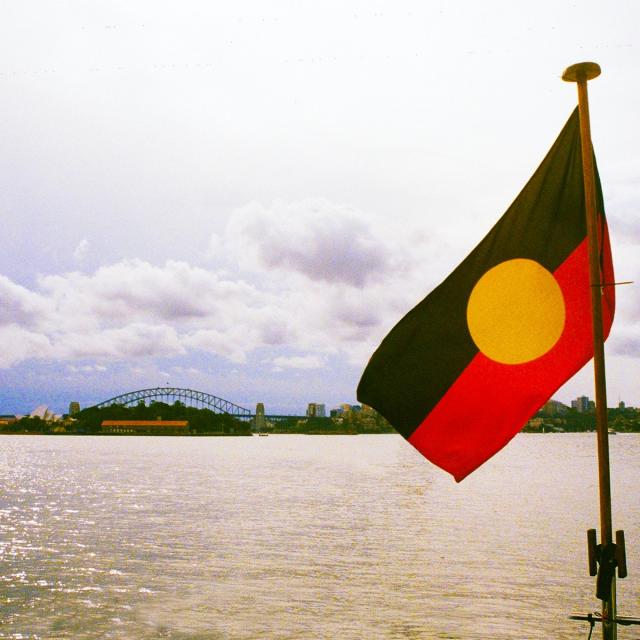
Cultural Competence - Aboriginal Sydney (Coursera)

Cultural Competence - Aboriginal Sydney (Coursera)

This course explores some of the key themes and capabilities of cultural competence by exploring Aboriginal experiences and narratives of Sydney. Australia was ‘claimed’ for the British Crown in 1770, by Captain James Cook, but the invasion began in earnest when the First Fleet of British arrived in 1788 and established a penal colony in Sydney.

Class Deals by MOOC List - Click here and see Coursera's Active Discounts, Deals, and Promo Codes.

As a consequence Sydney is a city rich in diverse pre-colonial, colonial and contemporary sites of significance to Aboriginal peoples. Too often though our perceptions about Aboriginal peoples consign them to an ancient past or perpetuates stereotypical imaginations that Aboriginal peoples live in remote communities (Hinkson, 2010).
At the heart of this MOOC is the theme that Sovereignty was never ceded and Sydney always was and always will be Aboriginal Land. Despite this the Aboriginal presence in the city is often invisible to non-Aboriginal eyes. This course aims to bring to light marginalised narratives of Aboriginal presence in this space.
To understand hidden and marginalised narratives and experiences it is necessary to develop cultural competence capabilities. Key elements of practicing cultural competence include being able to understand and interrogate context, which in the case of Sydney includes not only learning about the peoples, places and histories of Aboriginal Sydney but to also understand issues about how knowledge is created and how dominant narratives can exclude diverse knowledges and experiences.
Course learning outcomes

  1. Develop knowledge about cultural competence capabilities.
  2. Develop a deeper and multi-layered knowledge and understanding about Aboriginal peoples, cultures and places in Sydney.
  3. Develop a greater understanding of how history, cultures and places are represented, contested and interpreted and how that relates to their own context.

Acknowledgement of Country
We acknowledge that this course was developed on the land of the Gadigal Peoples of the Eora nation. We pay our respect to the Traditional Owners of this land and acknowledge that the land that the University of Sydney was built on has been a place of learning for many thousands of years.

Syllabus

WEEK 1
Introductions
Welcome to the Cultural Competence - Aboriginal Sydney MOOC.

WEEK 2
Representation and visibility in Aboriginal Sydney
This week highlights how Aboriginal peoples are represented and made invisible. We will look at how museums and anthropologists collected and studied Aboriginal peoples and their artefacts. We will also look at how Aboriginal peoples engaged with the colonisers and continue to do so.

WEEK 3
Sovereignty and self-determination in a colonised place
Aboriginal sovereignty has never been ceded. This means that Aboriginal peoples never came to any agreement which conceded their lands. One of the myths of colonisation was that Aboriginal people didn't resist. But they did resist, and they continue to fight for their sovereign rights in a myriad of different ways: from the overtly political to the revitalisation of cultures and languages, to expression through artistic endeavours. This week's lectures and activities highlight the many different perspectives about how people claim and embody sovereignty.

WEEK 4
People, past and present
This week, we will show the diversity of Aboriginal peoples and hear some stories and experiences which show the continued absence of Aboriginal peoples in Sydney.

WEEK 5
Visibility in place
This week's lectures and activities aim to draw our attention to Aboriginal presence in the city. All around us - even in a developed city like Sydney - there are significant sites, but we often don't notice them. From ancient rock engravings to contemporary public art projects, significant sites serve as a reminder of the ongoing presence and occupation of the Sydney area by Aboriginal people for thousands of years. In this Module, we will be shown some sites by the CEO and Cultural Officer of the Metropolitan Local Aboriginal Land Council. We will also be introduced to the work of the City of Sydney council who are working on raising awareness and understanding about Aboriginal people in Sydney.

WEEK 6
Resistance
This week we will focus on stories and experiences of resistance and activism, many of which were fostered in Sydney's inner city areas. For many years, Aboriginal people from around the country came to Sydney and settled near the industrial areas, finding work there and making their home in Sydney's inner city suburbs. In particular, the suburb of Redfern is the birthplace of contemporary Aboriginal political consciousness, where the fight for self-determination became tangible. The people we hear from this week share their stories on how they have negotiated their identities and made sense of their own experiences within this context.
Go to Class
MOOC List is learner-supported. When you buy through links on our site, we may earn an affiliate commission.

Related Courses

Magic in the Middle Ages (Coursera) Coursera
University of Barcelona

Magic in the Middle Ages (Coursera)

Magical thought has always attracted human imagination. In this course we will introduce you to the Middle Ages through a wide conception of magic. Students will have an approach to medieval culture, beliefs and practices from the perspective of History and History of Science. Popular magic, as well as learned magic (alchemy, geomancy and necromancy) will be addressed. Moreover, we will also deal with how eastern practices and texts influenced western culture. In July 2016, the course will contain a brand-new module devoted to astrology. Magic in the Middle Ages offers a captivating overview of medieval society and promotes reflection about certain stereotypes associated with this period.

Jun 22nd 2026
5-12 Weeks
Introduction to Archaeology: Knowing The Past (Coursera) Coursera
Rice University

Introduction to Archaeology: Knowing The Past (Coursera)

This course is an introduction to a series on the discipline of Archaeology. It is intended for learners at all stages, including advanced high school, college students, or life-long learners. Basic information about Archaeology and its history are presented in this course, while the following three courses cover scientific methods, forms of interpretation, and contemporary social issues that archaeologists engage with.

Jun 22nd 2026
4 Weeks
The Kennedy Half Century (Coursera) Coursera
University of Virginia

The Kennedy Half Century (Coursera)

When John F. Kennedy entered the presidential limousine at Love Field in Dallas, Texas on November 22, 1963, he began his ride into history. That journey continues even today and we call it the Kennedy legacy. This course will explore the Presidency, assassination, and lasting legacy of President John F. Kennedy. Students will learn how JFK’s life, administration, and tragic death have influenced the general public, the media, and each of the nine U.S. presidents who followed.

Jun 22nd 2026
4 Weeks
The Mediterranean, a Space of Exchange (from the Renaissance to Enlightenment) (Coursera) Coursera
University of Barcelona

The Mediterranean, a Space of Exchange (from the Renaissance to Enlightenment) (Coursera)

The course The Mediterranean, a Space of Exchange (from Renaissance to Enlightenment) aims to explain the Mediterranean, using history and the analysis of the past, as a space generated by routes and circulation. We consider it crucial to disclose mobility as a historical factor: a mobility comprised of four major elements, namely people, objects, ideas and practices.

Jun 19th 2026
5-12 Weeks
The Holocaust - An Introduction (II): The Final Solution (Coursera) Coursera
Tel Aviv University,Yad Vashem

The Holocaust - An Introduction (II): The Final Solution (Coursera)

The Holocaust was an inconceivable historical event, which forever robbed Western culture of its innocence. As civilized human beings, we fail to understand how events of such horror could have taken place, and how an idea so inhumanly warped could have spread like wildfire through an entire continent, instigating the systematic annihilation of millions of Jews.

Jun 15th 2026
3 Weeks
Exploring Beethoven’s Piano Sonatas Part 2 (Coursera) Coursera
Curtis Institute of Music

Exploring Beethoven’s Piano Sonatas Part 2 (Coursera)

Welcome to Part 2 of Exploring Beethoven's Piano Sonatas! I'm delighted to launch another set of new lectures of this course as Part 2. As before, this class is meant for people of all levels of experience with Beethoven's music (including no experience at all!). Remember that you are able to watch the lectures as many times as you like, at whatever pace is comfortable for you.

Jun 15th 2026
5-12 Weeks
Film, Images & Historical Interpretation in the 20th Century: The Camera Never Lies (Coursera) Coursera
University of London,Royal Holloway, University of London

Film, Images & Historical Interpretation in the 20th Century: The Camera Never Lies (Coursera)

This course is a short taster on the topic of the use of Images, Film, and their use in historical interpretation in the 20th century. It is primarily provided for those who have a general interest in history that draws on photojournalism as primary evidence, and films based on historical events.

Jun 15th 2026
5-12 Weeks
Plagues, Witches, and War: The Worlds of Historical Fiction (Coursera) Coursera
University of Virginia

Plagues, Witches, and War: The Worlds of Historical Fiction (Coursera)

A unique and exciting introduction to the genre and craft of historical fiction, for curious students, aspiring authors--anyone with a passion for the past. Read classics of the genre, encounter bestselling writers of historical fiction, and discover your own historical archive while interacting with a global community of interested readers.

Jun 22nd 2026
5-12 Weeks
Journey of the Universe: The Unfolding of Life (Coursera) Coursera
Yale University

Journey of the Universe: The Unfolding of Life (Coursera)

Journey of the Universe weaves together the discoveries of the evolutionary sciences together with humanities such as history, philosophy, art, and religion. The course draws on the Emmy-award winning film, Journey of the Universe, and the book from Yale University Press. Journey explores cosmic evolution as a creative process based on connection, interdependence, and emergence. It examines a range of dynamic interactions in the unfolding of galaxies, Earth, life, and human communities. It investigates ways in which we understand evolutionary processes and the implications for humans and our ecological future.

Jun 22nd 2026
5-12 Weeks
The Final Solution to the Jewish Question (Coursera) Coursera
Yad Vashem

The Final Solution to the Jewish Question (Coursera)

The "Final Solution to the Jewish Question" was the official code name used by Nazi German authorities for the planned annihilation of Jews during World War II. This course focuses on the origins, evolution, and implementation of this deadly operation which led to the murder of six million Jews by the Nazis and their collaborators.

Jun 22nd 2026
5-12 Weeks