Climate Change (Open2Study)

Climate Change (Open2Study)

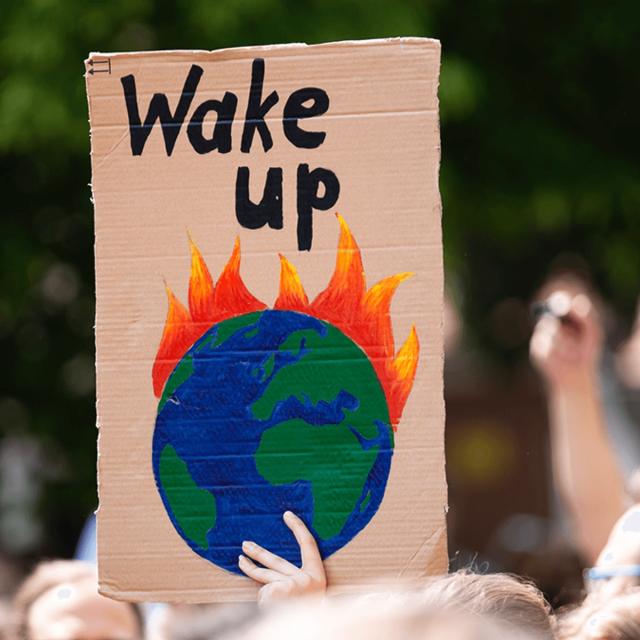
Find out how climate change will affect us, why we should care about it, and what solutions we can employ. Climate change is the biggest global challenge the human race has ever faced. Our insatiable demand for energy from fossil fuels is changing the atmosphere, and in turn changing our climate. Climate change is already affecting the physical surface of the earth, the environment that provides our life support, our food supply, economy and society.

These changes will accelerate over the next few decades
In this subject you will explore the impacts of climate change; why we should care about them, the science that underpins our understanding and how we can fix the problem before it’s too late.

What will you learn?

  • Why human activities are changing the climate
  • How our knowledge of science underpins what we know about the past, present and future climate
  • What our future might hold, and why we should care about it
  • Why an increase of 2 or 4°C in global average temperature is important
  • How the changing climate is affecting, and will continue to affect, the incidence and impacts of extreme weather events
  • The role of extreme events and the effect it has on our species, ecosystems, coastlines, food supply, health, infrastructure, economy and security
  • How climate change is likely to exacerbate existing problems of social inequality
  • How climate change will interact with other pressures on global systems such as ecosystem degradation and human population growth
  • Why fixing the climate problem is urgent, and how the timing of solutions is critical
  • The relative contributions that different emission reduction solutions have had on solving the climate problem
Note: This course is currently not available.
Related Courses

Sustainability Challenges for the Planet and Employers (Coursera) Coursera
Arizona State University

Sustainability Challenges for the Planet and Employers (Coursera)

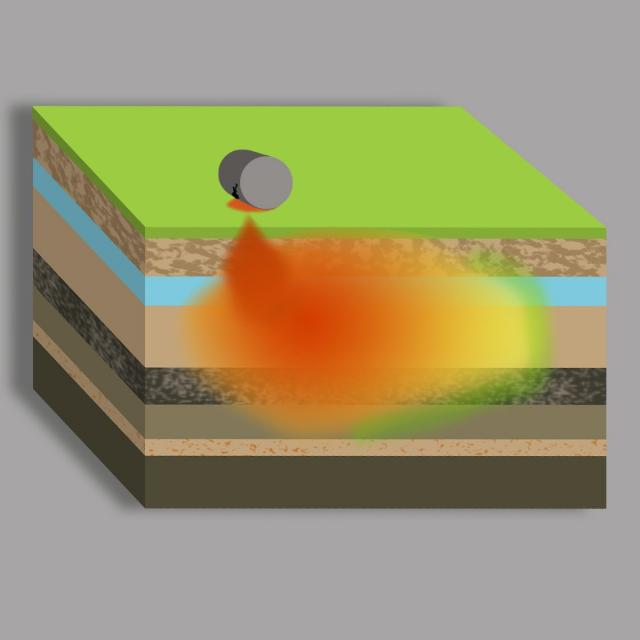
This course builds on the foundational knowledge gained in the first course in the series. Learners will continue to shape their understanding of global problems like climate change while developing their skills in using sustainability indicators, managing waste streams, addressing challenges, and providing green building recommendations.

Jun 29th 2026
5-12 Weeks
Population, Food, and Soil (Coursera) Coursera
Dartmouth College

Population, Food, and Soil (Coursera)

This course explores the population-environment relationship. In this course, you will learn about the human population and the ways in which changes in the population affect the environment. Agriculture, soils, and the environmental implications of eating meat, vegetables, local, organic, sustainable, industrial, and other types of food are discussed too.

Jun 29th 2026
4 Weeks
Planet Earth: Understanding and Protecting our Environment (FutureLearn) FutureLearn
University of Leeds

Planet Earth: Understanding and Protecting our Environment (FutureLearn)

Learn about the physical geography of Earth and discover how to use this knowledge to protect our natural environment. Discover the Earth’s natural systems and how human activity affects them. On this two-week course from the University of Leeds, you will discover the processes of the hydrosphere, the geosphere, and the biosphere and explore the impact of human activity and climate change on our planet.

Jun 29th 2026
2 Weeks
Food Science and Nutrition: From the Farm to You (FutureLearn) FutureLearn
University of Leeds

Food Science and Nutrition: From the Farm to You (FutureLearn)

Follow food’s fascinating journey from the farm to your body and explore new food technologies and nutrition around the world. Discover the science of food and understand the value of nutrition in our diets. On this course, you’ll learn how food science and nutrition helps us to understand and study the fascinating world of food.

Jun 29th 2026
2 Weeks
What is Climate Change? (Coursera) Coursera
University of Colorado Boulder

What is Climate Change? (Coursera)

In this course, learners will become familiar with the scientific evidence that demonstrates human-caused climate change. We will explore how greenhouse gases cause the Earth to warm, and why our recent warming is attributed to human activities. We will also discuss where our climate is headed, including anticipated future temperature, precipitation, and sea level. Learners will engage with the consequences of these changes on our ecosystems, infrastructure, and communities.

Jun 29th 2026
3 Weeks
Villes africaines: Environnement et enjeux de développement durable (Coursera) Coursera
École Polytechnique Fédérale de Lausanne

Villes africaines: Environnement et enjeux de développement durable (Coursera)

Le cours propose une lecture de l’environnement urbain en Afrique à travers les thématiques les plus pertinentes pour mesurer le niveau de développement d’un pays : eau et vie urbaine, assainissement (eaux usées et pluviales), gestion des déchets solides, agriculture urbaine. Après avoir analysé les différents enjeux de celles-ci, nous aborderons les liens entre environnement urbain et santé.

Jun 29th 2026
5-12 Weeks
Global Energy and Climate Policy (Coursera) Coursera
University of London,SOAS University of London

Global Energy and Climate Policy (Coursera)

The Global Energy and Climate Policy course offers an introduction to the theoretical and practical understanding of how energy and climate change policies are designed, shaped, advocated and implemented. As energy markets go truly global, domestic energy policies are becoming more and more entangled with wider issues of international governance. Concurrently, the urgent need to mitigate and adapt to climate change and transition to a low-carbon future is adding a further layer of complexity.

Jun 29th 2026
5-12 Weeks
An Introduction to the U.S. Food System: Perspectives from Public Health (Coursera) Coursera
Johns Hopkins University

An Introduction to the U.S. Food System: Perspectives from Public Health (Coursera)

A food system encompasses the activities, people and resources involved in getting food from field to plate. Along the way, it intersects with aspects of public health, equity and the environment. In this course, we will provide a brief introduction to the U.S. food system and how food production practices and what we choose to eat impacts the world in which we live. Through several case studies, we will discuss some key historical and political factors that have helped shape the current food system and consider alternative approaches from farm to fork.

Jun 22nd 2026
5-12 Weeks
The Effect of Fires on People, Property and the Environment (Coursera) Coursera
University of Maryland, College Park

The Effect of Fires on People, Property and the Environment (Coursera)

Fires impact people, property and the environment in all countries around the world. In some cases, the resulting losses are extraordinary, causing hundreds of deaths, widespread damage to property and contents and significant impacts on the environment. More often, fires may cause a single casualty or affect a single home, though the effects are still highly significant to those affected and collectively are substantial. This course will provide an overview of the challenges posed by fire as well as the fire safety solutions that are available to meet those challenges.

Jun 22nd 2026
5-12 Weeks
Global Warming I: The Science and Modeling of Climate Change (Coursera) Coursera
University of Chicago

Global Warming I: The Science and Modeling of Climate Change (Coursera)

This class describes the science of global warming and the forecast for humans’ impact on Earth’s climate. Intended for an audience without much scientific background but a healthy sense of curiosity, the class brings together insights and perspectives from physics, chemistry, biology, earth and atmospheric sciences, and even some economics—all based on a foundation of simple mathematics (algebra).

Jun 29th 2026
5-12 Weeks
The Finance of Climate Change (Coursera) Coursera
EDHEC Business School

The Finance of Climate Change (Coursera)

The urgent transition towards a low-carbon economy will profoundly change our economy. Households, companies and financial intermediaries have to be ready in order to avoid the downside risks and seize the opportunities created by climate change. The Finance of Climate Change MOOC will explain (i) how climate change and the policies aimed to mitigate it will impact the different businesses and (ii) the means and tools at the disposal of companies, banks and investors to be part of this transition.

Jun 29th 2026
4 Weeks
Global Arctic (Coursera) Coursera
École Polytechnique Fédérale de Lausanne

Global Arctic (Coursera)

The GlobalArctic MOOC introduces you the dynamics between global changes and changes in the Arctic. This course aims to highlight the effects of climate change in the Polar region. In turn, it will underline the impacts of a warmer Arctic on the planet Earth. For human civilization, the Arctic stands both as a laboratory and a warning for human kind.

Jul 3rd 2026
4 Weeks