EdX

Cellular Solids Part 2: Applications in Medicine (edX)

Offered by MIT, MITx,
Cellular Solids Part 2: Applications in Medicine (edX)

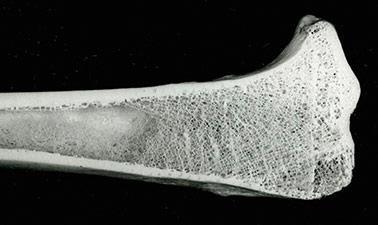
Learn how to apply foam models to trabecular bones and osteoporosis as well as to scaffolds for tissue engineering. In this engineering course, we will explore cellular solids in medicine, including trabecular bone mechanics, the increased risk of bone fracture due to trabecular bone loss in patients with osteoporosis, the development of metal foam coatings for orthopedic implants, applying foam models to tissue engineering scaffolds and the design of a porous scaffold for tissue engineering that mimics the body's own extracellular matrix.

Class Deals by MOOC List - Click here and see EdX's Active Discounts, Deals, and Promo Codes.

This course should be taken with 3.054.1x: Cellular Solids Part 1.

What you'll learn:

  • Application of the foam models to trabecular bone
  • Modeling of bone loss in osteoporosis
  • Application of foam models to tissue engineering scaffolds
  • Case study on the design of an osteochondral scaffold
  • The contractile behavior of biological cells on scaffolds
Go to Class
MOOC List is learner-supported. When you buy through links on our site, we may earn an affiliate commission.
Related Courses

Introducción al quirófano (edX) EdX
Universidad Anáhuac,AnahuacX

Introducción al quirófano (edX)

En este curso en línea se revisarán todos los procedimientos rutinarios que se llevan a cabo en el quirófano para poder integrarse con eficacia en el equipo que va a practicar una intervención quirúrgica. En este curso de medicina conocerás con detalle las técnicas y métodos que caracterizan a una correcta técnica quirúrgica y los aplica en la rutina del equipo quirúrgico durante la intervención para garantizar la seguridad del paciente y la efectividad de la técnica aséptica en un ambiente de ética y humanismo.

Feb 26th 2024
5-12 Weeks
Robot Mechanics and Control, Part II (edX) EdX
Seoul National University,SNUx

Robot Mechanics and Control, Part II (edX)

A mathematical introduction to the mechanics and control of robots. This course is Part II of a two-part mathematical introduction to the mechanics and control of robots that can be modeled as kinematic chains. Topics covered include the concept of a robot’s configuration space and degrees of freedom, static grasp analysis, the description of rigid body motions, kinematics of open and closed chains, and the basics of robot control.

No sessions available
4 Weeks
Introduction to Water and Climate (edX) EdX
Delft University of Technology,DelftX

Introduction to Water and Climate (edX)

Water is a crucial element in climate and for society. Find out about the latest engineering interventions for water management in rivers, coasts and the urban environment. Water is essential for life on Earth and of crucial importance for society. Water also plays a major role in affecting climate. Its natural cycle, from ocean to atmosphere by evaporation, then by precipitation back to land returning via rivers and aquifers to the oceans, has a decisive impact on regional and global climate patterns.

Self Paced
Self-Paced
Wave-Based NDT Methods (edX) EdX
Purdue University,PurdueX

Wave-Based NDT Methods (edX)

Learn how to use wave-based NDT techniques, ultrasonic testing, acoustic emission, etc, to inspect the structural integrity of civil engineering structures, including highways, bridges, dams, and buildings. Wave-based NDT methods allow for reliable and rapid evaluation of civil engineering infrastructure. These methods are particularly useful in long-range inspection; for example, in pipelines, where the wave-based NDT can provide data on hundreds of meters of piping in a matter of seconds.

Feb 14th 2022
5-12 Weeks
Energy-The Technology You Must Know in the 21st Century | 能源─21世紀你必須了解的科技! (edX) EdX
OECx

Energy-The Technology You Must Know in the 21st Century | 能源─21世紀你必須了解的科技! (edX)

A comprehensive introduction to existing and emerging energy technologies and their applications. (Taught in Mandarin). Energy technology is a highly multidisciplinary subject, which extends from engineering (e.g. mechanical, chemical, civil, environmental and electrical) to economy and ecology.

No sessions available
4 Weeks
Signals and Systems, Part 1 (edX) EdX
IIT Bombay,IITBombayX

Signals and Systems, Part 1 (edX)

This course provides the basic toolkit for any signal processing application - the abstraction of signals and systems, from the point of view of analysis and characterization. We encounter signals and systems extensively in our day-to-day lives, from making a phone call, listening to a song, editing photos, manipulating audio files, using speech recognition softwares like Siri and Google now, to taking EEGs, ECGs and X-Ray images.

No sessions available
5-12 Weeks
Interdisciplinary Management of Cardiopulmonary Health and Disease - Pulmonary Focus (edX) EdX
The Hong Kong Polytechnic University,HKPolyUx

Interdisciplinary Management of Cardiopulmonary Health and Disease - Pulmonary Focus (edX)

Learn how different healthcare professionals work together to give holistic management for patients with pulmonary diseases. Want to explore more about common pulmonary diseases and their management? Don't miss this FREE online course conducted by a team of dedicated healthcare professionals!

Aug 15th 2022
Self-Paced
Engineering the Space Shuttle (edX) EdX
MIT,MITx

Engineering the Space Shuttle (edX)

Learn all about the world’s first reusable spacecraft - the Space Shuttle - from the very people who designed, built, and operated it for 30 years. This course examines how the Space Shuttle was designed and how its design was influenced by economics and politics. The course goes into detail on many of the Shuttle’s subsystems (e.g. rocket engines, thermal protection, aerodynamics, environmental control and life support, communications, etc.) and explains how the Shuttle was operated (launch, mission control, payloads, etc.). The course also uses the Space Shuttle to present the fundamentals of Systems Engineering.

Feb 16th 2022
5-12 Weeks
Hypersonics - from Shock Waves to Scramjets (edX) EdX
University of Queensland,UQx

Hypersonics - from Shock Waves to Scramjets (edX)

Understand flight at speeds greater than Mach 5 and discover how to analyse the performance of a scramjet. A flow is called hypersonic if the Mach number is greater than 5. This means that the flow speed is more than five times the speed of sound. In air at room temperature, the speed of sound is around 340 m/s, so a Mach 5 flow would have a flow speed of 1.7 km/s or just over 6,000 km/h. When a rocket launches a satellite into earth orbit, when a probe enters the atmosphere of another planet or when an aircraft is propelled by a supersonic combustion ramjet engine (a scramjet), hypersonic flows are encountered.

Self Paced
Self-Paced