EdX

Cellular Solids 1: Structures, Properties and Engineering Applications (edX)

Offered by MIT, MITx,
Cellular Solids 1: Structures, Properties and Engineering Applications (edX)

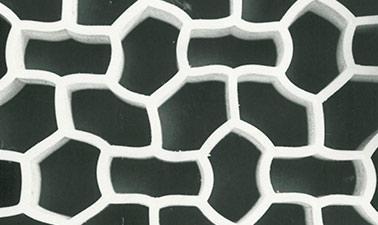
Learn how to model the mechanical properties of honeycombs and foams and to apply the models to material selection in engineering design. In this engineering course, we will explore the processing and structure of cellular solids as they are created from polymers, metals, ceramics, glasses and composites. We will derive models for the mechanical properties of honeycombs and foams, and we will discover how the unique properties of these materials can be exploited in applications such as lightweight structural panels, energy absorption devices, and thermal insulation.

Class Deals by MOOC List - Click here and see EdX's Active Discounts, Deals, and Promo Codes.

The Cellular Solids: Structures, Properties and Engineering Applications course provides a general understanding of cellular solids. Following this module, learners will be prepared to take one or both add-on modules to learn more about applications in medicine and to cellular materials in nature:

Taken together, these three modules provide similar content to the MIT subject 3.054: Cellular Solids: Structure, Properties, and Applications.

What you'll learn:

  • How cellular solids are made
  • How to characterize the microstructure of cellular solids
  • How to model the mechanical behavior of honeycombs and foams
  • Application of the models in devices for energy absorption and sandwich panels
Go to Class
MOOC List is learner-supported. When you buy through links on our site, we may earn an affiliate commission.

Related Courses

The Basics of Transport Phenomena (edX) EdX
Delft University of Technology,DelftX

The Basics of Transport Phenomena (edX)

Learn the basic framework to work on a broad spectrum of engineering problems concerning transfer of heat, mass and momentum. Learn through examples of everyday processes at home, in the lab and in industry. Have you ever wondered why ventilation helps to cool down your hot chocolate? Do you know why a surfing suit keeps you warm? Why iron feels cold, while wood feels warm at room temperature? Or how air is transferred into aqueous liquids in a water treatment plant? How can we sterilize milk with the least amount of energy? How does medicine spread in our tissue? Or how do we design a new cooling tower of a power plant? All these are phenomena that involve heat transfer, mass transfer or fluid flow.

Self Paced
Self-Paced
Forensic Engineering: Learning from Failures (edX) EdX
Delft University of Technology,DelftX

Forensic Engineering: Learning from Failures (edX)

Don’t let good failures go to waste! Identify the causes of failure and use this knowledge to enhance safety and improve performance. What do collapsed buildings, infected hospital patients, and crashed airplanes have in common? If you know the causes of these events and conditions, they can all be prevented. In this course, you will learn how to use the TU Delft mind-set to investigate the causes of such events so you can prevent them in the future.

Self Paced
Self-Paced
Energy Within Environmental Constraints (edX) EdX
HarvardX,Harvard University

Energy Within Environmental Constraints (edX)

A quantitative introduction to the energy system and its environmental impacts. Humanity faces an immense challenge: providing abundant energy to everyone without wrecking the planet. If we want a high-energy future while protecting the natural world for our children, we must consider the environmental consequences of energy production and use. But money matters too: energy solutions that ignore economic costs are not realistic, particularly in a world where billions of people currently can’t afford access to basic energy services. How can we proceed?

Self Paced
Self-Paced
Design of mound breakwaters for feasibility studies. Cubipod® Manual 2016 (edX) EdX
Universitat Politècnica de València,UPValenciaX

Design of mound breakwaters for feasibility studies. Cubipod® Manual 2016 (edX)

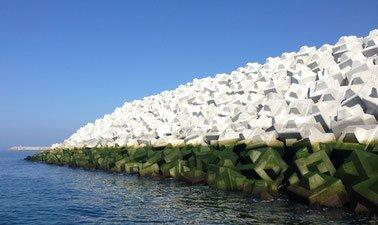
The goal of this course is to provide the tools to create feasible designs of mound breakwaters protected with Cubipod® armors fulfiling the prescribed economic, functional and safety requirements. This course is intended for professionals of coastal and port engineering who work in the preliminary design and feasibility studies of breakwaters.

Self Paced
Self-Paced
A System View of Communications: From Signals to Packets (Part 3) (edX) EdX
The Hong Kong University of Science and Technology - HKUST,HKUSTx

A System View of Communications: From Signals to Packets (Part 3) (edX)

Explore the tradeoffs in designing communication systems like mobile phones, and the engineering tools to handle them. Have you ever wondered how information is transmitted using your mobile phone or a WiFi hotspot? Gain an understanding of the basic engineering tools used and tradeoffs encountered in the design of these communication systems.

Self Paced
Self-Paced
Solar Energy: Photovoltaic (PV) Technologies (edX) EdX
Delft University of Technology,DelftX

Solar Energy: Photovoltaic (PV) Technologies (edX)

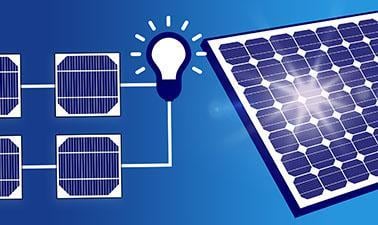
Explore the main PV technologies in the current market. Get in-depth knowledge on the design and processing methods of solar cells. The technologies used to produce solar cells and photovoltaic modules are advancing to deliver highly efficient and flexible solar panels. In this course you will explore the main PV technologies in the current market.

Self Paced
5-12 Weeks
Engineering Design for a Circular Economy (edX) EdX
Delft University of Technology,DelftX

Engineering Design for a Circular Economy (edX)

Discover and develop sustainable design and engineering methods to improve the reuse, repair, remanufacturing, and recycling of products for a circular economy. Products and equipment all around us are made of materials: look around you and you will see phones, computers, cars, and buildings. We face challenges in securing the supply of materials and the impact this has on the planet. Innovative product design can help us find solutions to these challenges. This course will explore new ways of designing products.

Self Paced
Self-Paced
Water and Wastewater Treatment Engineering: Biochemical Technology (edX) EdX
Tsinghua University,TsinghuaX

Water and Wastewater Treatment Engineering: Biochemical Technology (edX)

Learn the basic principles and characteristics of biochemical technology in water and wastewater treatment engineering. Biochemical technology in water and wastewater treatment engineering is essential in the field of water treatment. In this environmental studies course you will learn the basic principles and characteristics of biochemical technology.

Self Paced
Self-Paced
Introduction to Engineering Design (edX) EdX
MathWorks

Introduction to Engineering Design (edX)

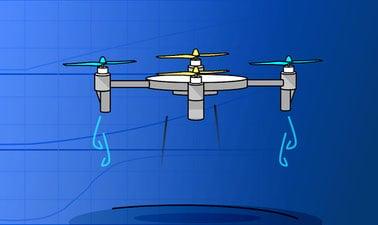
Gain a comprehensive overview of the engineering design workflow through the power of modeling and simulation. Welcome to Introduction to Engineering Design, the first course in the Engineering Design and Simulation Program. This course will give you a comprehensive overview of the engineering design workflow through the power of modeling and simulation, using the example of a quadcopter.

Self Paced
Self-Paced
Assembling and Testing a Quadcopter (edX) EdX
MathWorks

Assembling and Testing a Quadcopter (edX)

Learn the crucial skills of system-level integration, comprehensive testing, and collaboration to design and evaluate quadcopter systems effectively. Welcome to Integration and Testing of Quadcopter Systems, the final course in the Engineering Design and Simulation Program. This course is focused on integrating all the quadcopter subsystems into a cohesive system-level model and conducting thorough testing to ensure optimal performance.

Self Paced
Self-Paced