Big data and Language 2 (Coursera)

Big data and Language 2 (Coursera)

In this course, students will understand characteristics of language through big data. Students will learn how to collect and analyze big data, and find linguistic features from the data. A number of approaches to the linguistic analysis of written and spoken texts will be discussed.

Class Deals by MOOC List - Click here and see Coursera's Active Discounts, Deals, and Promo Codes.

Syllabus

WEEK 1
Scientific Approaches

WEEK 2
Analysis Tools I – BNC

WEEK 3
Analysis Tools II – COCA, ANTCONC & TagAnt

WEEK 4
Considerations of Big Data and Language

WEEK 5
Project
In the final projects, students are required to conduct their research on linguistics. The research topic can be chosen by students and the linguistic data should be collected according to. The material for this course can be helpful. Through the project, students can learn how to collect data, process data and analyze data for their purposes.

Go to Class
MOOC List is learner-supported. When you buy through links on our site, we may earn an affiliate commission.

Related Courses

Media ethics & governance (Coursera) Coursera
University of Amsterdam

Media ethics & governance (Coursera)

This course explores some of the basic theories, models and concepts in the field of media ethics. We will introduce influential ethical theories and perspectives, explore changing societal demands and expectations of media creation and media use, and we will elaborate on existing ethical norms for media professionals. After following this course, you will be able to reflect on ethical dilemmas and develop a well-substantiated argumentation for ethical decision making in a variety of media-related contexts.

Sep 21st 2026
4 Weeks
Big Data Science with the BD2K-LINCS Data Coordination and Integration Center (Coursera) Coursera
Icahn School of Medicine at Mount Sinai

Big Data Science with the BD2K-LINCS Data Coordination and Integration Center (Coursera)

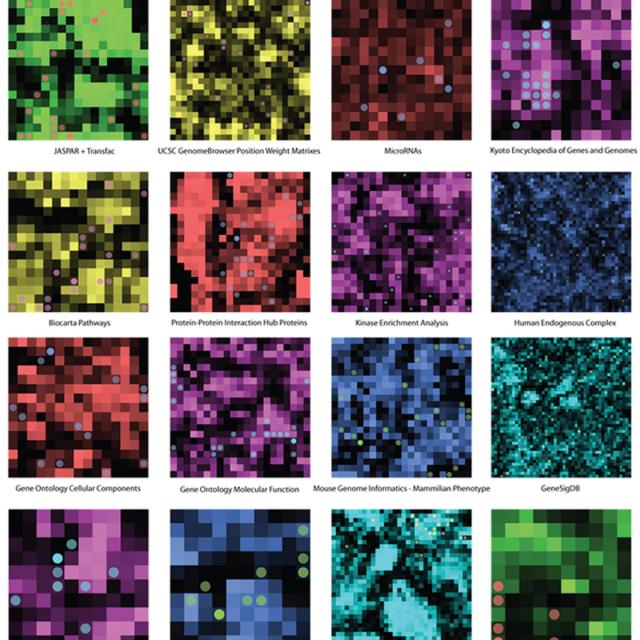
In this course we briefly introduce the DCIC and the various Centers that collect data for LINCS. We then cover metadata and how metadata is linked to ontologies. We then present data processing and normalization methods to clean and harmonize LINCS data. This follow discussions about how data is served as RESTful APIs. Most importantly, the course covers computational methods including: data clustering, gene-set enrichment analysis, interactive data visualization, and supervised learning. Finally, we introduce crowdsourcing/citizen-science projects where students can work together in teams to extract expression signatures from public databases and then query such collections of signatures against LINCS data for predicting small molecules as potential therapeutics.

Sep 21st 2026
5-12 Weeks
Introduction and Programming with IoT Boards (Coursera) Coursera
Pohang University of Science and Technology - POSTECH

Introduction and Programming with IoT Boards (Coursera)

Internet of Things (IoT) is an emerging area of information and communications technology (ICT) involving many disciplines of computer science and engineering including sensors/actuators, communications networking, server platforms, data analytics and smart applications. IoT is considered to be an essential part of the 4th Industrial Revolution along with AI and Big Data. This course will be very useful to senior undergraduate and graduate students as well as engineers who are working in the industry.

Sep 28th 2026
5-12 Weeks
Foundations of marketing analytics (Coursera) Coursera
ESSEC Business School

Foundations of marketing analytics (Coursera)

Who is this course for? This course is designed for students, business analysts, and data scientists who want to apply statistical knowledge and techniques to business contexts. For example, it may be suited to experienced statisticians, analysts, engineers who want to move more into a business role, in particular in marketing. You will find this course exciting and rewarding if you already have a background in statistics, can use R or another programming language and are familiar with databases and data analysis techniques such as regression, classification, and clustering. However, it contains a number of recitals and R Studio tutorials which will consolidate your competences, enable you to play more freely with data and explore new features and statistical functions in R.

Sep 21st 2026
5-12 Weeks
Big Data Integration and Processing (Coursera) Coursera
University of California, San Diego

Big Data Integration and Processing (Coursera)

At the end of the course, you will be able to: Retrieve data from example database and big data management systems; Describe the connections between data management operations and the big data processing patterns needed to utilize them in large-scale analytical applications; Identify when a big data problem needs data integration; Execute simple big data integration and processing on Hadoop and Spark platforms.

Sep 21st 2026
5-12 Weeks
Code Free Data Science (Coursera) Coursera
University of California, San Diego

Code Free Data Science (Coursera)

The Code Free Data Science class is designed for learners seeking to gain or expand their knowledge in the area of Data Science. Participants will receive the basic training in effective predictive analytic approaches accompanying the growing discipline of Data Science without any programming requirements. Machine Learning methods will be presented by utilizing the KNIME Analytics Platform to discover patterns and relationships in data.

Sep 28th 2026
4 Weeks
Graph Analytics for Big Data (Coursera) Coursera
University of California, San Diego

Graph Analytics for Big Data (Coursera)

Want to understand your data network structure and how it changes under different conditions? Curious to know how to identify closely interacting clusters within a graph? Have you heard of the fast-growing area of graph analytics and want to learn more? This course gives you a broad overview of the field of graph analytics so you can learn new ways to model, store, retrieve and analyze graph-structured data.

Sep 14th 2026
5-12 Weeks
Data Visualization in Excel (Coursera) Coursera
Macquarie University

Data Visualization in Excel (Coursera)

In an age now driven by "big data", we need to cut through the noise and present key information in a way that can be quickly consumed and acted upon making data visualization an increasingly important skill. Visualizations need to not only present data in an easy to understand and attractive way, but they must also provide context for the data, tell a story, achieving that fine balance between form and function. Excel has many rivals in this space, but it is still an excellent choice, particularly if it's where your data resides. It offers a wealth of tools for creating visualizations other than charts and the chart options available are constantly increasing and improving, so the newer versions now include waterfall charts, sunburst diagrams and even map charts. But what sets Excel apart is its flexibility, it gives us total creative control over our designs so if needed we could produce our own animated custom chart to tell the right story for our data.

Sep 21st 2026
5-12 Weeks
Machine Learning With Big Data (Coursera) Coursera
University of California, San Diego

Machine Learning With Big Data (Coursera)

Want to make sense of the volumes of data you have collected? Need to incorporate data-driven decisions into your process? This course provides an overview of machine learning techniques to explore, analyze, and leverage data. You will be introduced to tools and algorithms you can use to create machine learning models that learn from data, and to scale those models up to big data problems.

Sep 14th 2026
5-12 Weeks
Security and Privacy for Big Data - Part 1 (Coursera) Coursera
EIT Digital

Security and Privacy for Big Data - Part 1 (Coursera)

This course sensitizes regarding security in Big Data environments. You will discover cryptographic principles, mechanisms to manage access controls in your Big Data system. By the end of the course, you will be ready to plan your next Big Data project successfully, ensuring that all security related issues are under control. You will look at decent-sized big data projects with security-skilled eyes, being able to recognize dangers. This will allow you to improve your systems to a grown and sustainable level.

Oct 5th 2026
1 Week