Basic First Aid (Fisrtaidforfree)

Basic First Aid (Fisrtaidforfree)

A basic free online first aid course covering lifesaving skills and knowledge.

Topics covered include:

  • Incident management
  • Infection control
  • The recovery position
  • Cardiopulmonary resuscitation (CPR)
  • Major bleeding & shock

Knowledge is tested via a quiz at the end of each section.
Suggested Readings:
First Aid Manual

Go to Class
MOOC List is learner-supported. When you buy through links on our site, we may earn an affiliate commission.

Related Courses

TECH MeD: Transdisciplinary Education for Critical Hacks of Medical Devices (Coursera) Coursera
University of Florida

TECH MeD: Transdisciplinary Education for Critical Hacks of Medical Devices (Coursera)

This course seeks to create an informed public, aware of the technical, medical, legal, and ethical issues associated with implantable medical devices. The course features conversations with experts from a variety of relevant fields to discuss the present and future technological, ethical, legal, and social challenges associated with implantable medical devices.

Oct 26th 2026
5-12 Weeks
Diagnosing Health Behaviors for Global Health Programs (Coursera) Coursera
Johns Hopkins University

Diagnosing Health Behaviors for Global Health Programs (Coursera)

Health behavior lies at the core of any successful public health intervention. While we will examine the behavior of individual in depth in this course, we also recognize by way of the Ecological Model that individual behavior is encouraged or constrained by the behavior of families, social groups, communities, organizations and policy makers. We recognize that behavior change is not a simplistic process but requires an understanding of dimensions like frequency, complexity and cultural congruity. Such behavioral analysis is strengthened through the use of a toolkit of theoretical models and practical frameworks.

Oct 26th 2026
4 Weeks
Soul Beliefs: Causes and Consequences - Unit 3: How Does It All End? (Coursera) Coursera
Rutgers University

Soul Beliefs: Causes and Consequences - Unit 3: How Does It All End? (Coursera)

Throughout history, the vast majority of people around the globe have believed they have, however defined, a “soul.” While the question of whether the soul exists cannot be answered by science, what we can study are the causes and consequences of various beliefs about the soul and its prospects of surviving the death of the body. Why are soul and afterlife beliefs so common in human history? Are there adaptive advantages to assuming souls exist?

Oct 26th 2026
5-12 Weeks
Severe to Profound Intellectual Disability: Circles of Care and Education (Coursera) Coursera
University of Cape Town

Severe to Profound Intellectual Disability: Circles of Care and Education (Coursera)

This course is about caring for and educating children (and youth) with severe to profound intellectual disability. We use the idea of 'circles' to position the child at the center of the many levels of support needed. Around the child are circles of care and education - such as the parents, family, friends, caregivers, educators, health care workers and others such as neighbors, business owners and community members.

Oct 26th 2026
4 Weeks
Genomics: Decoding the Universal Language of Life (Coursera) Coursera
University of Illinois at Urbana-Champaign

Genomics: Decoding the Universal Language of Life (Coursera)

What is a genome? A genome contains all of the information that a cell needs to develop, function, and reproduce itself, and all the information needed for those cells to come together to form a person, plant, or animal. Genomes contain an organism’s complete set of genes, and also the even tinier genetic structures that help regulate when and how those genes are used. The ability to regrow a torn ligament, the clues that might predict the onset of mental illness, the nutritional potential of crops, and even the history of life itself, are all encoded in genomes. By taking this course, you will discover how scientists are deciphering the language of genomes to learn how to develop sustainable food and fuel supplies, improve disease treatment and prevention, and protect our environment.

Oct 26th 2026
5-12 Weeks
Regulated Competition in Healthcare Systems: Theory & Practice (Coursera) Coursera
Erasmus University Rotterdam

Regulated Competition in Healthcare Systems: Theory & Practice (Coursera)

In this MOOC you will learn about the theory and practice of 'regulated competition' (also known as 'managed competition') in healthcare systems. Many countries have implemented or consider implementation of regulated competition in healthcare. Examples include Australia, Belgium, Chile, Colombia, Germany, Ireland, Israel, The Netherlands, Switzerland and the United States.

Oct 26th 2026
5-12 Weeks
Clinical Terminology for International and U.S. Students (Coursera) Coursera
University of Pittsburgh

Clinical Terminology for International and U.S. Students (Coursera)

Understanding the clinical terms and abbreviations commonly used in U.S. hospitals is challenging. Adaptation to clinical language can be difficult for U.S. students entering the clinical area and even more so for international students whose primary language is not English. This course is designed to help both groups of students understand the terms and abbreviations commonly encountered during the first three months of clinical work on a U.S. hospital unit.

Oct 26th 2026
5-12 Weeks
Water Supply and Sanitation Policy in Developing Countries Part 1: Understanding Complex Problems (Coursera) Coursera
University of Manchester

Water Supply and Sanitation Policy in Developing Countries Part 1: Understanding Complex Problems (Coursera)

Our course explores what can be done to solve the complex problem that half a billion people worldwide do not have improved water supplies and two billion do not have improved sanitation. We look forward to you joining us. We want to help you develop the skills you need to address this major global challenge of the 21st century.

Oct 26th 2026
5-12 Weeks
Anatomy of the Abdomen and Pelvis; a journey from basis to clinic. (Coursera) Coursera
Leiden University,Leiden University Medical Center

Anatomy of the Abdomen and Pelvis; a journey from basis to clinic. (Coursera)

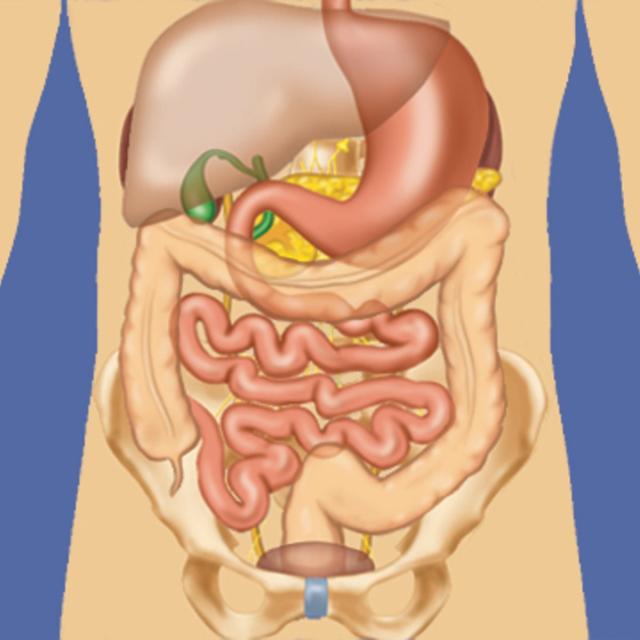
In this anatomy course you will explore the organs involved in our food digestion and discover the common causes of abdominal and pelvic pain. The latest graphics and animations will help you to find new insights and understanding of this part of the body, that has been the focus of anatomical research for centuries and presently arouses renewed scientific interest. You will explore the 3D anatomy of the organs from a basic level, providing thorough anatomical understanding, to its advanced application in surgical procedures.

Nov 2nd 2026
5-12 Weeks