Basic Circuit Theory B (UNINETTUNO)

Basic Circuit Theory B (UNINETTUNO)

It a classic basic engineering course, common to different engineering course degrees, and regards at basic level the electric circuits, with nods to the main engineering applications.

Despite this, it provides references to the main electromagnetic phenomena.

More info:http://www.uninettunouniversity.net/en/mooc-program.aspx?lf=en&courseid=3935&degree=164&planid=164&faculty=3

Go to Class
MOOC List is learner-supported. When you buy through links on our site, we may earn an affiliate commission.

Related Courses

L'Art des Structures 2 : treillis, poutres, dalles et cadres (Coursera) Coursera
École Polytechnique Fédérale de Lausanne

L'Art des Structures 2 : treillis, poutres, dalles et cadres (Coursera)

Les structures en treillis, en poutre, en dalles et en cadre sont essentielles pour une grande partie des constructions modernes : immeubles pour l'habitation ou de bureaux, halles et usines, ponts, ou passerelles, voies de transport de l'énergie ou des télécommunications, stades et grandes toitures. Le cours L'Art des Structures 2 vous propose d'en découvrir le fonctionnement et les bases de leur dimensionnement.

Nov 23rd 2026
5-12 Weeks
Quantitative Formal Modeling and Worst-Case Performance Analysis (Coursera) Coursera
EIT Digital

Quantitative Formal Modeling and Worst-Case Performance Analysis (Coursera)

Welcome to Quantitative Formal Modeling and Worst-Case Performance Analysis. In this course, you will learn about modeling and solving performance problems in a fashion popular in theoretical computer science, and generally train your abstract thinking skills. After finishing this course, you have learned to think about the behavior of systems in terms of token production and consumption, and you are able to formalize this thinking mathematically in terms of prefix orders and counting functions. You have learned about Petri-nets, about timing, and about scheduling of token consumption/production systems, and for the special class of Petri-nets known as single-rate dataflow graphs, you will know how to perform a worst-case analysis of basic performance metrics, like throughput, latency and buffering.

Nov 16th 2026
4 Weeks
Engineering of Structures: Tension and Compression (Coursera) Coursera
Dartmouth College

Engineering of Structures: Tension and Compression (Coursera)

This course deals with tension and compression. After going through this course, you will understand why tensegrity structures and sculptures are different from other structures. You will also explore tension and compression in different types of trusses. Additionally you will understand determinacy and realize how it applies to trusses.

Nov 9th 2026
3 Weeks
Microwave engineering and antennas (Coursera) Coursera
Eindhoven University of Technology

Microwave engineering and antennas (Coursera)

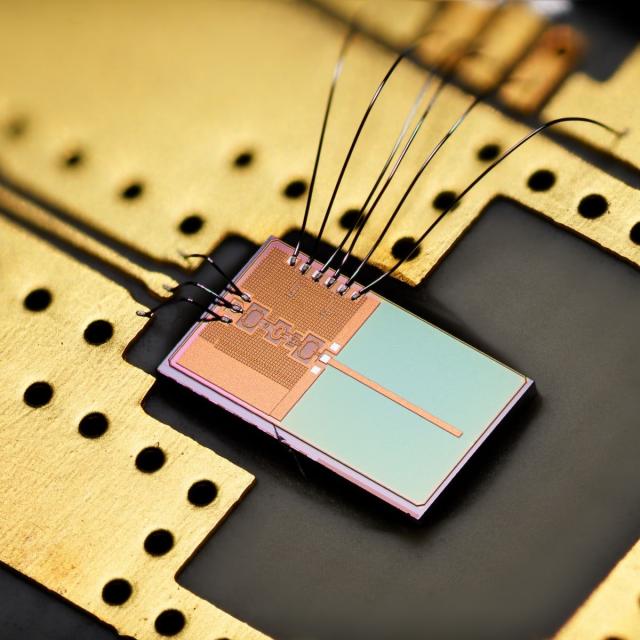
This unique Master-level course provides you with in-depth know-how of microwave engineering and antennas. The course combines both passive and active microwave circuits as well as antenna systems. Future applications, like millimeter-wave 5G/beyond-5G wireless communications or automotive radar, require experts that can co-design highly integrated antenna systems that include both antennas and microwave electronics. We will provide you with the required theoretical foundation as well as hands-on experience using state-of-the-art design tools. The web lectures are supported by many on-line quizzes in which you can practice the background theory.

Nov 23rd 2026
5-12 Weeks
Protecting the World: Introducing Corrosion Science and Engineering (Coursera) Coursera
University of Manchester

Protecting the World: Introducing Corrosion Science and Engineering (Coursera)

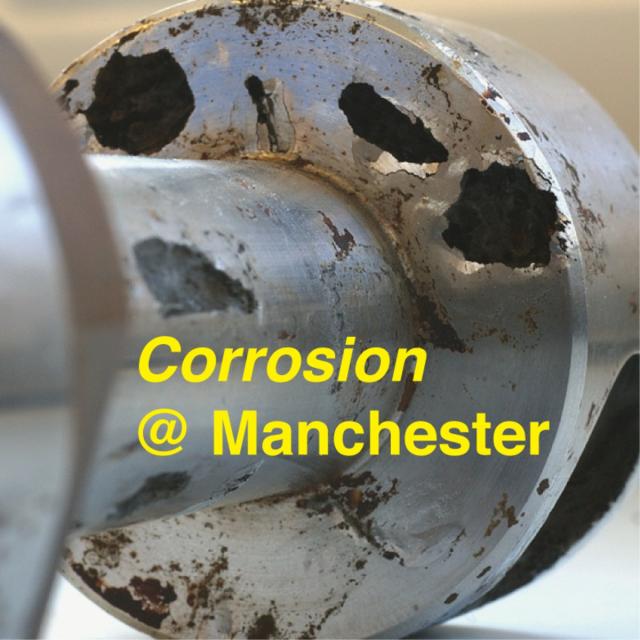
If you have ever encountered rusty car bodies, leaking pipes, tarnished silverware or the green patina of a copper roof then you have experienced corrosion in action. This course, from the Corrosion@Manchester team in collaboration with AkzoNobel, will teach you why metals corrode, what the environmental consequences are, how much corrosion costs and how corrosion can be controlled. It is designed for students, householders, teachers, professionals and anyone in-between.

Nov 16th 2026
4 Weeks
Thermodynamique : fondements (Coursera) Coursera
École Polytechnique Fédérale de Lausanne

Thermodynamique : fondements (Coursera)

Ce cours vous apportera une compréhension des concepts fondamentaux de la thermodynamique du point de vue de la physique, de la chimie et de l’ingénierie. Il est scindé un deux MOOCs. Dans la première partie, le Professeur J.-Ph. Ansermet de l’EPFL et son collaborateur le Dr. Sylvain Bréchet ont rassemblé en quatre leçons tous les principes fondamentaux de la thermodynamique. La deuxième partie du MOOC illustre l’approche thermodynamique par une série d’applications présentées par des spécialistes provenant de diverses institutions partenaires du réseau RESCIF.

Nov 9th 2026
4 Weeks
BIM Application for Engineers (Coursera) Coursera
National Taiwan University

BIM Application for Engineers (Coursera)

In order to effectively reach the goal of learning, students will get familiar with the model-building process. The second module of the course will be on how to use Autodesk Revit to build BIM models. We will use an example case and guide students to build a 6-story BIM model from the CAD drawings step by step.

Nov 16th 2026
5-12 Weeks
Sistemas Digitales: De las puertas lógicas al procesador (Coursera) Coursera
Universitat Autònoma de Barcelona

Sistemas Digitales: De las puertas lógicas al procesador (Coursera)

En este curso aprenderemos los fundamentos del diseño de los circuitos digitales actuales, siguiendo una orientación eminentemente práctica. A diferencia de otros cursos más "clásicos" de Circuitos Digitales, nuestro interés se centrará más en el Sistema que en la Electrónica que lo sustenta. Este enfoque nos permitirá sentar las bases del diseño de Sistemas Digitales complejos.

Nov 23rd 2026
5-12 Weeks
Introduction to Engineering Mechanics (Coursera) Coursera
Georgia Institute of Technology

Introduction to Engineering Mechanics (Coursera)

This course is an introduction to learning and applying the principles required to solve engineering mechanics problems. Concepts will be applied in this course from previous courses you have taken in basic math and physics. The course addresses the modeling and analysis of static equilibrium problems with an emphasis on real world engineering applications and problem solving.

Nov 16th 2026
5-12 Weeks