Armv8-M Architecture Fundamentals (Coursera)

Offered by Arm,
Armv8-M Architecture Fundamentals (Coursera)

The course includes fundamental architecture topics that are key to understanding how any Cortex-M processor functions internally. The course focuses specifically on the Armv8-M version of the Arm Architecture, which processors like the Cortex-M33 and Cortex-M55 are based on. However, even if you're working with older processors based on earlier versions of the architecture, like Armv6-M or Armv7-M, a lot of the information is mostly still very relevant and useful.

Class Deals by MOOC List - Click here and see Coursera's Active Discounts, Deals, and Promo Codes.

Course 2 of 4 in the Arm Cortex-M Architecture and Software Development Specialization.

What You Will Learn

  • Describe the programming model (register set, modes and states of the processor).
  • Describe standards and APIs that support the architecture.
  • Interpret and program in assembly language.
  • Target applications at the default system memory.

Syllabus

WEEK 1
Course Introduction
The course includes fundamental architecture topics that are key to understanding how any Cortex-M processor functions internally. The course focuses specifically on the Armv8-M version of the Arm Architecture, which processors like the Cortex-M33 and Cortex-M55 are based on. However, even if you're working with older processors based on earlier versions of the architecture, like Armv6-M or Armv7-M, a lot of the information is mostly still very relevant and useful.
Programmers' Model
This module is an essential foundation module for any Armv8-M Mainline implementation training course. It introduces the programmers model for the Armv8-M architecture.

WEEK 2
Assembly Programming
This module is an essential foundation module for any Armv8-M Mainline implementation course. It introduces the syntax and functionality of the assembly instructions used on all Armv8-M processors, which is crucial for configuration and debugging.

WEEK 3
Memory Model
This module is an essential foundation module for any Armv8-M Mainline implementation training course. It introduces the memory model for the Armv8-M architecture.

WEEK 4
Memory Protection
This is an optional module with the following learning objectives of describing the need for a Memory Protection Unit (MPU), understanding how the Armv8-M MPU differs to previous Armv7-M and Arm6-M MPUs, describing the different memory-mapped MPU registers, Configuring memory regions by programming the MPU registers, explaining how to optimise MPU programming.

WEEK 5
Exception Handling
This module is an essential foundation module for any Armv8-M Mainline implementation training course. It introduces the Exception Handling model for the Armv8-M architecture.

Go to Class
MOOC List is learner-supported. When you buy through links on our site, we may earn an affiliate commission.

Related Courses

C# for .NET Developers (Coursera) Coursera
Board Infinity

C# for .NET Developers (Coursera)

In this course you will be introduced to everything from the basics of programming concepts like variables, data types, and control structures, to more advanced topics like object-oriented programming, etc. By the end of the course, you'll have a solid understanding of C# programming, the .NET framework, and how to use them to build a variety of applications. You'll have the skills and knowledge you need to start your career as a C# developer or take your current skills to the next level.

Oct 5th 2026
3 Weeks
Introdução à Ciência da Computação com Python Parte 2 (Coursera) Coursera
Universidade de São Paulo, Brasil

Introdução à Ciência da Computação com Python Parte 2 (Coursera)

Bem vindo ao curso de Introdução à Ciência da Computação destinado aos alunos regulares da Universidade de São Paulo! Esta é a segunda parte do Curso, onde você vai continuar a aprender os principais conceitos introdutórios de Ciência da Computação e também aprenderá a desenvolver pequenos programas na linguagem Python.

Oct 5th 2026
5-12 Weeks
Embedded Systems Essentials with Arm: Get Practical with Hardware (edX) EdX
Arm Education,ArmEducationX

Embedded Systems Essentials with Arm: Get Practical with Hardware (edX)

Spark your creativity with Arm. Level up your Embedded Systems skills by developing working embedded prototypes using the Mbed API and an Arm-based development board, and unlock the boundless opportunities of the Internet of Things. Embedded systems are the fundamental building blocks of our connected world, and Arm-based devices are the industry standard. This course will provide you with the practical skills and confidence to build your own embedded system using the popular and affordable ST Nucleo F401RE development board.

Self Paced
Self-Paced
Embedded Systems Essentials with Arm: Getting Started (edX) EdX
Arm Education,ArmEducationX

Embedded Systems Essentials with Arm: Getting Started (edX)

Get practical without hardware. Quickly prototype and build microcontroller projects using industry-standard APIs. Embedded systems are everywhere – and Arm-based technologies are the industry standard. Getting started could not be easier. This course includes free access to an Mbed simulator so you can apply your new knowledge and skills to prototype and build real-world embedded applications quickly, without the trouble or expense of sourcing hardware.

Self Paced
Self-Paced
Programming Languages, Part A (Coursera) Coursera
University of Washington

Programming Languages, Part A (Coursera)

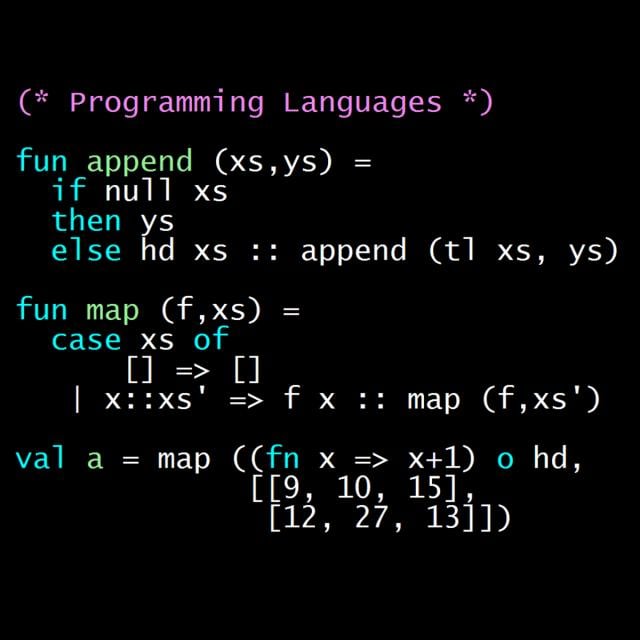
This course is an introduction to the basic concepts of programming languages, with a strong emphasis on functional programming. The course uses the languages ML, Racket, and Ruby as vehicles for teaching the concepts, but the real intent is to teach enough about how any language “fits together” to make you more effective programming in any language -- and in learning new ones.

Oct 5th 2026
5-12 Weeks
Programming Reactive Systems (Coursera) Coursera
École Polytechnique Fédérale de Lausanne

Programming Reactive Systems (Coursera)

Reactive programming is a set of techniques for implementing scalable, resilient and responsive systems. The basic building-block of such systems is event handlers. This course teaches how to implement reactive systems in Scala by using high-level abstractions based on event-handlers. You will learn how to: use, transform and sequence asynchronous computations using Future values; write concurrent systems based on Actors, using untyped Akka and Akka Typed; design systems resilient to failures; implement systems that can scale out according to a varying workload; transform and consume infinite and intermittent streams of data with Akka Stream; understand how back-pressure controls flows of data

Oct 5th 2026
5-12 Weeks
An Introduction to Interactive Programming in Python (Part 2) (Coursera) Coursera
Rice University

An Introduction to Interactive Programming in Python (Part 2) (Coursera)

This two-part course is designed to help students with very little or no computing background learn the basics of building simple interactive applications. Our language of choice, Python, is an easy-to learn, high-level computer language that is used in many of the computational courses offered on Coursera. To make learning Python easy, we have developed a new browser-based programming environment that makes developing interactive applications in Python simple.

Oct 5th 2026
4 Weeks
Getting Started with Puppet (Coursera) Coursera
Whizlabs

Getting Started with Puppet (Coursera)

The “Getting Started with Puppet” course is designed to help you gain knowledge of Puppet. You will learn Puppet overview with architecture and how to design, build PuppetDB, and also learn Puppet enterprise installation. Puppet is a software configuration management tool that includes its own declarative language to describe system configuration. It is a model-driven solution that requires limited programming knowledge to use. Puppet was created by Puppet Inc. founded by Luke Kanies in 2005.

Oct 5th 2026
3 Weeks
Programming Reactive Systems (Scala 2 version) (Coursera) Coursera
École Polytechnique Fédérale de Lausanne

Programming Reactive Systems (Scala 2 version) (Coursera)

Reactive programming is a set of techniques for implementing scalable, resilient and responsive systems as per the Reactive Manifesto. Such systems are based on asynchronous message-passing, and their basic building-blocks are event handlers. This course teaches how to implement reactive systems in Scala and Akka by using high-level abstractions, such as actors, asynchronous computations, and reactive streams.

Oct 5th 2026
5-12 Weeks
Advanced Armv8-M Features (Coursera) Coursera
Arm

Advanced Armv8-M Features (Coursera)

The final course covers more advanced and optional features that might be configured in a Cortex-M system. These features could help with particular project requirements such as security and performance. Not all of these topics might be relevant for any given Cortex-M project, so feel free to pick and choose which topics, if any, apply to you.

Sep 14th 2026
5-12 Weeks
Functional Programming Principles in Scala (Scala 2 version) (Coursera) Coursera
École Polytechnique Fédérale de Lausanne

Functional Programming Principles in Scala (Scala 2 version) (Coursera)

Functional programming is becoming increasingly widespread in industry. This trend is driven by the adoption of Scala as the main programming language for many applications. Scala fuses functional and object-oriented programming in a practical package. It interoperates seamlessly with both Java and Javascript. Scala is the implementation language of many important frameworks, including Apache Spark, Kafka, and Akka. It provides the core infrastructure for sites such as Twitter, Tumblr and also Coursera.

Oct 5th 2026
5-12 Weeks