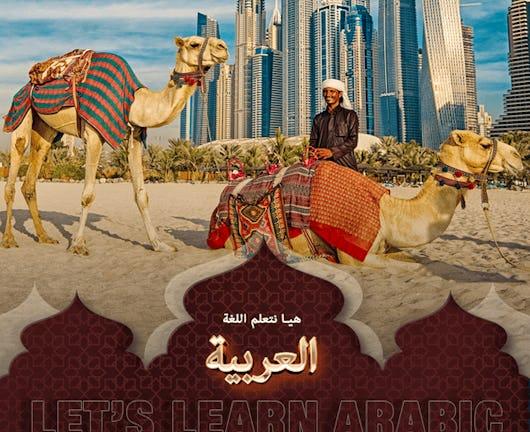
This course is the second of a three-course specialization in elementary Arabic. Communicating in Arabic Culture begins with specifically delving into terms related to education and school-related terminology. Speaking Arabic as a second language in a culturally and internationally diverse workspace can offer significant rewards.
Class Deals by MOOC List - Click here and see Coursera's Active Discounts, Deals, and Promo Codes.
Furthermore, proficiency in Arabic becomes exceptionally valuable when traveling to or working in Arabic-speaking countries, particularly in situations involving financial transactions. In our technology-driven world, where technology impacts nearly every facet of life, from transportation efficiency and safety to access to food, healthcare, socialization, and productivity, the internet's power has facilitated the formation of global communities for the easy sharing of ideas and resources, as exemplified by this course. Understanding the human body's various parts in the context of international sports and medicine is of paramount importance. This course, therefore, focuses on the multifaceted uses of body parts, both physical and emotional, as forms of expression in Arabic culture.
This course is part of the Arabic for Beginners Specialization.
What you'll learn
- Focus on enriching your vocabulary and cultural understanding.
- Describe the world around you, from 'Senses and Body Parts' to 'Time and Location.'
- Master the language of 'Daily Routines and Functions.'
Syllabus
Module 1: Real Life Vocabulary and Sentences
This module focuses on the everyday phrases of interpersonal communication both in personal and professional settings.
Module 2: Simple Sentences and Essential Vocabulary
This module will focus on how the basic restructuring and formulation of sentences in the Arabic language.
Module 3: Introduction to Arabic Culture
Learning a second language requires the learner to engage in and explore the cultural frameworks of language and those who speak it. This Module focuses on the cultural and traditional celebrations within the Arabic speaking world. The activities will also center around historical and contemporary landmarks within some Arabic countries.
Module 4: Preferences
Learning a second language requires the learner to engage in and explore the cultural frameworks of language and those who speak it. This Module focuses on the cultural and traditional celebrations within the Arabic speaking world. The activities will also center around historical and contemporary landmarks within some Arabic countries.