The amazing world of the ethnic groups of Yunnan Province (Coursera)

The amazing world of the ethnic groups of Yunnan Province (Coursera)

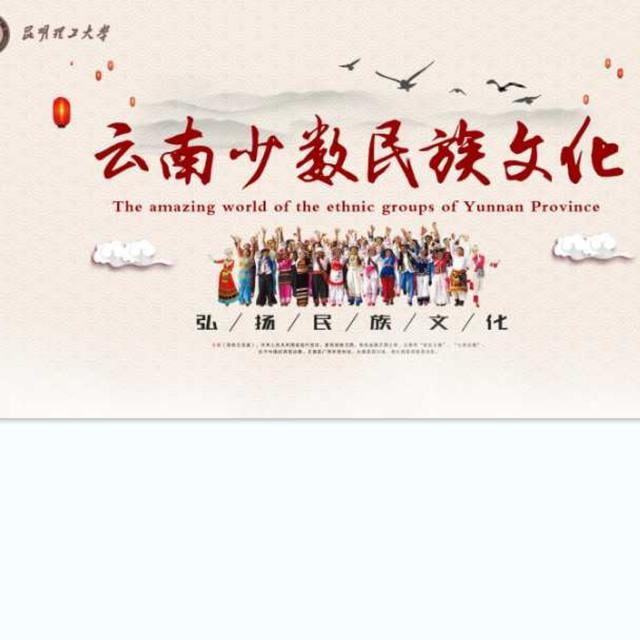
Yunnan, abbreviated as Yun and called Dian for short, is a multi-ethnic province which has historically been situated in the southwest frontier of China. Over time, the ethnic minorities evolved into splendid cultures, each with their own unique social life, religious beliefs and customs. The course is taught in English and provides an introduction to 25 ethnic minorities in Yunnan Province, namely the Yi, Bai, Hani, Dai, Zhuang, Miao, Hui, Lisu, Lahu, Wa, Naxi, Yao, Jingpo, Tibetan, Bulang, Buyi, Achang, Pumi, Mongolian, Nu, Jinuo, De'ang, Shui, Man and Dulong nationalities.

Class Deals by MOOC List - Click here and see Coursera's Active Discounts, Deals, and Promo Codes.

By participating in this course, you will gain fascinating insights into the culture of each ethnic group as we look in turn together at their geographical location, population distribution, language, costumes and diet, festivals and holidays, religious beliefs, literature and art, etc. This course aims to improve your English and bring these amazing people groups in Yunnan Province to life. we are sure you will thoroughly enjoy this course.

Syllabus

WEEK 1
unit 1 Ethnic groups in the upper reaches of Nujiang River
In Unit One, you are going to learn the cultural aspects such as the geographical location, population distribution, language, costumes and diet, festivals and holidays, religious beliefs, literature and art of three ethnic groups in the upper reaches of Nujiang River: Nu Nationality, Dulong Nationality and Lisu Nationality. At the end of the unit, there will be a test and two questions for discussion.

WEEK 2
Ethnic groups in the lower reaches of Nujiang River
In Unit Two, you are going to learn the cultural aspects such as the geographical location, population distribution, language, costumes and diet, festivals and holidays, religious beliefs, literature and art of three ethnic groups in the lower reaches of Nujiang River: Deang Nationality, Jingpo Nationality and Achang Nationality. At the end of the unit, there will be a test and two questions for discussion.

WEEK 3
Ethnic groups in the region of Three Parallel Rivers
In Unit Three, you are going to learn the cultural aspects such as the geographical location, population distribution, language, costumes and diet, festivals and holidays, religious beliefs, literature and art of three ethnic groups in the region of Three Parallel Rivers: Tibetan Nationality, Naxi Nationality and Pumi Nationality. At the end of the unit, there will be a test and two questions for discussion.

WEEK 4
Ethnic groups in Lancang River Basin (I)
In Unit Four, you are going to learn the cultural aspects such as the geographical location, population distribution, language, costumes and diet, festivals and holidays, religious beliefs, literature and art of three ethnic groups in Lancang River Basin: Dai Nationality, Hani Nationality and Lahu Nationality. At the end of the unit, there will be a test and two questions for discussion.

WEEK 5
Ethnic groups in Lancang River Basin (II)
In Unit Five, you are going to learn the cultural aspects such as the geographical location, population distribution, language, costumes and diet, festivals and holidays, religious beliefs, literature and art of another three ethnic groups in Lancang River Basin: Bulang Nationality, Jinuo Nationality and Wa Nationality. At the end of the unit, there will be a test and two questions for discussion.

WEEK 6
Ethnic groups in central and eastern Yunnan(I)
In Unit Six, you are going to learn the cultural aspects such as the geographical location, population distribution, language, costumes and diet, festivals and holidays, religious beliefs, literature and art of three ethnic groups in central and eastern Yunnan Province: Bai Nationality, Yi Nationality and Mongol Nationality. At the end of the unit, there will be a test and two questions for discussion.

WEEK 7
Ethnic groups in central and eastern Yunnan(II)
In Unit Seven, you are going to learn the cultural aspects such as the geographical location, population distribution, language, costumes and diet, festivals and holidays, religious beliefs, literature and art of another three ethnic groups in central and eastern Yunnan Province: Man Nationality, Hui Nationality and Zhuang Nationality. At the end of the unit, there will be a test and two questions for discussion.

WEEK 8
Ethnic groups in central and eastern Yunnan(III)
In Unit Eight, you are going to learn the cultural aspects such as the geographical location, population distribution, language, costumes and diet, festivals and holidays, religious beliefs, literature and art of the last four ethnic groups in central and eastern Yunnan Province: Miao Nationality, Yao Nationality, Buyi Nationality and Shui Nationality. At the end of the unit, there will be a test and two questions for discussion

Go to Class
MOOC List is learner-supported. When you buy through links on our site, we may earn an affiliate commission.

Related Courses

Chinese for Beginners (Coursera) Coursera
Peking University

Chinese for Beginners (Coursera)

Nowadays, there is an increasing number of people who are interested in Chinese culture and language. And it is useful to know about the language when coming to China for travel or business. This is an ABC Chinese course for beginners, including introduction of phonetics and daily expressions. After taking this class, learners can have a basic understanding of Chinese Mandarin and make basic conversations of daily living such as exchanging personal information, talking about daily arrangements and food, asking about price, introducing the city and the weather, telling your hobbies etc.

Jul 29th 2026
5-12 Weeks
Creating Modern China: The Republican Period to the Present (edX) EdX
HarvardX,Harvard University

Creating Modern China: The Republican Period to the Present (edX)

Explore the birth of modern China with a focus on the time between the fall of the Qing and the end of World War II. What does it mean to be modern? What constitutes modern politics, modern institutions, a modern military, and modern infrastructure? In this period of great excitement and experimentation, the country is asking itself: How do you become modern and remain true to the Chinese national identity?

Self Paced
Self-Paced
Literati China: Examinations, Neo-Confucianism, and Later Imperial China (edX) EdX
HarvardX,Harvard University

Literati China: Examinations, Neo-Confucianism, and Later Imperial China (edX)

Explore China’s imperial period, with a focus on the Song dynasty and the role of the exam system in government. Fundamental changes in government, the economy, and broader society took place between the 8th and 11th centuries in China. The state aristocracy gave way to new literati elite: educated men who sought to enter government through competitive examinations. A new kind of Confucianism also took shape, which prized the moral autonomy of individuals. With this, the later imperial period of China’s history begins.

Self Paced
Self-Paced
Business Opportunities and Risks in a Globalized Economy (Coursera) Coursera
IE Business School

Business Opportunities and Risks in a Globalized Economy (Coursera)

This is the last of the three courses part of the Globalization, Economic Growth and Stability Specialization.¨Business Opportunities and Risks in a Globalized World¨ is the the 3rd and final course of the ¨Globalization, Economic Growth and Stability¨ Specialization taught by IE Business School's Professor Gayle Allard. This course is designed to help an investor, businessperson or economist approach macroeconomic, institutional and international data and derive information from the indicators that point to the types of opportunities and risks that they present.

Aug 3rd 2026
5-12 Weeks
China Strategy (Coursera) Coursera
The Chinese University of Hong Kong

China Strategy (Coursera)

This course is designed to help you, as a strategist of a foreign company, better understand how to develop your China strategy. Specifically, after studying China’s changing strategic landscape, you will focus on mastering three strategic issues: who – the major players in China, how – the entry modes, and where – the location strategy for your China business. This course is aimed to deliver updated knowledge and real experiences of developing China strategy.

Aug 3rd 2026
4 Weeks
中國人文經典導讀 (Coursera) Coursera
The Chinese University of Hong Kong

中國人文經典導讀 (Coursera)

本課程對象為對中國文化有興趣的同學。 課程目的為通過四個不同特色的主題,討論中國文化的四個主要面向。每個主題選取兩篇經典文本作為核心閱讀,並與延伸閱讀做互文探討,以新角度解讀經典文本的意義,展現中國文化的複雜性、多元性。文本難度與大學一年級國文程度相當。

Jul 27th 2026
5-12 Weeks
Doing Business in China Capstone (Coursera) Coursera
The Chinese University of Hong Kong

Doing Business in China Capstone (Coursera)

Doing Business in China Capstone enables you to apply your skills to real business challenges. You’ll use your newly earned business skills to identify, explore and evaluate a real opportunity involving products. In this capstone, you are the business consultant working for a well-established “HON / wellness” company. The CEO has given you a task. You have to bring a new overseas product into China.

Aug 3rd 2026
4 Weeks
Chinese Culture and Contemporary China (Coursera) Coursera
Nanjing University

Chinese Culture and Contemporary China (Coursera)

This course of Chinese Culture and Contemporary China will explore the foundations of Chinese civilization and the dimensions of Chinese culture. It will pay particular attention to the relationship between Chinese culture and the present-day life of the Chinese people and to the different elements of the culture which are under the present social structures, belief systems, literature, arts, customs, etc. The course aims at providing students with a deeper knowledge of Chinese culture, thus enabling them to better understand China.

Jul 27th 2026
5-12 Weeks
China’s Economic Transformation Part 1: Economic Reform and Growth in China (Coursera) Coursera
The Hong Kong University of Science and Technology - HKUST

China’s Economic Transformation Part 1: Economic Reform and Growth in China (Coursera)

In 1978, after nearly 30 years of socialist planning under Mao Zedong, China was one of the world’s poorest countries, saddled with an inefficient, inward-looking economy. Today, China is an upper-middle income country and the world’s largest trading nation, contributing more to global economic growth than any other nation. How could such a remarkable transformation take place? This course will examine in detail the reforms that have contributed to China’s economic development and the current challenges facing the Chinese economy.

Jul 27th 2026
5-12 Weeks
Religions and Society in China (Coursera) Coursera
Higher School of Economics - HSE University

Religions and Society in China (Coursera)

This course provides an introduction to the study of the history, major teachings, and practices of the major Chinese religions and spiritual practices and is deigned to give conceptual tools to appreciate diverse religious practice in East. It covers the development of Buddhism, Daoism, Confucianism and wide range of popular and local religions.

Jul 25th 2022
5-12 Weeks