Anthropometry, Biomechanics, and Motor Skills in User Design (Coursera)

Anthropometry, Biomechanics, and Motor Skills in User Design (Coursera)

Course 5 examines the role of anthropometrics, biomechanics and motor skills in human performance as well as key factors that influence how humans produce and sense motion, and how these can be applied to training and testing performance.

Class Deals by MOOC List - Click here and see Coursera's Active Discounts, Deals, and Promo Codes.

This course is part of the Human Factors & Usability Engineering: Designing for Humans Specialization.

What you'll learn
You will be introduced to types of controls, be able to understand and identify key factors that influence how humans produce & sense motion.

Syllabus

Course Introduction
This course explores anthropometry, biomechanics, and motor skills. You will learn about measuring human body dimensions and characteristics, known as anthropometrics, and how these measurements are used in design. The course covers factors influencing motion production and perception, including open- and closed-loop control and stimulus-response compatibility. You will also explore the applications of motion-tracking technologies in training and testing human performance.

Module 1: Anthropometry & Ergonomics
Module 1 explores anthropometry and ergonomics, covering the measurement of human body dimensions and the importance of anthropometric data in fields like product design and workspace layout. The module also focuses on ergonomics, the science of designing products and environments to fit human capabilities and enhance safety and efficiency. You will learn about the principles and goals of ergonomics, as well as ergonomic design considerations for creating user-centered products and workspaces.

Module 2: Ergonomics Research 1 - Office Design and Exercise
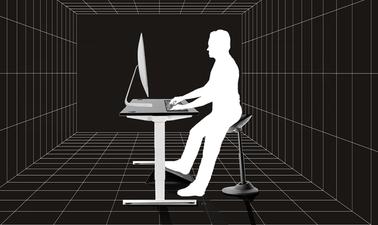
In Module 2, we dive into the realm of ergonomics research, exploring various applications in different settings. We begin with Lesson 1, focusing on office design and exercise, aiming to create the perfect ergonomic workspace. Moving on to Lesson 2, we shift our attention to factories and industrial settings. In Lesson 3, we turn our focus to the healthcare sector.

Module 3: Intro to Biomechanics
In this module, we explore the field of biomechanics, which focuses on studying the mechanics and movement of the human body. We will cover various aspects of biomechanics, including its definition, applications in different domains, and methods for analyzing human movement. By the end of this module, you will have a solid understanding of biomechanics principles and how they are used to study and analyze human motion.

Module 4: Biomechanics Applications
Module 4 focuses on the practical applications of biomechanics in various fields. It explores how biomechanics can be utilized to optimize performance, prevent injuries, and enhance movement in sports, rehabilitation, ergonomics, and other contexts.

Go to Class
MOOC List is learner-supported. When you buy through links on our site, we may earn an affiliate commission.

Related Courses

L'Art des Structures 2 : treillis, poutres, dalles et cadres (Coursera) Coursera
École Polytechnique Fédérale de Lausanne

L'Art des Structures 2 : treillis, poutres, dalles et cadres (Coursera)

Les structures en treillis, en poutre, en dalles et en cadre sont essentielles pour une grande partie des constructions modernes : immeubles pour l'habitation ou de bureaux, halles et usines, ponts, ou passerelles, voies de transport de l'énergie ou des télécommunications, stades et grandes toitures. Le cours L'Art des Structures 2 vous propose d'en découvrir le fonctionnement et les bases de leur dimensionnement.

Aug 31st 2026
5-12 Weeks
Re-Imagine Work: Strategies During COVID-19 and Beyond (edX) EdX
The University of British Columbia,UBCx

Re-Imagine Work: Strategies During COVID-19 and Beyond (edX)

Improve and reinvent working at a distance during COVID-19 and beyond! Learn from strategic design experts, and build your at-home toolkit by applying human-centered design techniques. As a result of COVID-19, millions of us are adapting to working from home, may have lost our jobs, or are looking for ways to reinvent our work to meet social distancing requirements.

Self Paced
Self-Paced
Math in Sports (edX) EdX
University of Notre Dame,NotreDameX

Math in Sports (edX)

In this course you will learn to use some mathematical tools that can help predict and analyze sporting performances and outcomes. This course will help coaches, players, and enthusiasts to make educated decisions about strategy, training, and execution. We will discuss topics such as the myth of the Hot Hand and the curse of the Sports Illustrated cover; how understanding data can improve athletic performance; and how best to pick your Fantasy Football team.

No sessions available
4 Weeks
Build Better Products with a Human-Centered Product Backlog (openSAP) OpenSAP
SAP

Build Better Products with a Human-Centered Product Backlog (openSAP)

Join this free online course to learn how to build better products by balancing human needs, business values, and technical feasibilities with a human-centered product backlog. The world is becoming more complex and digital transformation is radically changing people’s lives. This in turn leads to rising expectations for products and services that are expected to help users get their job done – both at work and in their private lives. Hence, product organizations have to change the way they build products.

Jun 21st 2022
4 Weeks
Global Postharvest Loss Prevention: Fundamentals, Technologies, and Actors (Coursera) Coursera
University of Illinois at Urbana-Champaign

Global Postharvest Loss Prevention: Fundamentals, Technologies, and Actors (Coursera)

This course provides an overview of the issue of postharvest loss of grains by exploring essential physical, technical, and social dimensions of postharvest supply chains and loss prevention methods globally. Each year, estimates suggest that 1/3 of all food produced is lost or wasted, making postharvest loss a critical global food security and sustainability issue of today. Key knowledge areas are presented including: an overview of postharvest loss; supply chain activities such as harvesting, drying, and storage; economics and markets; an introduction to the network of actors working in this field.

Aug 24th 2026
4 Weeks
MRI Fundamentals (Coursera) Coursera
Korea Advanced Institute of Science and Technology - KAIST

MRI Fundamentals (Coursera)

Welcome! In this course learners will develop expertise in basic magnetic resonance imaging (MRI) physics and principles and gain knowledge of many different data acquisition strategies in MRI. In particular, learners will get to know what is magnetic resonance phenomenon, how magnetic resonance signals are generated, how an image can be formulated using MRI, how soft tissue contrast can change with imaging parameters.

Aug 24th 2026
5-12 Weeks