EdX

The Ancient Greek Hero (edX)

The Ancient Greek Hero (edX)

Discover the literature and heroes of ancient Greece through the Homeric Iliad and Odyssey, the tragedies of Sophocles, the dialogues of Plato, and more. Explore what it means to be human today by studying what it meant to be a hero in ancient Greek times.

Class Deals by MOOC List - Click here and see EdX's Active Discounts, Deals, and Promo Codes.

In this introduction to ancient Greek culture and literature, learners will experience, in English translation, some of the most beautiful works of ancient Greek literature and song-making spanning over a thousand years from the eighth century BCE through the third century CE: the Homeric Iliad and Odyssey; tragedies of Aeschylus, Sophocles, and Euripides; songs of Sappho and Pindar; dialogues of Plato, and On Heroes by Philostratus. All of the resources are free and designed to be equally accessible and transformative for a wide audience.

You will gain access to a supportive learning community led by Professor Gregory Nagy and his Board of Readers, who model techniques for “reading out” of ancient texts. This approach allows readers with little or even no experience in the subject matter to begin seeing this literature as an exquisite, perfected system of communication.
No previous knowledge of Greek history, literature, or language is required. This is a project for students of any age, culture, and geographic location, and its profoundly humanistic message can be easily received without previous acquaintance with Western Classical literature.

What you'll learn:

  • To read “out of,” rather than “into,” a literary text, which is the art of close reading
  • The definition of a “hero” in the Classical Greek sense, contrasted with modern concepts of heroism
  • The relationship between epic and lyric in the ancient Greek tradition
  • To explore the interaction of text and image in the ancient Greek tradition
  • About hero cult and the role of heroes as objects of worship in ancient Greece
  • About the connection between myth and ritual in ancient Greece
  • The concept of the hero as conveyed in dramatic performance and as activated through Socratic dialogue
Go to Class
MOOC List is learner-supported. When you buy through links on our site, we may earn an affiliate commission.

Related Courses

Global Shakespeares: Re-Creating the Merchant of Venice (edX) EdX
MIT,MITx

Global Shakespeares: Re-Creating the Merchant of Venice (edX)

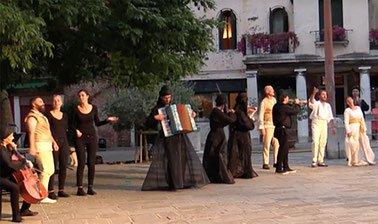
Learn how performance of William Shakespeare’s The Merchant of Venice provides occasions for creative, thoughtful communication across personal, historical, and cultural boundaries on topics including language and theatricality, gender relations, and religious prejudice. William Shakespeare is the most performed playwright on the globe; this course brings his play The Merchant of Venice into the 21st century by comparing multiple recent performances, from film and television stagings to an international production that marked the first performance of the play in the former Jewish Ghetto of Venice, Italy.

Self Paced
Self-Paced
Shakespeare on the Page and in Performance: Tragic Love (edX) EdX
Wellesley College

Shakespeare on the Page and in Performance: Tragic Love (edX)

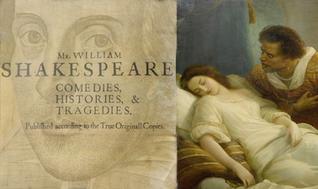
Explore Shakespeare's mature plays of tragic love, Othello and King Lear, and learn what makes them so powerful and enduring. This literature and theater course will study two of the most sublime and gut-wrenching plays in the English language: Othello and King Lear. We will try to understand the reasons for their centrality to literary history as well as their continuing power to mesmerize audiences in theatres and cinemas across the world.

No sessions available
4 Weeks
Greek and Roman Mythology (Coursera) Coursera
University of Pennsylvania

Greek and Roman Mythology (Coursera)

Myths are traditional stories that have endured over a long time. Some of them have to do with events of great importance, such as the founding of a nation. Others tell the stories of great heroes and heroines and their exploits and courage in the face of adversity. Still others are simple tales about otherwise unremarkable people who get into trouble or do some great deed. What are we to make of all these tales, and why do people seem to like to hear them? This course will focus on the myths of ancient Greece and Rome, as a way of exploring the nature of myth and the function it plays for individuals, societies, and nations. We will also pay some attention to the way the Greeks and Romans themselves understood their own myths.

Aug 24th 2026
5-12 Weeks
Ancient Philosophy: Aristotle and His Successors (Coursera) Coursera
University of Pennsylvania

Ancient Philosophy: Aristotle and His Successors (Coursera)

What is philosophy? How does it differ from science, religion, and other modes of human discourse? This course traces the origins of philosophy in the Western tradition in the thinkers of Ancient Greece. We begin with the Presocratic natural philosophers who were active in Ionia in the 6th century BCE and are also credited with being the first scientists. Thales, Anaximander, and Anaximines made bold proposals about the ultimate constituents of reality, while Heraclitus insisted that there is an underlying order to the changing world.

Aug 24th 2026
5-12 Weeks
Uncovering the Voices of Japanese Literature (edX) EdX
Waseda University,WasedaX

Uncovering the Voices of Japanese Literature (edX)

This course explores issues of agency in premodern and modern Japan. Discover many facets of the Japanese literary, theatrical, and intellectual traditions which, although important, are rarely taught around the world. This course will provide you with an introduction and a basis for further study in Japanese history, culture, literature, arts, and other areas which you may intend to explore in the future.

Self Paced
Self-Paced
A Global History of Architecture (edX) EdX
MIT,MITx

A Global History of Architecture (edX)

Learn about humanity’s rich architectural history on this journey around the globe – from 100,000 BCE to ca. 1,600 CE. How do we understand architecture? One way of answering this question is by looking through the lens of history, beginning with First Societies and extending to the 16th century. This course in architectural history is not intended as a linear narrative, but rather aims to provide a more global view, by focusing on different architectural "moments."

Oct 18th 2023
5-12 Weeks
Ancient Masterpieces of World Literature (edX) EdX
HarvardX,Harvard University

Ancient Masterpieces of World Literature (edX)

Examine how cultures of the ancient world defined themselves through literature and how their vision of literature contributes to our understanding of civilization, culture, and literature today. This short literature course, based on the first half of the Masterpieces of World Literature edX MOOC, examines how civilizations and cultures of the ancient world defined themselves through literature and how that literature has continued to contribute to our understanding of those civilizations and cultures today.

Self Paced
Self-Paced
Modern Masterpieces of World Literature (edX) EdX
HarvardX,Harvard University

Modern Masterpieces of World Literature (edX)

Examine how great modern writers capture the intricacies of our globalized world and how their works circulate within that world to find their own audiences. Based on the second half of the Masterpieces of World Literature edX MOOC, this short literature course examines how writers reach beyond national and linguistic boundaries as worldly readers and travelers, and how their modern fictions rise to the status of world literature.

Self Paced
Self-Paced
Book Sleuthing: The Nineteenth Century (edX) EdX
Harvard University

Book Sleuthing: The Nineteenth Century (edX)

Go behind the scenes at Harvard’s libraries to discover how readers in the first information age interacted with their books. Do you love printed paper and wonder how much longer it will survive in the age of ebooks? Are you curious about how the mass-produced modern book emerged in the first place? Come behind the scenes in Harvard’s libraries to explore the look, feel and even smell of nineteenth-century British and American books in this module of The Book: Histories Across Time and Space.

No sessions available
3 Weeks