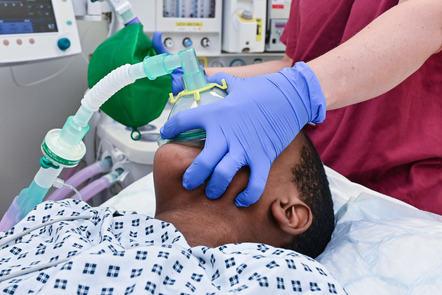
Airway Matters (FutureLearn)

Airway Matters (FutureLearn)

Explore key concepts underlying safe, multidisciplinary airway management. Develop safe airway management strategies for your patients. The safe management of a patient’s airway is one of the most challenging and complex tasks undertaken by a health professional - complications can result in devastating outcomes.

Class Deals by MOOC List - Click here and see FutureLearn's Active Discounts, Deals, and Promo Codes.

In this 5-week course, you’ll learn how to improve safety, prevent complications, and be prepared to manage difficulties in airway management.
Understand airway assessment and safety
At the beginning of the course, we’ll discuss the meaning of airway management, how human factors and ergonomics have an impact, and the effect of a patient having COVID-19 on airway procedures.
You’ll learn how to assess an airway and what kinds of equipment you’ll be using in elective and emergency airway management. Guidelines and cognitive aids can help with decision-making and human factors in emergency airway management, so we’ll take a look at some examples.
Discover Rapid Sequence Induction for an obstructed airway
In a situation where a patient has an obstructed airway, you may need to use Rapid Sequence Induction, so you’ll learn how to use this technique to secure the airway safely and rapidly. We’ll also delve into some other special techniques including tracheal intubation and jet ventilation.
When dealing with patients, it’s important to involve them in decision-making, so we’ll discuss how to ensure clear communication and a safe strategy for complicated cases.
Explore airway management in specific scenarios
Airway management depends on many things, including the condition of the patient who requires your help. At this stage of the course, you’ll learn how airway management differs between children and adults, and how factors such as pregnancy and obesity can affect procedures.
Finally, you’ll investigate how airway management differs around the globe, from high resource to low resource settings.

What topics will you cover?

This course has been carefully designed to provide an up-to-date and practical educational experience, with learners accessing comprehensive course materials developed in collaboration with leading experts, frontline clinicians, and patients.
Week 1: Safe Airway Management, Human Factors and Ergonomics, Airway Anatomy

  • Airway Safety: The Big Picture
  • NAP4, Key Findings and Recommendations
  • Human Factors and Ergonomics
  • Anatomy: a Journey Through the Airways

Week 2: Airway Assessment and Planning, Cognitive Tools, Dealing with Emergencies

  • Assess the Airway and Develop a Strategy
  • Airway Equipment
  • Cognitive Tools
  • Can’t Intubate, Can’t Oxygenate

Week 3: Safety and Special Techniques

  • Rapid Sequence Induction
  • Extubation
  • The Obstructed Airway
  • Special Techniques: Awake Tracheal Intubation, High-Flow Nasal Oxygenation, Jet Ventilation, LASER

Week 4: The Shared Airways

  • The Patient Journey
  • Tracheostomies and Laryngectomies
  • The Critically Ill Patient
  • Prehospital Airway Management

Week 5: Airway Management in Special Circumstances

  • Paediatrics
  • Obstetrics
  • Obesity
  • A Global Perspective

Learning on this course
You can take this self-guided course and learn at your own pace. On every step of the course you can meet other learners, share your ideas and join in with active discussions in the comments.

What will you achieve?
By the end of the course, you‘ll be able to...

  • Improve your strategies to deal with the unexpected difficult airway and explore guidelines to use in special circumstances.
  • Identify the key learning points and recommendations from the 4th National Audit Project (NAP4) on major complications of airway management in the UK.
  • Apply the principles of multidisciplinary planning, communication and teamwork in shared airways interventions.
  • Describe the technical and non-technical aspects of safe airway management for patients undergoing elective or emergency surgery, and the critically ill.
  • Engage in a global discussion on airway matters with health professionals from around the world.

Who is the course for?
This course, endorsed by the Difficult Airway Society, is for all members of the multidisciplinary team who provide airway support to patients, or care for patients with a compromised airway. This includes anaesthetists, anaesthesia associates, operating department practitioners, nurses, physiotherapists, adult and paediatric intensivists, prehospital and emergency medicine physicians, paramedics, head and neck surgeons and members of the cardiac arrest team.
The course is in English and the learning outcomes are relevant to UK based and international colleagues.
Health professionals might find the Certificate of Achievement for this course useful for providing evidence of Continuing Professional Development (CPD) or commitment to their career.

Go to Class
MOOC List is learner-supported. When you buy through links on our site, we may earn an affiliate commission.

Related Courses

MedTech: Trends and Product Design (FutureLearn) FutureLearn
University of Leeds

MedTech: Trends and Product Design (FutureLearn)

Explore the product design process of MedTech devices and examine future trends in healthcare technology and the MedTech industry. Learn how innovative medical devices are designed, produced and regulated. Major advances in technology are driving innovation in healthcare. On this course, you will explore the global landscape of medical device trends by looking at the past, present, and future of medical technology development.

Self Paced
2 Weeks
MedTech: AI and Medical Robots (FutureLearn) FutureLearn
University of Leeds

MedTech: AI and Medical Robots (FutureLearn)

Explore human robot interaction and enter the fascinating world of robotics and artificial intelligence in healthcare. Learn how medical robots in healthcare are designed, regulated and used. On this course, you will learn what robots are and explore human robot interaction (HRI) in healthcare. You will identify the challenges of designing robots for healthcare and look at what MedTech scientists are doing to solve them.

Self Paced
2 Weeks
Non-Invasive Prenatal Testing (NIPT): An Introduction for Healthcare Professionals (FutureLearn) FutureLearn
St George's, University of London

Non-Invasive Prenatal Testing (NIPT): An Introduction for Healthcare Professionals (FutureLearn)

Get broad insight into the key issues surrounding Non-Invasive Prenatal Testing with this course for healthcare professionals. Learn about the history, limitations, and ethical considerations of NIPT. Non-Invasive Prenatal Testing (NIPT) is a timely issue in the UK. Already available within the private healthcare system, this maternal blood test is set to be offered by England’s National Health Service (NHS) in 2019.

Self Paced
3 Weeks
Using Infection Control to Combat Antimicrobial Resistance (FutureLearn) FutureLearn
University of East Anglia

Using Infection Control to Combat Antimicrobial Resistance (FutureLearn)

Find out how effective infection control in health and social care can tackle the global risk of antimicrobial resistance. Get practical guidance on infection control in health and social care settings. This online course will explore the growing problem of antimicrobial-resistant infections in health and social care settings. You’ll find out how infectious diseases are acquired and spread, and how this contributes to the global risk of antimicrobial resistance.

Self Paced
3 Weeks
Challenges in Antibiotic Resistance: Point Prevalence Surveys (FutureLearn) FutureLearn
British Society for Antimicrobial Chemotherapy - BSAC

Challenges in Antibiotic Resistance: Point Prevalence Surveys (FutureLearn)

Learn how to use Point Prevalence Surveys (PPS) to measure antibiotic consumption and fight antimicrobial resistance. Point Prevalence Surveys (PPS) are an important tool for healthcare professionals to use to assess and improve antibiotic prescribing locally, nationally and globally. This online course - led by experts from the British Society for Antimicrobial Chemotherapy (BSAC) - looks at their use. You’ll discover the importance of measuring antibiotic consumption and how PPS can help.

Self Paced
2 Weeks
Managing Change in a Healthcare Environment (FutureLearn) FutureLearn
University of East Anglia

Managing Change in a Healthcare Environment (FutureLearn)

Understand why change happens in healthcare environments and learn how to improve your response. In rapidly changing world, with new healthcare roles emerging and the complexity of care increasing, being able to respond to change is vital. On this course for healthcare professionals, you will explore the issue of change in healthcare environments, and learn how to improve your response to change.

Self Paced
3 Weeks
Achieving Sustainable Development (FutureLearn) FutureLearn
Trinity College Dublin

Achieving Sustainable Development (FutureLearn)

Explore the challenges of sustainable development. See the impact of UN Sustainable Development Goals on real people. Consider the impact that UN Sustainable Development Goals could have. Governments of the world have signed up to the Sustainable Development Goals (SDGs), a UN initiative for international development. They are targets for improving the world by 2030, including: health, environment, education, and security. But will they have an impact on the lives of people?

Self Paced
4 Weeks
Improving Health Assessments for People with an Intellectual Disability (FutureLearn) FutureLearn
Trinity College Dublin,EIT Health

Improving Health Assessments for People with an Intellectual Disability (FutureLearn)

Learn how to improve healthcare for people with intellectual disabilities with this course for healthcare professionals. Detecting poor health and supporting people with an intellectual disability in managing their health can be challenging for healthcare professionals. During this course, you will gain valuable knowledge that you can transfer into your daily practice on how to include people with an intellectual disability in health assessments.

Self Paced
3 Weeks
Clinical Bioinformatics: Unlocking Genomics in Healthcare (FutureLearn) FutureLearn
University of Manchester

Clinical Bioinformatics: Unlocking Genomics in Healthcare (FutureLearn)

Learn about the role of clinical bioinformaticians in healthcare and how their work is helping to realise the genomics revolution. This free online course aims to raise awareness amongst healthcare professionals of the role of Clinical Bioinformatics and Genomics in healthcare today.

Self Paced
5-12 Weeks
MedTech: Exploring the Human Genome (FutureLearn) FutureLearn
University of Leeds

MedTech: Exploring the Human Genome (FutureLearn)

Discover how advances in the field of genomics are transforming healthcare with this online genomics course. Learn how genomics is changing the future of healthcare. Advances in genomics have opened up exciting new possibilities for healthcare. On this course, you’ll learn what genomics is, and how it can revolutionise patient care. You’ll learn how genomic testing works, and consider the regulatory and ethical issues that surround it.

Self Paced
2 Weeks
ECG Assessment: an Introduction for Healthcare Providers (FutureLearn) FutureLearn
St George's, University of London

ECG Assessment: an Introduction for Healthcare Providers (FutureLearn)

Understand the principles of electrocardiography and learn a step-by-step approach to the ECG test, with this free online course. The electrocardiograph (also known as electrocardiogram) or ECG is a non-invasive diagnostic procedure, commonly used to assess people with known or suspected heart disease, in a variety of healthcare settings. Competent recording, reading and interpretation is vital to ensure safe and effective care, yet ECGs are commonly undertaken by unqualified and junior staff, who have received little training.

Self Paced
2 Weeks