Learn the fundamentals and principal AI concepts about clustering, dimensionality reduction, reinforcement learning and deep learning to solve real-life problems. In this course you will learn the basics of several machine learning topics to help you solve real life challenges. Unsupervised learning techniques such as clustering and dimensionality reduction are useful to make sense of large and/or high dimensional datasets that are not annotated. Deep learning is a supervised learning technique that is useful to train neural networks to solve more complicated classification and regression tasks. Finally, reinforcement learning techniques can be used to train AI agents that interact with an environment.
Class Deals by MOOC List - Click here and see EdX's Active Discounts, Deals, and Promo Codes.
Using hands-on and interactive exercises you will get insight into the fundamental algorithms and basic concepts of:
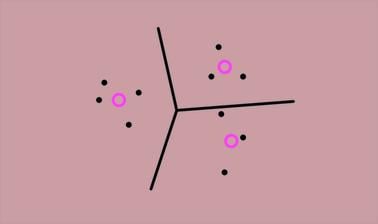
Clustering is used to identify similar data/objects and patterns from your engineering datasets. It is a technique that is especially useful if you don’t have labeled or annotated data. We explain various approaches to clustering and cover how similarity and dissimilarity measures are used.
Dimensionality reduction techniques are used to reduce the number of features representing a given dataset, while retaining the structure of the dataset. We discuss feature selection and feature extraction techniques such as Principal Component Analysis (PCA), and how and when to apply it.
Deep Learning is a family of machine learning methods based on artificial neural networks. You will learn how to build and train deep neural networks consisting of fully connected neural networks of multiple hidden layers.
Reinforcement learning teaches an AI to interact with an environment. We cover basic reinforcement learning concepts and techniques, such as how to model the system using a Markov Decision Process, and how to train an optimal policy using tabular Q-learning using the Bellman equation.
This course is designed by a team of TU Delft machine learning experts from various backgrounds, highlighting the various topics from their individual perspectives.
This course is part of the AI Skills: Basic and Advanced Techniques in Machine Learning Professional Certificate.
What you'll learn
- Describe the main classes of clustering techniques
- Implement k-means and hierarchical clustering
- Motivate the need and choice of dimensionality reduction techniques
- Implement Principal Component Analysis (PCA) for feature extraction
- Explain how deep neural networks work and their advantages
- Train deep neural networks for classification and regression task
- Explain the basic concepts and techniques of reinforcement learning
- Describe how reinforcement learning could be applied in real world applications
Syllabus
Week 1: Introduction
This week is an introduction to the course with an overview of the topics.
Week 2: Clustering
Clustering techniques are used to identify similar data/objects and patterns from your engineering datasets.
In this week, you will learn about the problem of clustering, the main classes of clustering techniques and how we can implement k-means and hierarchical clustering.
Topics we’ll cover in this week are:
- Introduction to clustering
- Formalizing the problem of clustering
- Similarity and dissimilarity measures
- k-means clustering
- Hierarchical clustering
Week 3: Dimensionality Reduction
Dimensionality reduction techniques are used to reduce the number of features representing a given dataset, while retaining the structure of the dataset as much as possible.
In this week, you will learn what dimensionality reduction is, why it is needed and how to use it. You will learn about Principal Component Analysis dimensionality reduction technique and how and when to apply it.
Topics we’ll cover this week are:
- What is dimensionality reduction?
- Why dimensionality reduction techniques are used
- Feature selection vs. feature extraction techniques
- Principal component analysis feature-extraction technique
Week 4: Introduction to Deep Learning
Deep learning is a broader family of machine learning methods based on artificial neural networks.
In this week you will learn the foundations of Deep Learning, understand how to build neural networks, and learn how to lead successful machine learning projects. You will learn about fully connected neural networks, some theoretical aspects of deep learning, the back-propagation algorithm, Adam, and much more.
Topics we’ll cover this week are:
- What neural networks are
- Architecture of fully connected neural networks
- Capabilities of neural networks
- The benefits of deep architectures
- Training deep neural networks with stochastic gradient descent and Adam
Week 5: Introduction to Reinforcement Learning
Reinforcement learning teaches an AI to interact with an environment.
In this week you will be introduced to basic reinforcement learning concepts and techniques, and how they could be applied in real world applications.
Topics we’ll cover this week are:
- How an AI interacts with the environment
- The formalization of this as a Markov Decision Process
- An agent’s behavior as a policy
- The optimal policy found using tabular Q-learning
- Why tabular reinforcement learning does not scale well
- Neural networks for deep reinforcement learning to scale up to interesting applications
Week 6: Wrap up
This week is an extra week to wrap up all the exercises done during the course.