EdX

Advanced Fluid Mechanics 1: Fundamentals (edX)

Offered by MIT, MITx,
Advanced Fluid Mechanics 1: Fundamentals (edX)

Learn the fundamental principles underlying fluid dynamics; including the kinematics of deformation, hydrostatics & buoyancy, inviscid flow and the application of Bernoulli’s theorems, as well as applications of control volume analysis for more complex problems of engineering interest.

Class Deals by MOOC List - Click here and see EdX's Active Discounts, Deals, and Promo Codes.

This course covers the fundamentals of advanced fluid mechanics: including its connections to continuum mechanics more broadly, hydrostatics, buoyancy and rigid body accelerations, inviscid flow, and the application of Bernoulli’s theorems, as well as applications of control volume analysis for more complex fluid flow problems of engineering interest. This course features lecture and demo videos, lecture concept checks, practice problems, and extensive problem sets.
This course is the first of a three-course sequence in incompressible fluid mechanics: Advanced Fluid Mechanics: Fundamentals, Advanced Fluid Mechanics: The Navier-Stokes Equations for Viscous Flows, and Advanced Fluid Mechanics: Potential Flows, Lift, Circulation & Boundary Layers. The series is based on material in MIT’s class 2.25 Advanced Fluid Mechanics, one of the most popular first-year graduate classes in MIT’s Mechanical Engineering Department. This series is designed to help people gain the ability to apply the governing equations, the principles of dimensional analysis and scaling theory to develop physically-based, approximate models of complex fluid physics phenomena. People who complete these three consecutive courses will be able to apply their knowledge to analyze and break down complex problems they may encounter in industrial and academic research settings.
The material is of relevance to engineers and scientists across a wide range of mechanical chemical and process industries who must understand, analyze and optimize flow processes and fluids handling problems. Applications are drawn from hydraulics, aero & hydrodynamics as well as the chemical process industries.

What you'll learn

  • Continuum mechanics
  • Hydrostatics
  • Buoyancy and rigid body accelerations
  • Inviscid flow
  • Application of Bernoulli’s theorems
  • Applications of control volume analysis for more complex fluid flow problems of engineering interest

Syllabus

  1. Continuum viewpoint and the equations of motion
  2. Hydrostatic analysis of fluids in static equilibrium, buoyancy
  3. Inviscid flow (differential approach): Euler’s equation, Bernoulli’s integral, and the effects of streamline curvature. The Mechanical Energy Equation
  4. Control volume theorems (integral approach): Mass conservation, linear momentum theorem, angular momentum theorem, first and second laws of thermodynamics.
  5. Application to increasingly complex systems

Go to Class
MOOC List is learner-supported. When you buy through links on our site, we may earn an affiliate commission.

Related Courses

Logistics Fundamentals (edX) EdX
LOGYCAX

Logistics Fundamentals (edX)

Have you ever wondered how products arrive at your hands? From the clothes we wear to the food we consume, they have been through a series of links, processes, operations and flows we know as logistics. Logistics are the first trait for a company’s success! Learn all about logistics and how you can use it to achieve every goal in your organization. In this online course you will gain a holistic view of logistics and transportation within your company, which is useful to understand how a company can thing strategically thanks to basic but essential content.

Self Paced
Self-Paced
A System View of Communications: From Signals to Packets (Part 1) (edX) EdX
The Hong Kong University of Science and Technology - HKUST,HKUSTx

A System View of Communications: From Signals to Packets (Part 1) (edX)

Explore the tradeoffs in designing communication systems like mobile phones, and the engineering tools to handle them. Have you ever wondered how information is transmitted using your mobile phone or a WiFi hotspot? This introductory course seeks to enable you to understand the basic engineering tools used and tradeoffs encountered in the design of these systems.

Self Paced
Self-Paced
Understanding Nuclear Energy (edX) EdX
Delft University of Technology,DelftX

Understanding Nuclear Energy (edX)

Learn the science and technology behind nuclear energy and the special features of this energy source. In this nuclear energy course, we will tackle provocative questions such as: Is nuclear energy a good substitute for fossil fuels to reduce our CO2 emission or not?; Can nuclear reactors operate safely without any harm to the public and environment?; How much nuclear waste is produced and how long does it need to be stored safely?; How can we make nuclear energy clean and more sustainable?; How much are nuclear energy costs?

Self Paced
Self-Paced
The Engineering of Structures Around Us (edX) EdX
DartmouthX,Dartmouth College

The Engineering of Structures Around Us (edX)

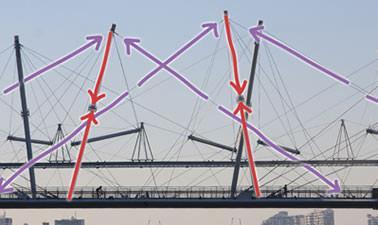
Explore how engineers design bridges and buildings in our communities and iconic structures around the world. In this introductory course, you’ll learn some engineering principles that can be applied to structural systems everywhere: in nature, in furniture, in mechanical and aerospace systems, and in any solid object that resists a load. Together we’ll explore how structures work, why they were designed the way they were designed, how they support loads, and where forces flow through them.

Self Paced
Self-Paced
Introducción a la Ingeniería del Software (edX) EdX
Universidad Autonoma de Madrid,UAMx

Introducción a la Ingeniería del Software (edX)

Conoce las distintas fases de desarrollo por las que pasa un proyecto informático, así como las actividades de gestión necesarias para lograr finalizar el proyecto con éxito. ¿Alguna vez te has preguntado qué es y para qué sirve la Ingeniería de Software? ¿Quieres saber por qué es tan necesaria esta disciplina y por qué se utiliza tanto en entornos tecnológicos? ¿O cuál es el motivo de que muchos proyectos informáticos no finalizan en tiempo y coste o con la calidad deseada?

Self Paced
Self-Paced
Fundamentos de Mecánica para Ingeniería (edX) EdX
Universitat Politècnica de València,UPValenciaX

Fundamentos de Mecánica para Ingeniería (edX)

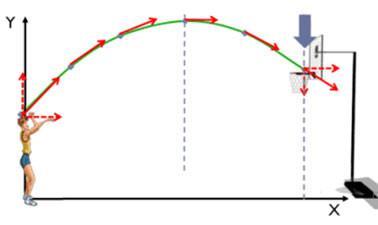
Estudiaremos la cinemática y la dinámica del punto, los conceptos de trabajo y potencia y la energía mecánica. Se aborda el estudio del universo físico analizando objetos en movimiento. Se definen y analizan todas las magnitudes y leyes físicas que permiten describir geométrica y causalmente el movimiento de cuerpos representados por un punto.

Self Paced
Self-Paced
A Hands-on Introduction to Engineering Simulations (edX) EdX
CornellX,Cornell University

A Hands-on Introduction to Engineering Simulations (edX)

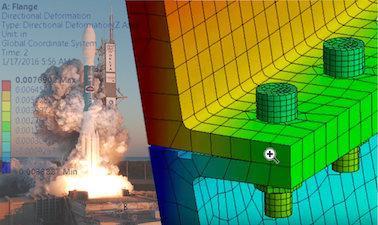
Learn how to analyze real-world engineering problems using ANSYS simulation software and gain important professional skills sought by employers. In this hands-on course, you’ll learn how to perform engineering simulations using a powerful tool from ANSYS, Inc. This is a problem-based course where you’ll learn by doing. The focus will be on understanding what’s under the blackbox so as to move beyond garbage-in, garbage-out. You’ll practice using a common solution approach to problems involving different physics: structural mechanics, fluid dynamics and heat transfer.

Self Paced
Self-Paced
Forensic Engineering: Learning from Failures (edX) EdX
Delft University of Technology,DelftX

Forensic Engineering: Learning from Failures (edX)

Don’t let good failures go to waste! Identify the causes of failure and use this knowledge to enhance safety and improve performance. What do collapsed buildings, infected hospital patients, and crashed airplanes have in common? If you know the causes of these events and conditions, they can all be prevented. In this course, you will learn how to use the TU Delft mind-set to investigate the causes of such events so you can prevent them in the future.

Self Paced
Self-Paced
Quantum Mechanics of Molecular Structures (edX) EdX
The University of Tokyo,UTokyoX

Quantum Mechanics of Molecular Structures (edX)

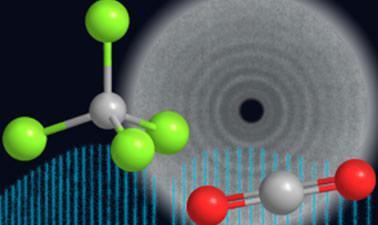
Learn two methods used to determine molecular structures and their properties in this introduction to Quantum Mechanics. Knowing the geometrical structure of the molecules around us is one of the most important and fundamental issues in the field of chemistry. This course introduces the two primary methods used to determine the geometrical structure of molecules: molecular spectroscopy and gas electron diffraction.

Self Paced
Self-Paced
Dynamics and Control (edX) EdX
Universitat Politècnica de València,UPValenciaX

Dynamics and Control (edX)

This is an interactive course about the basic concepts of Systems, Control and their impact in all the human activities. First, the basic concepts of systems, dynamics, structure and control are introduced. Then, looking at many examples in Nature and human made devices, we will realize that the dynamic behavior of most systems can be modified by adding a control system. Later we will see how knowing how to evaluate the dynamic behavior of a system and measure its performance will provide the tools to design new controlled systems fulfilling some requirements.

Self Paced
Self-Paced