Advanced Data Science Capstone (Coursera)

Offered by IBM,
Advanced Data Science Capstone (Coursera)

This project completer has proven a deep understanding on massive parallel data processing, data exploration and visualization, advanced machine learning and deep learning and how to apply his knowledge in a real-world practical use case where he justifies architectural decisions, proves understanding the characteristics of different algorithms, frameworks and technologies and how they impact model performance and scalability.

Class Deals by MOOC List - Click here and see Coursera's Active Discounts, Deals, and Promo Codes.

Please note: You are requested to create a short video presentation at the end of the course. This is mandatory to pass. You don't need to share the video in public.
Course 4 of 4 in the Advanced Data Science with IBM Specialization

Syllabus

WEEK 1
Identify DataSet and UseCase
In this module, the basic process model used for this capstone project is introduced. Furthermore, the learner is required to identify a practical use case and data set

WEEK 2
ETL and Feature Creation
This module emphasizes on the importance of ETL, data cleansing and feature creation as a preliminary step in ever data science project

WEEK 3
Model Definition and Training
This module emphasizes on model selection based on use case and data set. It is important to understand how those two factors impact choice of a useful model algorithm.

WEEK 4
Model Evaluation, Tuning, Deployment and Documentation
One a model is trained it is important to assess its performance using an appropriate metric. In addition, once the model is finished, it has to be made consumable by business stakeholders in an appropriate way

Go to Class
MOOC List is learner-supported. When you buy through links on our site, we may earn an affiliate commission.

Related Courses

Introduction to Image Generation (Coursera) Coursera
Google Cloud

Introduction to Image Generation (Coursera)

This course introduces diffusion models, a family of machine learning models that recently showed promise in the image generation space. Diffusion models draw inspiration from physics, specifically thermodynamics. Within the last few years, diffusion models became popular in both research and industry. Diffusion models underpin many state-of-the-art image generation models and tools on Google Cloud. This course introduces you to the theory behind diffusion models and how to train and deploy them on Vertex AI.

Aug 17th 2026
3 Weeks
Introduction to Genomic Technologies (Coursera) Coursera
Johns Hopkins University

Introduction to Genomic Technologies (Coursera)

This course introduces you to the basic biology of modern genomics and the experimental tools that we use to measure it. We'll introduce the Central Dogma of Molecular Biology and cover how next-generation sequencing can be used to measure DNA, RNA, and epigenetic patterns. You'll also get an introduction to the key concepts in computing and data science that you'll need to understand how data from next-generation sequencing experiments are generated and analyzed.

Aug 17th 2026
4 Weeks
Applied Text Mining in Python (Coursera) Coursera
University of Michigan

Applied Text Mining in Python (Coursera)

This course will introduce the learner to text mining and text manipulation basics. The course begins with an understanding of how text is handled by python, the structure of text both to the machine and to humans, and an overview of the nltk framework for manipulating text. The second week focuses on common manipulation needs, including regular expressions (searching for text), cleaning text, and preparing text for use by machine learning processes. The third week will apply basic natural language processing methods to text, and demonstrate how text classification is accomplished. The final week will explore more advanced methods for detecting the topics in documents and grouping them by similarity (topic modelling).

Aug 17th 2026
4 Weeks
Cadeia de Suprimentos na Nuvem (Coursera) Coursera
FIA Business School

Cadeia de Suprimentos na Nuvem (Coursera)

Nossas boas-vindas ao Curso Cadeia de Suprimentos na Nuvem. Neste curso, você aprenderá como o supply chain pode ampliar o valor da empresa explorando as diversas ferramentas disponíveis em cloud para potencializar a visibilidade e a responsividade da cadeia, melhorando o nível de serviço prestado aos clientes.

Aug 17th 2026
5-12 Weeks
Digital Signal Processing 4: Applications (Coursera) Coursera
École Polytechnique Fédérale de Lausanne

Digital Signal Processing 4: Applications (Coursera)

Digital Signal Processing is the branch of engineering that, in the space of just a few decades, has enabled unprecedented levels of interpersonal communication and of on-demand entertainment. By reworking the principles of electronics, telecommunication and computer science into a unifying paradigm, DSP is a the heart of the digital revolution that brought us CDs, DVDs, MP3 players, mobile phones and countless other devices.

Aug 17th 2026
3 Weeks
Analytic Combinatorics (Coursera) Coursera
Princeton University

Analytic Combinatorics (Coursera)

Analytic Combinatorics teaches a calculus that enables precise quantitative predictions of large combinatorial structures. This course introduces the symbolic method to derive functional relations among ordinary, exponential, and multivariate generating functions, and methods in complex analysis for deriving accurate asymptotics from the GF equations. All the features of this course are available for free. It does not offer a certificate upon completion.

Aug 10th 2026
5-12 Weeks
Matrix Methods (Coursera) Coursera
University of Minnesota

Matrix Methods (Coursera)

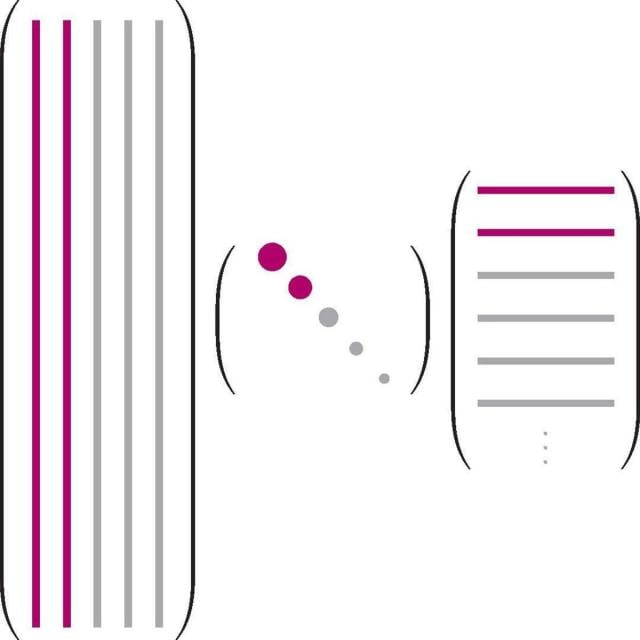
Mathematical Matrix Methods lie at the root of most methods of machine learning and data analysis of tabular data. Learn the basics of Matrix Methods, including matrix-matrix multiplication, solving linear equations, orthogonality, and best least squares approximation. Discover the Singular Value Decomposition that plays a fundamental role in dimensionality reduction, Principal Component Analysis, and noise reduction.

Aug 17th 2026
5-12 Weeks
Deep Learning Applications for Computer Vision (Coursera) Coursera
University of Colorado Boulder

Deep Learning Applications for Computer Vision (Coursera)

This course can be taken for academic credit as part of CU Boulder’s Master of Science in Data Science (MS-DS) degree offered on the Coursera platform. The MS-DS is an interdisciplinary degree that brings together faculty from CU Boulder’s departments of Applied Mathematics, Computer Science, Information Science, and others. With performance-based admissions and no application process, the MS-DS is ideal for individuals with a broad range of undergraduate education and/or professional experience in computer science, information science, mathematics, and statistics.

Aug 17th 2026
5-12 Weeks
Practical Machine Learning on H2O (Coursera) Coursera
H2O.ai

Practical Machine Learning on H2O (Coursera)

In this course, we will learn all the core techniques needed to make effective use of H2O. Even if you have no prior experience of machine learning, even if your math is weak, by the end of this course you will be able to make machine learning models using a variety of algorithms. We will be using linear models, random forest, GBMs and of course deep learning, as well as some unsupervised learning algorithms.

Aug 17th 2026
5-12 Weeks
Introduction to TensorFlow for Artificial Intelligence, Machine Learning, and Deep Learning (Coursera) Coursera
DeepLearning.AI

Introduction to TensorFlow for Artificial Intelligence, Machine Learning, and Deep Learning (Coursera)

If you are a software developer who wants to build scalable AI-powered algorithms, you need to understand how to use the tools to build them. This course is part of the upcoming Machine Learning in Tensorflow Specialization and will teach you best practices for using TensorFlow, a popular open-source framework for machine learning.

Aug 17th 2026
4 Weeks