Acupressure (Coursera)

Acupressure (Coursera)

This course provides an overview of the basic principles and applications of acupressure for patient symptom management and self-care.

Class Deals by MOOC List - Click here and see Coursera's Active Discounts, Deals, and Promo Codes.

By the end of the course, you will be able to: a) explain basic concepts of East Asian Medicine (EAM); b) describe clinical indications for acupressure and the evidence base for its use in symptom management; c) identify various methods of administering acupressure, and clinical contraindications/precautions associated with each; d) demonstrate acupoint protocols for the management of pain, gastrointestinal disturbances, and wellbeing; e) demonstrate an acupressure treatment session; including assessment, administration of acupoint therapy, and evaluation of treatment effect; and f) determine a plan of action for incorporating acupressure into your professional practice and self-care routines.
Course 3 of 5 in the Integrative Nursing Specialization.

What You Will Learn

  • Basic concepts of East Asian Medicine (EAM)
  • Clinical indications for acupressure and the evidence base for its use in symptom management
  • Acupressure protocols for the management of pain, gastrointestinal disturbances, and wellbeing
  • Strategies for incorporating acupressure into your professional practice and self-care routines

Syllabus

WEEK 1: Clinical Acupressure Fundamentals
WEEK 2: Acupressure for Pain
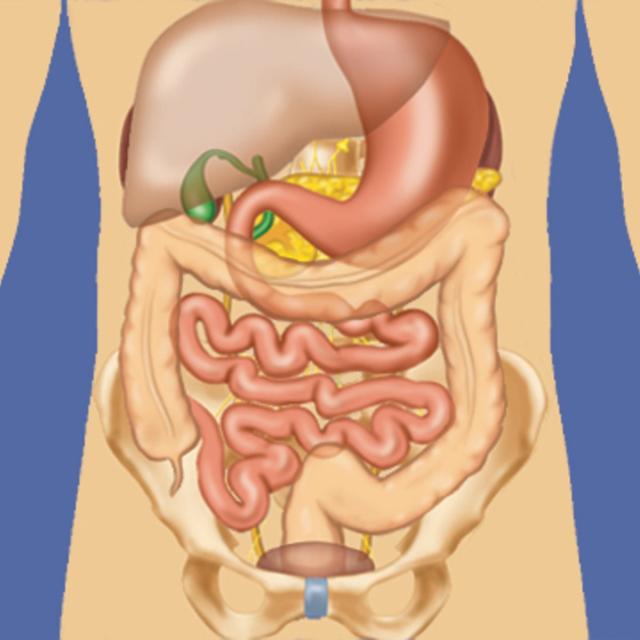
WEEK 3: Acupressure for Gastrointestinal Disturbances & Acupressure for Wellbeing
WEEK 4: Bringing Acupressure into Your Professional Practice

Go to Class
MOOC List is learner-supported. When you buy through links on our site, we may earn an affiliate commission.

Related Courses

Villes africaines: Environnement et enjeux de développement durable (Coursera) Coursera
École Polytechnique Fédérale de Lausanne

Villes africaines: Environnement et enjeux de développement durable (Coursera)

Le cours propose une lecture de l’environnement urbain en Afrique à travers les thématiques les plus pertinentes pour mesurer le niveau de développement d’un pays : eau et vie urbaine, assainissement (eaux usées et pluviales), gestion des déchets solides, agriculture urbaine. Après avoir analysé les différents enjeux de celles-ci, nous aborderons les liens entre environnement urbain et santé.

Sep 21st 2026
5-12 Weeks
Population Health: Panel Management Next Level (Coursera) Coursera
Leiden University

Population Health: Panel Management Next Level (Coursera)

How can you, as a healthcare professional, identify patients that share the same risk of an adverse event? How do you transform your healthcare practice in such a way that you are not only able to provide proactive care but you are also able to improve the health of populations at risk? In this course you will learn how to apply the panel management approach to tackle these questions in order to change from reactive to proactive care.

Sep 21st 2026
4 Weeks
Global Health at the Human-Animal-Ecosystem Interface (Coursera) Coursera
University of Geneva

Global Health at the Human-Animal-Ecosystem Interface (Coursera)

The University of Geneva, Institute Pasteur, University of Montreal and Centre Virchow-Villermé/University Paris Descartes welcome you to this new MOOC on "Global Health at the Human-Animal-Ecosystem Interface"! Over the next 5 weeks, you will explore and learn about some of the major and current Global Health Challenges at the Human-Animal-Ecosystem Interface: zoonotic emerging infections (e.g. Ebola, Nipah, MERS, Avian Influenza), antimicrobial resistance, neglected tropical diseases (e.g. rabies, leishmaniasis, zoonotic TB), snakebite and other human-animal conflicts etc.

Sep 21st 2026
5-12 Weeks
Understanding the Brain: The Neurobiology of Everyday Life (Coursera) Coursera
University of Chicago

Understanding the Brain: The Neurobiology of Everyday Life (Coursera)

Learn how the nervous system produces behavior, how we use our brain every day, and how neuroscience can explain the common problems afflicting people today. We will study functional human neuroanatomy and neuronal communication, and then use this information to understand how we perceive the outside world, move our bodies voluntarily, stay alive, and play well with others.

Sep 21st 2026
5-12 Weeks
Improving Immunity Based on Traditional Eastern Exercises (Coursera) Coursera
Shanghai Jiao Tong University

Improving Immunity Based on Traditional Eastern Exercises (Coursera)

Exercise is medicine. Regular and moderate exercise can effectively strengthen immune system so as to reduce the risk of virus infection and also improve or assist in the treatment of dysthymic disorders like anxiety and depression. This course provides suggestions for the general public about how to actively respond to the outbreak of novel coronavirus. It also explains: how the immune system reacts when viruses invade into the body; why exercises can enhance immunity and what is the mechanism; what the difference is between western sports and traditional eastern exercises.

Sep 21st 2026
5-12 Weeks
Precision Medicine (Coursera) Coursera
University of Geneva

Precision Medicine (Coursera)

This course will provide you with the key knowledge and tools to understand the fundamentals and practical implications of precision medicine, its opportunities and challenges. It will address precision-medicine era diagnostics, treatment selection, genetic counseling, public health interventions, and biomedical research. It will also deal with data science and ethical issues. From genomic analysis and genetic counseling to cancer biomarkers, from risk assessment of chronic diseases to the understanding of gene-environment interactions, from pharmacogenomics to multi-omics data integration, experts will walk you through the many aspects of precision medicine, from the bench to the bedside and to population health.

Sep 21st 2026
5-12 Weeks
Extracellular Vesicles in Health and Disease (Coursera) Coursera
University of California, Irvine

Extracellular Vesicles in Health and Disease (Coursera)

This course aims to provide current understanding about extracellular vesicles (EVs) and their role in health and diseases. The EVs are known to be involved in cell to cell communication. Apart from maintaining normal cell physiology, EVs deliver messages that can drive or influence the progression of a disease. This course discusses recent advances made in the field to give an introduction on their function in health as well as in disease.

Sep 21st 2026
4 Weeks
Ebola : Vaincre ensemble ! (Coursera) Coursera
University of Geneva

Ebola : Vaincre ensemble ! (Coursera)

Il s’agit d’un MOOC sur la crise internationale sur Ebola partie d’Afrique de l’Ouest en 2014 ; d’une durée de 5 semaines, où interviendront plus de 30 professeurs des universités, chercheurs, responsables politiques, autorités sanitaires nationales et internationales, membres d’ONGs, et autres acteurs d’Europe et d’Afrique sur plus de 60 séquences vidéos. Les thèmes abordés se dérouleront selon une séquence hebdomadaire décrite ci-dessous (section « plan du cours »).

Sep 21st 2026
5-12 Weeks
Stanford's Short Course on Breastfeeding (Coursera) Coursera
Stanford University

Stanford's Short Course on Breastfeeding (Coursera)

Stanford's Short Course on Breastfeeding was designed for new mothers and the people who support them. This engaging, one-week learning experience, provides participants with everything they need to know to more successfully establish breastfeeding – or support a new mother who has decided to breastfeed. We created the course because we recognize that there is a very small window in which successful, exclusive breastfeeding can be established, and that many new mothers are mastering this skill during a busy and sometimes stressful time.

Sep 21st 2026
1 Week