Writing Case Studies: Science of Delivery (NovoEd)

Offered by Princeton University,
Writing Case Studies: Science of Delivery (NovoEd)

This course is about writing “science of delivery" case studies that help us understand how practitioners have addressed complex policy or program implementation challenges. It offers an orientation to the research, writing, and ethics of interview-based case study research.

The science of delivery begins with a simple observation. We often have a vision of the right policies or strategies for improving health, safety, and economic well-being. However, the real problem is getting things done. Even a simple policy intervention such as child vaccination requires much more than nurses and a stock of vaccine to be effective.
Case studies are a vital tool for sharing insight about the hows of policy implementation and institutional reform. They trace the steps taken to produce results. They show solutions people have devised to address anticipated challenges and overcome unanticipated obstacles. They help us think about how to adapt approaches so that they work in different contexts.
In this course you will learn about:

  • The key elements of a science of delivery case study.
  • The qualities readers or audiences value.
  • The analytical functions a science of delivery case study best serves.
  • How to develop a research strategy.
  • How to plan and carry out an interview.
  • Strategies for handling common research challenges.
  • Ways to plan the writing process.
  • Stylistic conventions and standards that improve communication.
  • How to manage some common writing challenges.
  • Systems for complying with important ethical and legal standards.

In each of the six segments, you will have an opportunity to hear from several writers, researchers, and users in a series of short videos. Exercises will enable you to work with others to practice some of the tips the speakers offer. Reading selections provide models and introduce you to important analytical issues, stylesheets, and other useful information.
We invite you to join us! The course is most suitable for practitioners who want to document and analyze their efforts to implement a program or build a new institution, researchers who want to trace how programs achieved results, and graduate students who want an introduction to one type of case study method.

Go to Class
MOOC List is learner-supported. When you buy through links on our site, we may earn an affiliate commission.

Related Courses

The Brain and Space (Coursera) Coursera
Duke University

The Brain and Space (Coursera)

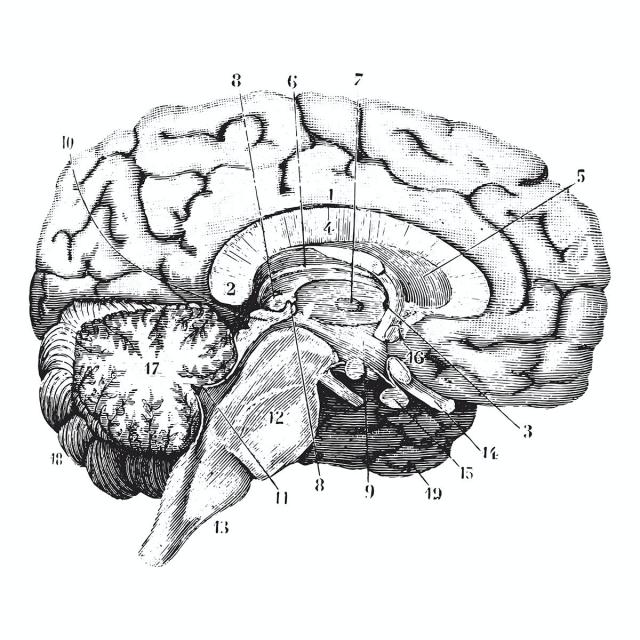
This course is about how the brain creates our sense of spatial location from a variety of sensory and motor sources, and how this spatial sense in turn shapes our cognitive abilities. Knowing where things are is effortless. But “under the hood,” your brain must figure out even the simplest of details about the world around you and your position in it.

Oct 12th 2026
5-12 Weeks
Intellectual Humility: Science (Coursera) Coursera
University of Edinburgh

Intellectual Humility: Science (Coursera)

It’s clear that the world needs more intellectual humility. But how do we develop this virtue? And why do so many people still end up so arrogant? Do our own biases hold us back from becoming as intellectually humble as we could be—and are there some biases that actually make us more likely to be humble? Which cognitive dispositions and personality traits give people an edge at being more intellectually humble - and are they stable from birth, learned habits, or something in between? And what can contemporary research on the emotions tell us about encouraging intellectual humility in ourselves and others?

Oct 12th 2026
4 Weeks
Philosophy of Science (Coursera) Coursera
University of Pennsylvania

Philosophy of Science (Coursera)

For the last four centuries, scientists have aimed to provide us with an understanding of the world around us. By all appearances, science has made substantial progress during this time. But is this progress real or illusory? And if it is real, how has this progress been made? This four-week course will consider these important questions.

Oct 5th 2026
4 Weeks
Teaching Science at University (Coursera) Coursera
University of Zurich

Teaching Science at University (Coursera)

This course will prepare you for teaching science in higher education. In this MOOC you will learn to make your knowledge as an excellent researcher accessible to your students. We will show you how to communicate science to novices as well as advanced students in science.

Oct 12th 2026
5-12 Weeks
Requirements Writing (Coursera) Coursera
UNSW Sydney - University of New South Wales

Requirements Writing (Coursera)

Welcome to "Requirements Writing". As the title indicates, over the next four weeks, we will be looking at the important task of writing of text-based requirement statements. The course takes you step by step through the rules for writing requirements statements in accordance with the "Guide for Writing Requirements" published by the International Council on Systems Engineering (INCOSE).

Oct 18th 2026
5-12 Weeks
Write Your First Novel (Coursera) Coursera
Michigan State University

Write Your First Novel (Coursera)

If you’ve ever had the dream, the desire or even just a vague notion that you would like to write a novel, this course is for you. Whether you are a full-time student, have a full-time job, a family to take care of or all of the above, you can do it. Really! And I will help you get there.

Oct 12th 2026
+25 Weeks
Writing and Disseminating Grey Literature (Coursera) Coursera
Indian Institute for Human Settlements

Writing and Disseminating Grey Literature (Coursera)

If you are a researcher, academic, student, development sector professional or a practitioner who is keen to reach the research-based knowledge you have created to a wider audience, this course is for you. Vast amounts of knowledge are produced by educational and research institutions through rigorous research and fieldwork. Yet, there is a dearth of access to this knowledge among non-academic communities (which includes practitioners, policymakers, and citizens) due to the language used. Researchers can bring visibility to grey literature if they engage with alternate public writing forms.

Oct 19th 2026
5-12 Weeks
Research Design: Inquiry and Discovery (Coursera) Coursera
University of North Texas

Research Design: Inquiry and Discovery (Coursera)

The main purpose of this course is to focus on good questions and how to answer them. This is essential to making considered decisions as a leader in any organization or in your life overall. Topics will include the basis of human curiosity, development of questions, connections between questions and approaches to information gathering design, variable measurement, sampling, the differences between experimental and non-experimental designs, data analysis, reporting and the ethics of inquiry projects.

Oct 12th 2026
4 Weeks
Biosphere 2 Science for the Future of Our Planet (Coursera) Coursera
University of Arizona

Biosphere 2 Science for the Future of Our Planet (Coursera)

Are you ready to take an incredible journey around Planet Earth and beyond? In this course, you will delve into a world of innovative science and learn from a team of Biosphere 2 and University of Arizona researchers. From plants and soils, to oceans and rainforests, the Moon, Mars, and more, this course is an exciting opportunity for anyone interested in science and Earth stewardship.

Oct 12th 2026
5-12 Weeks
Corrección, estilo y variaciones de la lengua española (Coursera) Coursera
Universitat Autònoma de Barcelona

Corrección, estilo y variaciones de la lengua española (Coursera)

¿Le interesa el idioma español y se preocupa por la corrección, el estilo y las variaciones de la lengua española? ¿Siente curiosidad acerca de las variaciones española y argentina o americana del Español estudiadas en textos cultos de referencia? En este curso se estudian empíricamente algunos aspectos relevantes de esas variedades de la lengua con datos significativos de las versiones hispanas de J. D. Salinger: «El cazador oculto», argentinas; y «El guardián entre el centeno», españolas.

Oct 12th 2026
5-12 Weeks
Translation in Practice (Coursera) Coursera
Nanjing University

Translation in Practice (Coursera)

This course offers you basic but valuable techniques used by a good translator in the translation between English and Chinese. We’ll discuss what is translation, what is good translation, and learn about how to produce good translations. All the examples used in this course are taken from the course instructor's own translations of various genres and topics of writing.

Oct 5th 2026
5-12 Weeks