Volume and mass flow rates (HVAC Learning)

Offered by ADEGEB,
Volume and mass flow rates (HVAC Learning)

Learn how to work with volume and mass flow rate.

Objective(s) :
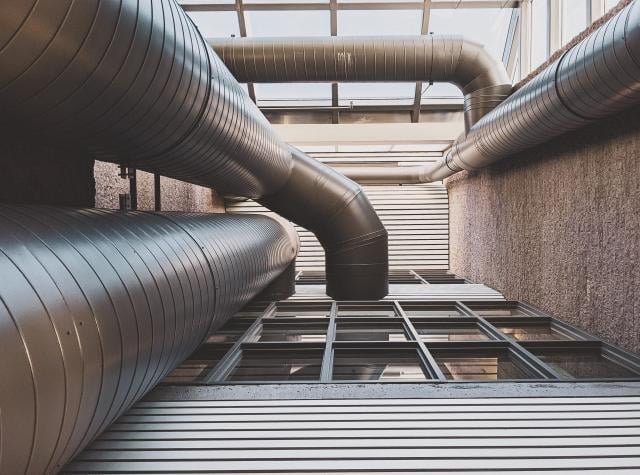
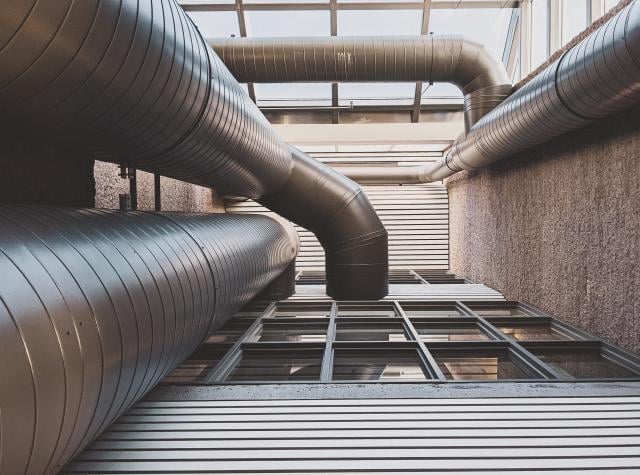
Volume and mass flow rates course defines flow rates according to circulation speed and pipe gauge, air change rates and how to maintain flow rates or to convert mass flow to volume flow.

Whatever the training level, studying this training course is useful, even without doing the exercises. At the School Certificate and HND level only the first 3 paragraphs will be studied. This important E-book is quite substantial. To begin with don’t hesitate to put the notion of mass flow rate aside (last §), and come back to this later

Go to Class
MOOC List is learner-supported. When you buy through links on our site, we may earn an affiliate commission.

Related Courses

Flight Mechanics - Anemobarometry (Coursera) Coursera
ISAE-SUPAERO

Flight Mechanics - Anemobarometry (Coursera)

This course focuses on the physics of the atmosphere and its consequences on speed and altitude measurements. At the end of this course, you will understand precisely the meaning of the speed and altitude indication available to the pilot of an airplane. You will understand the difference between standard and actual atmosphere and be able to perform basic altitude and speed correction computations.

Jun 1st 2026
3 Weeks
Science and Technology in the Silla Cultural Heritage (Coursera) Coursera
Pohang University of Science and Technology - POSTECH

Science and Technology in the Silla Cultural Heritage (Coursera)

Science and Technology in the Silla Heritage. The course explores the scientific and technological aspects of the cultural heritage of Silla, an ancient dynasty in Korea, and its relationship with other ancient civilizations in the world. The lecture series will cover major cultural heritage of Silla: Bulguksa, Seokguram, Cheomseongdae, Poseokjeong, the Sacred Bell of Great King Seongdeok, and metallurgy.

Jun 1st 2026
5-12 Weeks
Modern Topics in Condensed Matter Physics (Coursera) Coursera
University of Colorado Boulder

Modern Topics in Condensed Matter Physics (Coursera)

This course will begin by discussing superconductivity - a central example of a macroscopic phenomenon. It will then proceed to discuss various modern topics in quantum condensed matter physics, including fractionalization, anyon statistics, topology, and non-equilibrium phases. The course aims to provide learners with an appreciation for some modern topics in condensed matter physics.

Jun 1st 2026
4 Weeks
Vers l'infiniment grand (Coursera) Coursera
École Polytechnique

Vers l'infiniment grand (Coursera)

Partez à la découverte de l'infiniment grand, en compagnie de physiciens et de physiciennes qui vont vous faire découvrir l'Univers aux distances les plus grandes connues à ce jour et les outils scientifiques utilisés pour l'étudier. Vous comprendrez ce que les scientifiques ont pu apprendre sur l'histoire et la structure de l'Univers, ses composantes, et comment ils ont pu accumuler ces observations sur les étoiles, les galaxies, les amas de galaxies, et l'Univers dans son ensemble.

Jun 1st 2026
4 Weeks
Physics 101 - Forces and Kinematics (Coursera) Coursera
Rice University

Physics 101 - Forces and Kinematics (Coursera)

This course serves as an introduction to the physics of force and motion. Upon completion, learners will have an understanding of how mathematical laws and conservation principles describe the motions and interactions of objects all around us. They will gain experience in solving physics problems with tools such as graphical analysis, algebra, vector analysis, and calculus.

Jun 1st 2026
4 Weeks
Flight mechanics - The basis (Coursera) Coursera
ISAE-SUPAERO

Flight mechanics - The basis (Coursera)

More than one century after the Wright brothers' first flight, the flight still defy our intuition. You will learn here how to name the different parts of the airplane and how to describe and quantify its geometry. For that, we need now to share a precise vocabulary to describe the airplane's movement and attitude in space, and a refresher on basic general mechanic principles. You will remind how Newton's 2nd law allows you to determine what force must be applied on an apple - or on an airplane, to modify the magnitude and direction of its speed.

Jun 1st 2026
3 Weeks
Les deux infinis et nous (Coursera) Coursera
École Polytechnique

Les deux infinis et nous (Coursera)

Partez à la découverte de l'infiniment grand et de l'infiniment petit dans leurs aspects les plus proches de notre quotidien, en compagnie de physiciens et de physiciennes qui vont vous faire découvrir leur présence insoupçonnée dans notre vie de tous les jours. Vous vous initierez à la vie et aux métiers d'une grande collaboration en physique de l'infiniment petit et de l'infiniment grand, vous découvrirez comment les outils développés dans ces domaines ont trouvé des applications inattendues, comment la physique nucléaire a profondément modifié les domaines de l'énergie et de la santé, et comment les propriétés de certaines particules aident à présent d'autres disciplines à sonder la matière d'une manière totalement différente.

Jun 1st 2026
4 Weeks
Writing in the Sciences (Coursera) Coursera
Stanford University

Writing in the Sciences (Coursera)

This course teaches scientists to become more effective writers, using practical examples and exercises. Topics include: principles of good writing, tricks for writing faster and with less anxiety, the format of a scientific manuscript, peer review, grant writing, ethical issues in scientific publication, and writing for general audiences.

Jun 1st 2026
5-12 Weeks
Philosophy, Science and Religion: Science and Philosophy (Coursera) Coursera
University of Edinburgh

Philosophy, Science and Religion: Science and Philosophy (Coursera)

Philosophy, Science and Religion mark three of the most fundamental modes of thinking about the world and our place in it. Are these modes incompatible? Put another way: is the intellectually responsible thing to do to ‘pick sides’ and identify with one of these approaches at the exclusion of others? Or, are they complementary or mutually supportive? As is typical of questions of such magnitude, the devil is in the details. For example, it is important to work out what is really distinctive about each of these ways of inquiring about the world. In order to gain some clarity here, we’ll be investigating what some of the current leading thinkers in philosophy, science and religion are actually doing.

Jun 1st 2026
5-12 Weeks