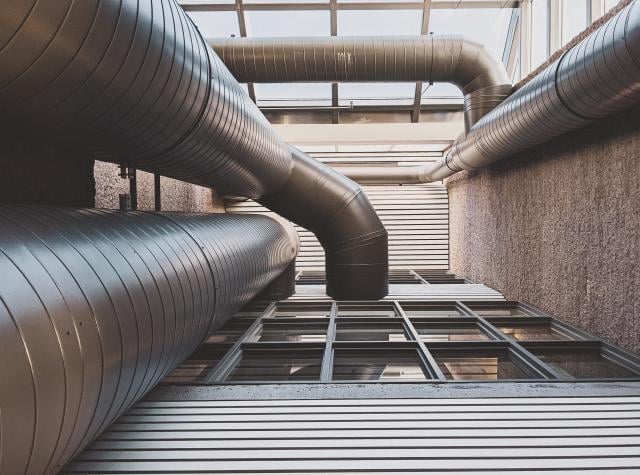
Protection of air handling units (HVAC Learning)

Offered by ADEGEB,
Protection of air handling units (HVAC Learning)

Learn how to work with air handling units.

Objective(s) :
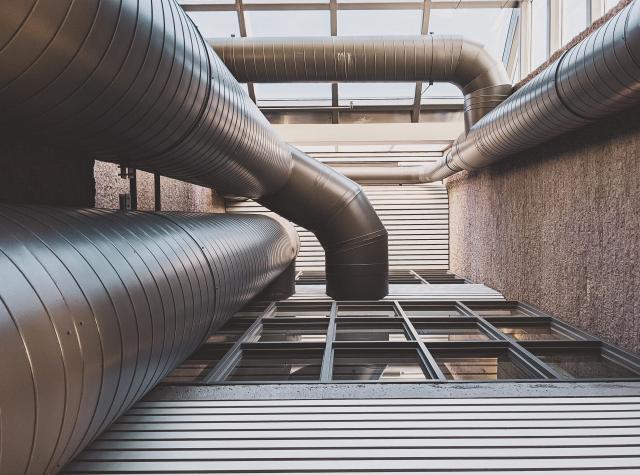
Protection of air handling units online training explains how to install, regulate and control protection devices for air handling units.

Thermostats and pressure switches constitute the first control level for the correct operating of air handling units. Knowledge of their operation and their regulating is therefore very important for all technicians in charge of this type of equipment.

Go to Class
MOOC List is learner-supported. When you buy through links on our site, we may earn an affiliate commission.
Related Courses

Control of Nonlinear Spacecraft Attitude Motion (Coursera) Coursera
University of Colorado Boulder

Control of Nonlinear Spacecraft Attitude Motion (Coursera)

This course trains you in the skills needed to program specific orientation and achieve precise aiming goals for spacecraft moving through three dimensional space. First, we cover stability definitions of nonlinear dynamical systems, covering the difference between local and global stability. We then analyze and apply Lyapunov's Direct Method to prove these stability properties, and develop a nonlinear 3-axis attitude pointing control law using Lyapunov theory. Finally, we look at alternate feedback control laws and closed loop dynamics.

Aug 3rd 2026
4 Weeks
Física: Vectores, Trabajo y Energía (Coursera) Coursera
Tecnológico de Monterrey

Física: Vectores, Trabajo y Energía (Coursera)

Este curso provee al estudiante con conceptos y herramientas matemáticas para modelar problemas en física, que al aplicar podrá enfrentar con éxito los cursos de física universitarios. Así pues, la filosofía de este curso consiste en cubrir temas conceptuales relativos a la Física y desarrollar tu capacidad de aprender y aplicarlos en tu vida profesional.

Aug 17th 2026
5-12 Weeks
Particle Physics: an Introduction (Coursera) Coursera
University of Geneva

Particle Physics: an Introduction (Coursera)

This course introduces you to subatomic physics, i.e. the physics of nuclei and particles. More specifically, the following questions are addressed: What are the concepts of particle physics and how are they implemented?; What are the properties of atomic nuclei and how can one use them?; How does one accelerate and detect particles and measure their properties?; What does one learn from particle reactions at high energies and particle decays?; How do electromagnetic interactions work and how can one use them?; How do strong interactions work and why are they difficult to understand?; How do weak interactions work and why are they so special?; What is the mass of objects at the subatomic level and how does the Higgs boson intervene?; How does one search for new phenomena beyond the known ones?; What can one learn from particle physics concerning astrophysics and the Universe as a whole?

Aug 10th 2026
5-12 Weeks
Archaeoastronomy (Coursera) Coursera
Politecnico di Milano

Archaeoastronomy (Coursera)

Archaeoastronomy is the “science of stars and stones”: it studies the relationships between the ancient monuments and the sky, in order to gain a better understanding of the ideas of the architects of the past and of their religious and symbolic world. The course provides the first complete, easy introduction to this fascinating discipline.

Aug 17th 2026
5-12 Weeks
The Sun and the Total Eclipse of August 2017 (Coursera) Coursera
University of Colorado Boulder

The Sun and the Total Eclipse of August 2017 (Coursera)

A total eclipse is one of the most spectacular sights you can ever see! It looks like the end of the world may be at hand. There is a black hole in the sky where the sun should be. Pink flames of solar prominences and long silver streamers of the sun's corona stretch across the sky. It gets cold, and animals do strange things. People scream and shout and cheer, and remember the experience their whole life. But total eclipses are important scientifically as well.

Aug 3rd 2026
5-12 Weeks
Astro 101: Black Holes (Coursera) Coursera
University of Alberta

Astro 101: Black Holes (Coursera)

What is a black hole? Do they really exist? How do they form? How are they related to stars? What would happen if you fell into one? How do you see a black hole if they emit no light? What’s the difference between a black hole and a really dark star? Could a particle accelerator create a black hole? Can a black hole also be a worm hole or a time machine? In Astro 101: Black Holes, you will explore the concepts behind black holes. Using the theme of black holes, you will learn the basic ideas of astronomy, relativity, and quantum physics.

Aug 17th 2026
5-12 Weeks
Physics 101 - Rotational Motion and Gravitation (Coursera) Coursera
Rice University

Physics 101 - Rotational Motion and Gravitation (Coursera)

This course serves as an introduction to the physics of rotational motion and gravitation. Upon completion, learners will have an understanding of how mathematical laws and conservation principles describe the motions and interactions of objects all around us. They will gain experience in solving physics problems with tools such as graphical analysis, algebra, vector analysis, and calculus.

Aug 3rd 2026
4 Weeks
Mechanics: Motion, Forces, Energy and Gravity, from Particles to Planets (Coursera) Coursera
UNSW Sydney - University of New South Wales

Mechanics: Motion, Forces, Energy and Gravity, from Particles to Planets (Coursera)

Most of the phenomena in the world around you are, at the fundamental level, based on physics, and much of physics is based on mechanics. Mechanics begins by quantifying motion, and then explaining it in terms of forces, energy and momentum. This allows us to analyse the operation of many familiar phenomena around us, but also the mechanics of planets, stars and galaxies.

Aug 17th 2026
5-12 Weeks
Fundamentals of Fluid-Solid Interactions (Coursera) Coursera
École Polytechnique

Fundamentals of Fluid-Solid Interactions (Coursera)

What is fluid-solid interactions ? It is what happens when the motions of a fluid and of a solid are somehow coupled. This happens all the time, around you when leaves flutter in the wind, inside you when your heart beats, above you when wings of a plane vibrate, under the sea... The idea behind this MOOC is to give you the basic tools to be able to predict and eventually mitigate things called flutter, galloping, sloshing, vortex-induced vibrations, added mass, to cite a few. We are going to consider any possible domains of applications such as civil engineering, aerospace engineering, nuclear engineering , ocean engineering, biomechanics and even food processing !

Aug 10th 2026
5-12 Weeks