Valuing Nature: Should We Put a Price on Ecosystems? (FutureLearn)

Offered by University of Exeter,
Valuing Nature: Should We Put a Price on Ecosystems? (FutureLearn)

Discover the many ways that we benefit from the natural world through ecosystem services. There are many services that ecosystems provide that we never even consider, until we destroy them. Natural ecosystems help alleviate flooding, improve food security and protect our coastlines. Yet we consistently replace these ecosystems with manmade alternatives.

Class Deals by MOOC List - Click here and see FutureLearn's Active Discounts, Deals, and Promo Codes.

If we put a price on nature, will it help us to protect these important ecosystems? And is it morally right to put a price on nature? Get answers with this course that uses an interdisciplinary approach to explore the ins and outs of how we value nature.

Syllabus

Week 1: Putting a Price on Nature
Week 2: Ecosystem Services in Action

What will you achieve?
By the end of the course, you'll be able to...

  • Describe the concept of 'valuing nature’
  • Compare different types of services that ecosystems provide
  • Assess the moral and political dilemmas associated with valuing ecosystems
  • Apply your understanding of ecosystem services to peatlands, coral reefs and rainforests
  • Identify key ecosystem services in your place
  • Investigate the best ways to manage and preserve ecosystems and their services
Go to Class
MOOC List is learner-supported. When you buy through links on our site, we may earn an affiliate commission.

Related Courses

Invisible Worlds: Understanding the Natural Environment (FutureLearn) FutureLearn
University of Exeter,Eden Project

Invisible Worlds: Understanding the Natural Environment (FutureLearn)

Explore the connection between life and the Earth's invisible systems and gain new insights into the natural environment. Discover Earth's invisible systems and transform your understanding of the world. Given the current climate emergency, it’s increasingly important that we have a good understanding of Earth’s life support systems. We rely on these systems for fresh air, clean water, fertile soil, rich biodiversity and a stable climate. On this course, you’ll explore the natural systems we can’t see or feel, from microscopic creatures to gases.

Available Now
4 Weeks
Innovative Environmental Management Models: Case Studies and Applications (edX) EdX
University System of Maryland - USM,USMx,University of Maryland Center for Environmental Science - UMCES,UMCES

Innovative Environmental Management Models: Case Studies and Applications (edX)

Utilizing extensive case studies of various ecosystems, you will learn how to effectively utilize science-based management to mitigate anthropogenic impacts and ensure resiliency and sustainability in your community. Case studies are the best means to analyze real world problems and assess viability of proposed solutions. We will explore a variety of ecosystems and determine how effectively they are managed given the specific challenges of each locale.

Self Paced
Self-Paced
Fashion Values: Nature (FutureLearn) FutureLearn
London College of Fashion

Fashion Values: Nature (FutureLearn)

Understand biodiversity in the context of fashion and create a plan for fashion that protects our earth’s systems. Discover fashion practices that can protect, restore, and regenerate ecosystems. Nature is the life force that provides us with the air, water, soil, and minerals that sustain life on earth. These elements come together in the clothes we wear. This course will help you build the knowledge, skills, and connections to reimagine fashion’s practices and develop a plan to put nature first.

Available now
4 Weeks
Zoologia (edX) EdX
University of Naples Federico II,FedericaX

Zoologia (edX)

Comprendere gli animali e i sistemi naturali, attraverso il filo conduttore dell’evoluzione. Un viaggio da percorrere con l’entusiasmo di un bambino e la professionalità di uno studioso. La zoologia è la conoscenza degli animali, i nostri coinquilini. Ci sono centinaia di specie animali che interagiscono insieme a noi in una relazione di comunità o ecosistema. Questo corso di Zoologia è una passeggiata nei temi propri della materia come elemento culturale essenziale per il biologo, il naturalista e chiunque si occupi della vita.

Self Paced
Self-Paced
Mindfulness and Well-being: Peace in, Peace Out (Coursera) Coursera
Rice University

Mindfulness and Well-being: Peace in, Peace Out (Coursera)

The purpose of this course is to introduce mindfulness as a robust tool for spiritual development. Highlighting its rich traditional roots, the course explores the capacity of mindfulness to expand understanding about the nature of human consciousness and facilitate certain transcendent emotional experiences, including awe, wonder and flow.

Jul 20th 2026
4 Weeks
Climate Adaptation in Africa (Coursera) Coursera
University of Cape Town

Climate Adaptation in Africa (Coursera)

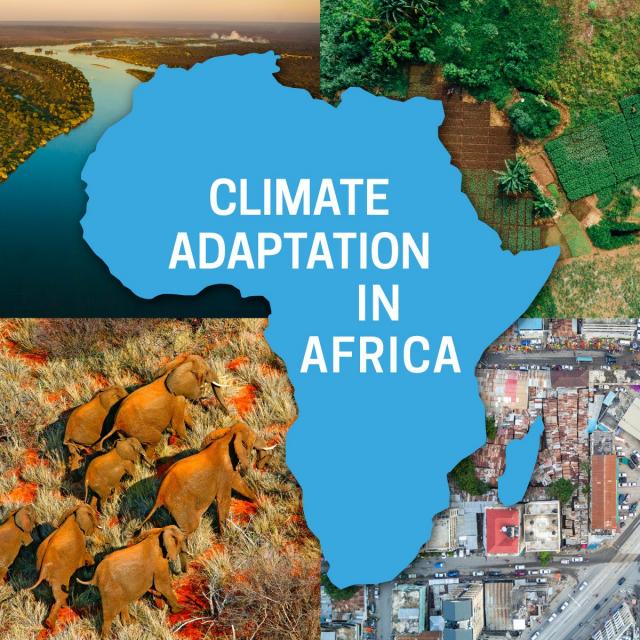
This course explores why climate change adaptation is important in the African context. Africa is considered one to be one of the most vulnerable regions to climate change. Historically, climate-related hazards such as drought, flooding, pest and disease outbreaks, coastal storms and heat waves have had devastating impacts on people and the environment in which they live.

Aug 3rd 2026
5-12 Weeks
Planet Earth: Understanding and Protecting our Environment (FutureLearn) FutureLearn
University of Leeds

Planet Earth: Understanding and Protecting our Environment (FutureLearn)

Learn about the physical geography of Earth and discover how to use this knowledge to protect our natural environment. Discover the Earth’s natural systems and how human activity affects them. On this two-week course from the University of Leeds, you will discover the processes of the hydrosphere, the geosphere, and the biosphere and explore the impact of human activity and climate change on our planet.

Self Paced
2 Weeks
Environmental Challenges: Human Impact in the Natural Environment (FutureLearn) FutureLearn
University of Leeds

Environmental Challenges: Human Impact in the Natural Environment (FutureLearn)

Complexity in nature arises from a myriad of simple interactions. How can this lead to an unpredictable dynamism? Complex patterns in ecology are not always causal and predictable. Populations have their own dynamics that can be independent of external environmental conditions. In this course we look at the way that natural systems are organised; although living systems are complex, there are also some fairly constant patterns and relationships.

Self Paced
2 Weeks
Water: Addressing the Global Crisis (edX) EdX
SDGAcademyX,SDG Academy

Water: Addressing the Global Crisis (edX)

We are living in a water stressed world. It is a global crisis and therefore we must act now! What can we do to save the planet and ensure availability of water for all by 2030? Water isthe source of all life. Without it, neither humans nor nature will survive. Yet lack of access to water is a rapidly growing problem and one of the world’s gravest risks. It is a global crisis.

Self Paced
Self-Paced
Introduction to Sustainability (Coursera) Coursera
University of Illinois at Urbana-Champaign

Introduction to Sustainability (Coursera)

This course introduces the academic approach of Sustainability and explores how today’s human societies can endure in the face of global change, ecosystem degradation and resource limitations. The course focuses on key knowledge areas of sustainability theory and practice, including population, ecosystems, global change, energy, agriculture, water, environmental economics and policy, ethics, and cultural history.

Aug 3rd 2026
5-12 Weeks
La enseñanza de las Ciencias Naturales en la escuela primaria (Coursera) Coursera
Universidad Austral

La enseñanza de las Ciencias Naturales en la escuela primaria (Coursera)

Los científicos y las científicas son “aprendices profesionales”: se dedican a formular preguntas, encontrar observaciones discordantes, poner en duda aquello que no cierra y construir nuevas respuestas que permitan entender mejor el mundo en que vivimos. En este curso, desarrollarás las estrategias necesarias para lograr que tus estudiantes aprendan no sólo conocimientos científicos conceptuales sino también aquellas herramientas que les permitan investigar el mundo que los rodea, de modo similar a como hacen los científicos y científicas.

Aug 10th 2026
4 Weeks