Using Sensors With Your Raspberry Pi (Coursera)

Using Sensors With Your Raspberry Pi (Coursera)

This course on integrating sensors with your Raspberry Pi is course 3 of a Coursera Specialization and can be taken separately or as part of the specialization. Although some material and explanations from the prior two courses are used, this course largely assumes no prior experience with sensors or data processing other than ideas about your own projects and an interest in building projects with sensors.

Class Deals by MOOC List - Click here and see Coursera's Active Discounts, Deals, and Promo Codes.

This course focuses on core concepts and techniques in designing and integrating any sensor, rather than overly specific examples to copy. This method allows you to use these concepts in your projects to build highly customized sensors for your applications.
Some of the ideas covered include calibrating sensors and the trade-offs between different mathematical methods of storing and applying calibration curves to your sensors. We also discuss accuracy, precision, and how to understand uncertainty in your measurements. We study methods of interfacing analog sensors with your Raspberry Pi (or other platform) with amplifiers and the theory and technique involved in reducing noise with spectral filters. Lastly, we borrow from the fields of data science, statistics, and digital signal processing, to post-process our data in Python.

Course 3 of 4 in the Powering your Home Projects with Raspberry Pi Specialization.

Syllabus

WEEK 1
Designing Sensors
This first module gets us all on the same page, no matter how much experience you have with sensors or measurement technology. We'll start by describing a straightforward sensor flow model to help us understand the myriad of sensors available in the world, and which you may later build. Then we'll move into the concepts of accuracy, precision, and uncertainty, which are necessary for understanding the inherent error in any measurement system. This module lays the groundwork for the circuits and examples in later modules.

WEEK 2
Calibration Methods
In this module, we'll look at examples of three common methods to store calibration data and apply that data to your sensor measurements. These examples range from simple to sophisticated, but none are complicated. We'll use Python and advanced open-source libraries to do the heavy math, just like you can implement in your Raspberry Pi projects.

WEEK 3
Interface Circuits
Once you have a sensor, and have a Raspberry Pi, there is often a need for circuitry in the middle to interface the two. In this module, we'll show how simple amplifier and filter circuits can be used to adapt voltage levels and reduce noise from your sensor data.

WEEK 4
Introduction to Signal Processing
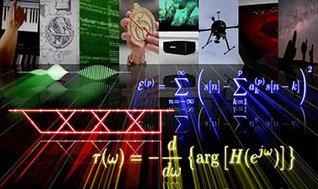
The great thing about using a Raspberry Pi for your sensor projects is that you have access to great open-source software libraries and lots of processing power to manipulate your sensor data. This module looks at a few techniques for using statistical and digital signal processing methods to clean up your sensor data.
Go to Class
MOOC List is learner-supported. When you buy through links on our site, we may earn an affiliate commission.

Related Courses

Intelligent Machining (Coursera) Coursera
University at Buffalo,The State University of New York

Intelligent Machining (Coursera)

Manufacturers are increasingly utilizing machine tools that are self-aware – they perceive their own states and the state of the surrounding environment – and are able to make decisions related to machine activity processes. This is called intelligent machining, and through this course students will receive a primer on its background, tools and related terminology.

Sep 21st 2026
4 Weeks
Introduction to the Internet of Things and Embedded Systems (Coursera) Coursera
University of California, Irvine

Introduction to the Internet of Things and Embedded Systems (Coursera)

The explosive growth of the “Internet of Things” is changing our world and the rapid drop in price for typical IoT components is allowing people to innovate new designs and products at home. In this first class in the specialization you will learn the importance of IoT in society, the current components of typical IoT devices and trends for the future. IoT design considerations, constraints and interfacing between the physical world and your device will also be covered. You will also learn how to make design trade-offs between hardware and software. We'll also cover key components of networking to ensure that students understand how to connect their device to the Internet.

Sep 14th 2026
4 Weeks
Teaching Physical Computing with Raspberry Pi and Python (FutureLearn) FutureLearn
Raspberry Pi Foundation

Teaching Physical Computing with Raspberry Pi and Python (FutureLearn)

Explore the exciting world of physical computing and create electronic circuits that you can control with code. Learn the benefits of using physical computing with your students. On this course from the Raspberry Pi Foundation, you will be introduced to the world of physical computing. You will use input devices to capture data, process that data with the Python programming language, and then use output devices to get information back out from your computer.

Mar 6th 2023
3 Weeks
Signals and Systems, Part 1 (edX) EdX
IIT Bombay,IITBombayX

Signals and Systems, Part 1 (edX)

This course provides the basic toolkit for any signal processing application - the abstraction of signals and systems, from the point of view of analysis and characterization. We encounter signals and systems extensively in our day-to-day lives, from making a phone call, listening to a song, editing photos, manipulating audio files, using speech recognition softwares like Siri and Google now, to taking EEGs, ECGs and X-Ray images.

No sessions available
5-12 Weeks
Embedded Smart Home (openHPI) OpenHPI
Hasso-Plattner-Institut

Embedded Smart Home (openHPI)

Herzlich Willkommen zum interaktiven Kurs „Embedded Smart Home“. Wir freuen uns, Sie in die Welt des Smart Home zu entführen. Während des Kurses bekommen Sie Einblicke in die Umsetzung eines Smart Home Projekts auf Basis eines Raspberry Pi und unter Nutzung von Sensoren, Aktuatoren und Displays. Um für die Programmierung gewappnet zu sein, können Sie Ihr Wissen aus dem zurückliegenden Python Kurs ("Spielend Programmieren lernen") nutzen und vertiefen. Wer diesen Kurs noch nicht besucht hat, kann dies auch jetzt noch im Archivmodus machen.

Self Paced
Self-Paced
Touch IoT with SAP Leonardo (openSAP) OpenSAP
SAP

Touch IoT with SAP Leonardo (openSAP)

Join this free online course to learn and experience how the Internet of Things (IoT) works. If you’re interested in running an IoT project, learn how sensors and devices with intelligent software can support you to achieve your goals. What does the Internet of Things mean to you? We first asked this question with the course “Imagine IoT”, held in 2016. Since then, IoT has continued to evolve at a rapid pace, with even more IoT projects demonstrating what’s possible in a world of digitally connected and sensing things. And SAP has responded by announcing SAP Leonardo, an innovation portfolio focused on this digital transformation.

Self Paced
Self-Paced
Robotics With Raspberry Pi: Build and Program Your First Robot Buggy (FutureLearn) FutureLearn
Raspberry Pi Foundation,National Centre for Computing Education

Robotics With Raspberry Pi: Build and Program Your First Robot Buggy (FutureLearn)

Build and program your first robot buggy using a Raspberry Pi, learning how to connect motors, add sensors and write algorithms. Learn robotics by building a robot buggy and controlling it with a Raspberry Pi. On this course from the Raspberry Pi Foundation, you’ll build a robot buggy controlled by a Raspberry Pi.

Jan 2nd 2023
3 Weeks
Interfacing with the Raspberry Pi (Coursera) Coursera
University of California, Irvine

Interfacing with the Raspberry Pi (Coursera)

The Raspberry Pi uses a variety of input/output devices based on protocols such as HDMI, USB, and Ethernet to communicate with the outside world. In this class you will learn how to use these protocols with other external devices (sensors, motors, GPS, orientation, LCD screens etc.) to get your IoT device to interact with the real world.

Sep 14th 2026
4 Weeks
Introduction and Programming with IoT Boards (Coursera) Coursera
Pohang University of Science and Technology - POSTECH

Introduction and Programming with IoT Boards (Coursera)

Internet of Things (IoT) is an emerging area of information and communications technology (ICT) involving many disciplines of computer science and engineering including sensors/actuators, communications networking, server platforms, data analytics and smart applications. IoT is considered to be an essential part of the 4th Industrial Revolution along with AI and Big Data. This course will be very useful to senior undergraduate and graduate students as well as engineers who are working in the industry.

Sep 28th 2026
5-12 Weeks
Fundamentals of Robotics & Industrial Automation (Coursera) Coursera
L&T EduTech

Fundamentals of Robotics & Industrial Automation (Coursera)

The "Fundamentals of Robotics & Industrial Automation" course is tailored to provide a comprehensive understanding of essential concepts and practical skills necessary for excelling in the field of collaborative robotics. Through three dynamic modules, participants will explore the intricacies of sensors & transducers in machine tools & robots, servo systems, and interfacing and simulation techniques.

Sep 14th 2026
3 Weeks