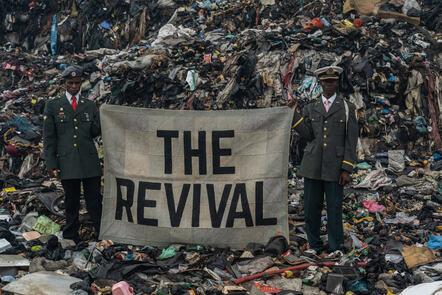
Upcycling and the Circular Economy: Ghanaian Creative Solutions to Global Textile Waste (FutureLearn)

Upcycling and the Circular Economy: Ghanaian Creative Solutions to Global Textile Waste (FutureLearn)

Explore the environmental impact of fast fashion in Ghana and discover localised solutions to a global issue. Learn to create collective change with Ghanaian creatives at THE REVIVAL. Almost three-quarters of all textile waste is incinerated or sent to landfill. On this two-week course, you’ll discover the global impact of fast fashion. You’ll explore how THE REVIVAL, a collective of Ghanaian creatives, are using artistic ingenuity to resolve textile waste challenges in their community and use this as inspiration to create your own localised solutions.

Class Deals by MOOC List - Click here and see FutureLearn's Active Discounts, Deals, and Promo Codes.

Investigate a global perspective of circular economy
In the UK alone, over a million tonnes of clothing ends up as waste.
You’ll examine what happens to waste textiles and how a circular economy can transform fashion waste by generating jobs, reducing inequality, and minimising the environmental impact of the fashion industry.
Using real-world case studies to contextualise your learning, you’ll be able to develop your own approach to conscious fashion and take responsibility for your fashion choices.

Explore upcycling culture and develop creative upcycling ideas
You’ll learn practical tips for upcycling, discovering how community level actions impact global fashion consumption.
Sharing your ideas, you’ll engage with other learners, developing upcycling ideas and projects with an ethical purpose.

Develop an understanding of sustainable fashion using ethnographic research
The work of THE REVIVAL is extensively featured in the Eileen Fisher Foundation & Pentatonic Textile Waste Crisis report (launching 6th July).
You’ll learn about their ethnographic, creative approach to creating change and its wider implications for fashion sustainability and global textile waste.
By the end of this course, you’ll understand circular economies as a response to global textile waste. You’ll be equipped with the knowledge to develop a community of changemakers and inspired to upcycle fashion into one of a kind treasures.

Syllabus

Week 1: Who is a circular economy for?
Week 2: Upcycling for Transformation

What will you achieve?
By the end of the course, you‘ll be able to...

  • Apply contemporary visual arts and upcycling culture as a tool to shape popular consciousness and foster positive fashion action around the globe
  • Describe the cultural, economic and environmental impacts of fast fashion and foreign "fashion aid/textile donations" in Ghana
  • Explore how THE REVIVAL built a global, textile waste enterprise through organic, digital collaboration and trust
  • Living-the-data: introduction to concept of ‘ethnography’ and story-based research powered by communities, for communities

Who is the course for?
This course is designed for anyone with an interest in fashion and sustainability. It is particularly suited to creatives, professionals in the fashion industry, and environmental activists.
Go to Class
MOOC List is learner-supported. When you buy through links on our site, we may earn an affiliate commission.

Related Courses

Sustainable Construction in a Circular Economy (Coursera) Coursera
Parsons School of Design, The New School

Sustainable Construction in a Circular Economy (Coursera)

This course takes a wide-lens view of the role of materials decisions in circular design and the promotion of a healthier world. You find out how to execute a healthier project. You learn why healthier materials matter to the entire project team and the importance of communication between teams. You look at circularity, embodied carbon reduction, and the evolution of the built environment. You examine the role designers play in executing a healthier project, from construction to installation to use, and its significance in the context of cities.

Sep 28th 2026
3 Weeks
Fashion Values: Nature (FutureLearn) FutureLearn
London College of Fashion

Fashion Values: Nature (FutureLearn)

Understand biodiversity in the context of fashion and create a plan for fashion that protects our earth’s systems. Discover fashion practices that can protect, restore, and regenerate ecosystems. Nature is the life force that provides us with the air, water, soil, and minerals that sustain life on earth. These elements come together in the clothes we wear. This course will help you build the knowledge, skills, and connections to reimagine fashion’s practices and develop a plan to put nature first.

Available now
4 Weeks
Sustainable Packaging in a Circular Economy (edX) EdX
Delft University of Technology,DelftX

Sustainable Packaging in a Circular Economy (edX)

Learn how to apply the principles of the circular economy to sustainable packaging systems. It has become almost impossible to imagine what our lives would be like without the many benefits of packaging - just think about the different packaging and single-use items you use on a daily basis. Yet as our global population grows in size and affluence, both our collective demand for packaging materials and the waste we generate as a result will increasedramatically.

Self Paced
Self-Paced
Management of Fashion and Luxury Companies (Coursera) Coursera
Università Bocconi

Management of Fashion and Luxury Companies (Coursera)

Learn how fashion and luxury companies work and understand their brands, products, retail, and communication strategies. Travel through business models, international development, and product categories with industry influent experts. Adopting a case-study approach, the course presents strategic brand management in luxury and fashion companies as a balancing act: tradition vs. innovation, expertise vs. experimentation, casual vs. stylish; in order to increase the brand value by nurturing the brand heritage and at the same time staying fresh, relevant, and contemporary in the global marketplace.

Sep 21st 2026
5-12 Weeks
Introduction to Sustainable Practices in Food Service (FutureLearn) FutureLearn
International Culinary Studio

Introduction to Sustainable Practices in Food Service (FutureLearn)

Create a more sustainable food service business and make a difference to your bottom line, your stakeholders, and the environment. Improve your sustainable practices within your organisation. Sustainability isn’t just about ‘greening’; sustainability actually means ‘meeting the needs of the present without compromising the ability of future generations to meet their needs.’ On this course, you’ll look at general global sustainability concepts, issues, and concerns, before focusing on sustainability specifically within food service and what you can do to reduce your impact.

Self Paced
2 Weeks
Circular Economy for a Sustainable Built Environment (edX) EdX
Delft University of Technology,DelftX

Circular Economy for a Sustainable Built Environment (edX)

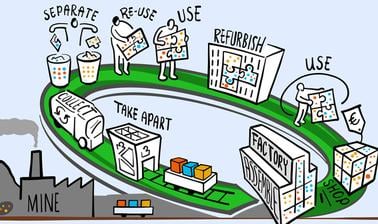
Learn how the principles of the Circular Economy can be applied to the built environment ranging from products and buildings to metropolitan and regional development strategies. In this course you will become familiar with circularity as a systemic, multi-disciplinary approach, concerned with the different scale, from material to product, building, city, and region.

Self Paced
Self-Paced
Del desperdicio al valor: cómo abordar el desperdicio de alimentos (FutureLearn) FutureLearn
University of Reading,EIT Food,EIT

Del desperdicio al valor: cómo abordar el desperdicio de alimentos (FutureLearn)

Descubra las causas y el impacto del desperdicio de alimentos y aprenda cómo abordarlo a nivel personal, comunitario y nacional. Conozca cómo la lucha contra el desperdicio y la pérdida de alimentos puede ayud. La importante contribución del sistema alimentario al cambio climático está ampliamente reconocida y los consumidores están cada vez más preocupados por el desperdicio de alimentos.

Jan 3rd 2022
3 Weeks
Built environment sustainability assessment (edX) EdX
Universitat Politècnica de València,UPValenciaX

Built environment sustainability assessment (edX)

The course introduces the basic elements and trends for performing a through built environment assessment and develops the tools for urban sustainability policy impact analysis. The course introduces the basic elements and trends for performing a through built environment assessment and develops the tools for urban sustainability policy impact analysis.

Self Paced
Self-Paced
Fashion Values: Cultures (FutureLearn) FutureLearn
London College of Fashion

Fashion Values: Cultures (FutureLearn)

Use storytelling to contribute to equitable, inclusive and diverse cultures in and through fashion. Reimagine fashion as a powerful medium to explore and amplify cultures. On this four-week course from London College of Fashion, you’ll learn how to find and tell stories of the ingenuity and creativity of fashion in its many cultural forms.

Dec 5th 2022
4 Weeks
Economía Circular en los procesos logísticos (edX) EdX
LOGYCAX,LOGYCA

Economía Circular en los procesos logísticos (edX)

La economía circular es una alternativa que busca redefinir el crecimiento organizacional, con énfasis en los beneficios para toda la sociedad. Esto implica separar la actividad económica del consumo de recursos finitos y eliminar los residuos del sistema desde el diseño. Existen diferentes modelos que nos enseñan a utilizar este concepto, pero en este curso podrá encontrar como aplicar estos modelos en procesos logísticos de la mano de las empresas y expertos que lo han investigado.

Self Paced
Self-Paced
Waste Management and Critical Raw Materials (edX) EdX
Delft University of Technology,DelftX

Waste Management and Critical Raw Materials (edX)

Learn about waste management and its key role in saving critical raw materials. Gain practical knowledge of the circular economy, recycling, refurbishment, and remanufacturing as a means of identifying new business opportunities. How can we ensure the continuous supply of the increasingly scarce raw materials that are needed to make the products we use every day? In this course, we will look at the potential benefits of circular procurement and how recycling technologies and more efficient ways of collecting and recycling critical raw materials (CRMs) can make your business and production more resource resilient.

Self Paced
Self-Paced
Sustainable Fashion (Coursera) Coursera
Copenhagen Business School

Sustainable Fashion (Coursera)

Sometimes when we say we work with sustainable fashion people look at us like... "Mmmm, is it really possible for something like fashion to be sustainable?" And let's face it, people are right being suspicious. If anything the fashion industry has become increasingly unsustainable over the last decades, using more and more natural resources and creating more and more waste.

Oct 12th 2026
5-12 Weeks