NAU

Turismo Sustentável (NAU)

Turismo Sustentável (NAU)

O que será do turismo após a COVID-19? Será o Turismo Sustentável a alternativa? Conheça e compreenda os princípios éticos e sustentáveis aplicados ao turismo. O Turismo Sustentável é, segundo os especialistas, a aposta que deve ser feita para evitar um turismo massificado, sobretudo após o aparecimento da COVID-19 e consequente pandemia. No curso Turismo Sustentável vai conseguir responder a várias questões, tais como: quais as alternativas para o turismo massificado? Como tornar o meu destino mais apelativo e competitivo? Que atitudes deve tomar para que a procura seja adequada?

Em 2020 estava previsto o aumento de cerca de 4% no movimento de turistas internacionais em comparação ao ano anterior, facto que significaria mais de 1,5 biliões de pessoas a viajarem.
É preciso repensar e refletir em alternativas. A atual forma de atuação do turismo não é promissora, sendo necessário que o turismo se renove. Especialistas, com mais de 20 anos de experiência no tema, irão abordar estas temáticas de maneira simples, objetiva e clara.

Público-alvo
O curso tem como foco os trabalhadores da área do turismo, estudantes, curiosos e a comunidade local que deseja rever os conceitos preconcebidos de uma destinação de sucesso, revendo os caminhos, trilhando novos rumos e reaprendendo o turismo de maneira mais respeitosa ao meio ambiente, à economia, à sociedade e à cultura.

Objetivos de Aprendizagem
Após a realização deste curso vai ser capaz de:

  1. Compreender os conceitos de sustentabilidade e turismo sustentável;
  2. Perceber o papel do património material e imaterial para o desenvolvimento sustentável;
  3. Responder às novas exigências do mercado turístico;
  4. Criar alternativas sustentáveis para o desenvolvimento do turismo.

Carga Horária
O curso tem uma carga total de 29 horas.

Go to Class
MOOC List is learner-supported. When you buy through links on our site, we may earn an affiliate commission.

Related Courses

Principles of Sustainable Finance (Coursera) Coursera
Erasmus University Rotterdam

Principles of Sustainable Finance (Coursera)

Finance is widely seen as an obstacle to a better world. Principles of Sustainable Finance explains how the financial sector can be mobilized to counter this. Using finance as a means to achieve social goals we can divert the planet and its economy from its current path to a world that is sustainable for all. Throughout this course, you will learn about the UN Sustainable Development Goals, how social and environmental factors should not be regarded as externalities, you will learn more about sustainable banking and asset management, about effective engagement, sustainable scenario analysis and long-term value creation.

Sep 28th 2026
5-12 Weeks
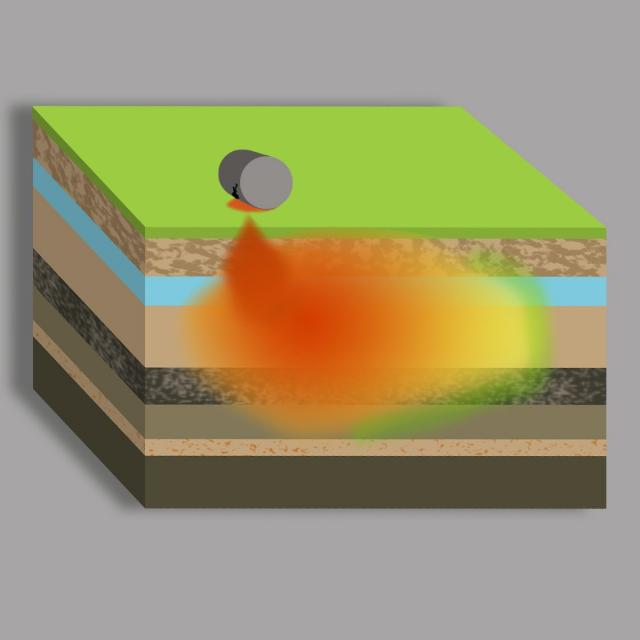
Natural Attenuation of Groundwater Contaminants: New Paradigms, Technologies, and Applications (Coursera) Coursera
Rice University

Natural Attenuation of Groundwater Contaminants: New Paradigms, Technologies, and Applications (Coursera)

Cleaning up the large number of groundwater contamination sites is a significant and complex environmental challenge. The environmental industry is continuously looking for remediation methods that are both effective and cost-efficient. Over the past 10 years there have been amazing, important developments in our understanding of key attenuation processes and technologies for evaluating natural attenuation processes, and a changing institutional perspective on when and where Monitored Natural Attenuation (MNA) may be applied.

Sep 28th 2026
5-12 Weeks
Sustainable Tourism – promoting environmental public health (Coursera) Coursera
University of Copenhagen

Sustainable Tourism – promoting environmental public health (Coursera)

The MOOC introduces learners to key environmental health and natural resources management challenges associated with the rapid growth in international tourist arrivals into low-income countries. Since infrastructural and regulatory capacities in such countries are often limited they are more exposed to the negative implications of such development. The MOOC will present experiences and potential avenues to develop a more sustainable form of tourism.

Sep 28th 2026
3 Weeks
Paths to a Sustainable Future (Coursera) Coursera
ESSEC Business School

Paths to a Sustainable Future (Coursera)

This MOOC is an introduction to social and ecological transition. Ecological issues (climate change, loss in biodiversity, scarcity of resources, etc.) and their social consequences (growing inequalities, poverty, conflicts, forced migrations, etc.) call upon us to promote a paradigm shift, to redesign our production and consumption patterns, as well as our lifestyles. This is what transition is all about.

Sep 28th 2026
4 Weeks
Global Warming I: The Science and Modeling of Climate Change (Coursera) Coursera
University of Chicago

Global Warming I: The Science and Modeling of Climate Change (Coursera)

This class describes the science of global warming and the forecast for humans’ impact on Earth’s climate. Intended for an audience without much scientific background but a healthy sense of curiosity, the class brings together insights and perspectives from physics, chemistry, biology, earth and atmospheric sciences, and even some economics—all based on a foundation of simple mathematics (algebra).

Sep 21st 2026
5-12 Weeks
Global Postharvest Loss Prevention: Fundamentals, Technologies, and Actors (Coursera) Coursera
University of Illinois at Urbana-Champaign

Global Postharvest Loss Prevention: Fundamentals, Technologies, and Actors (Coursera)

This course provides an overview of the issue of postharvest loss of grains by exploring essential physical, technical, and social dimensions of postharvest supply chains and loss prevention methods globally. Each year, estimates suggest that 1/3 of all food produced is lost or wasted, making postharvest loss a critical global food security and sustainability issue of today. Key knowledge areas are presented including: an overview of postharvest loss; supply chain activities such as harvesting, drying, and storage; economics and markets; an introduction to the network of actors working in this field.

Sep 21st 2026
4 Weeks
The Sustainable Development Goals – A global, transdisciplinary vision for the future (Coursera) Coursera
University of Copenhagen

The Sustainable Development Goals – A global, transdisciplinary vision for the future (Coursera)

In 2015, the UN launched the 17 Sustainable Development Goals (SDGs). Adopted by 193 member states, the goals represent an important international step in setting humanity on a trajectory towards sustainable development. Within this course, you will get a historical overview of how sustainability has been understood, as well as a thorough introduction to the SDGs – what they are, how progress can be measured, and how the SDGs are relevant for the management of the global systems supporting humanity. The course will examine how various societal actors are responding to and implementing the SDGs.

Sep 27th 2026
3 Weeks
Sustainable Development - Ideas and Imaginaries (Coursera) Coursera
University of Copenhagen

Sustainable Development - Ideas and Imaginaries (Coursera)

Ideas and imaginaries inspire human capacity for great endeavours, but ‘conventional wisdom’ frequently prevents necessary change. Achievement of global sustainable development is, therefore, dependent on a profound comprehension of the preunderstandings and implicit imaginaries that form both our perception of reality and our basic confidence in the viability of transgressive action.

Sep 21st 2026
4 Weeks
Energy, Environment, and Everyday Life (Coursera) Coursera
University of Illinois at Urbana-Champaign

Energy, Environment, and Everyday Life (Coursera)

This course teaches you everything you need to know about energy, the environment, and at least a number of things in everyday life. It starts by talking about energy itself and where it comes from. This includes how much we have, who has it, who uses it, and what that all means. The video clips are produced in a fast-paced multimedia format during which Professor Ruzic throws in fun and demonstrations. There are multiple-choice questions to check your understanding and some more in-depth exercises to guide you deeper into the subject.

Sep 28th 2026
5-12 Weeks
Ash-Related Operational Challenges in Energy Utilization of Sustainable Fuels (Coursera) Coursera
Technical University of Denmark - DTU

Ash-Related Operational Challenges in Energy Utilization of Sustainable Fuels (Coursera)

The basic idea behind this MOOC, is to present recent data on fuel characterization, slagging, fouling, corrosion, and trace element transformations, in a course that can be readily provided for students and industry people. This ensures understanding and application of the research, and provides the students and industry with a forum for discussion of the very latest research results, as well as feedback from industry to the research group at DTU, on important new research subjects in the field.

Sep 21st 2026
5-12 Weeks
Applied Sustainability Engineering (Coursera) Coursera
University of Colorado Boulder,Siemens

Applied Sustainability Engineering (Coursera)

Applied Sustainability Engineering, the second course in the "Applied Sustainability for Technical Managers" specialization discusses the techniques used by engineers and scientists to develop and assess the environmental impact of products and processes required to make those products. It begins with a discussion of different renewable energy technologies and their economics – highlighting how continued reductions in cost have made wind and solar power the least expensive way to generate electricity. It then addresses carbon footprints and how they are determined, applying a practical example where you determine your residential and transportation carbon footprints.

Sep 19th 2026
5-12 Weeks
Sustainable Business Enterprises (Coursera) Coursera
University of Illinois at Urbana-Champaign

Sustainable Business Enterprises (Coursera)

This course will explore current challenges and opportunities facing firms in the area of environmental sustainability. It will begin with an introduction to sustainability, with a particular focus on how environmental sustainability is relevant to business. Topics such as unsustainable consumption/consumer behavior, market research sustainable product design, sustainable value chains and communications will be covered. The bottom-up approach in terms of immersion, emersion, and design as applied to sustainable business enterprise will be covered.

Sep 14th 2026
4 Weeks