Think like an Engineer (OpenLearning)

Offered by Taylor's University,
Think like an Engineer (OpenLearning)

Engineering is an extremely exciting profession! Engineers are behind many of the advancements we are taking for granted today including computers, the Internet, smartphones, medical tools and cars. Engineers use science and math to create cool products and machines that make life worth living.
Engineering is not only a field of study. It is a way of thinking. The word 'engineer' is from the Latin word ingenium, which shares the same root as the word 'genius'. Adopting an engineering way of thinking can improve our performance in our daily life regardless of our field.
This course combines the engineering thinking (CDIO) with entrepreneurial behaviour leading towards the creation of purpose-driven technopreneurs.
Let's change the world together.
Dream big. Be different. Have fun.

The course explores the CDIO (Conceive, Design, Implement, Operate) framework to guide you to think like an engineer. You'll be able to join the engineering students on campus to work on project while discovering the engineer in you!

  1. Technopreneurship: Learning, Language and the Brain

In this lecture we will explore how Technopreneurship as a frame of mind can be learned and nurtured. Through the use of the right language and the correct technique, we can build myelin around our rewired brains to be highly effective technopreneurs who recognise opportunity and deliver value and make a difference in the world.

  1. Think Like a Technopreneur

In this lecture we will explore how engineers think and where do they draw their inspiration from. You will get to learn how engineers Conceive the cool things that they make and will start working on your own engineering project.

  1. The Lean Startup

In this lecture we will explore the lean startup process, of which Kal Joffres from Tandemic will speak on his experiences as a social entrepreneur.

  1. Crowd Funding

In this lecture we will explore the basics of crowd funding so that you can run a successful crowd funding campaign for your project. The lecture is delivered by Sam Shafie from PitchIn, the crowd funding platform that we are collaborating with in this course.

  1. Technopreneurial Eco System

In this lecture we will explore the basic components of the eco system in which value is created and delivers to the customers. Technopreneurs create products and services that are desirable and they achieve this through creating a balance between what is technologically feasible, economically viable and humanly desirable. The value is created and delivered to customers and funders within an eco system.

  1. Build a Technopreneurial Dream Team

In this lecture we will explore the basics of building effective teams that will work towards having the core competencies necessary to deliver the promised value to the stakeholders.

  1. Communicate Like a Technopreneur

In this lecture we will explore the framework for an effective communication that can be used not only in business context, but also in your life at large.

  1. Business Plan

In this lecture we will explore how technopreneurs communicate their ideas and plans of new ventures through business plan. A business plan is a document that outlines the venture’s potential including the business value, the customers’ segments, the resources needed and the expected profit.

  1. Market and Marketing

In this lecture we will explore how to market a product or a service effectively as well as how to segment a market and how to penetrate new markets.

  1. Money in the Organisation

In this lecture we will explore various terminologies and concepts related to managing money within a business.

  1. Return on Failure

In this lecture we will the importance of failure as a pre-requisite for success.

Go to Class
MOOC List is learner-supported. When you buy through links on our site, we may earn an affiliate commission.

Related Courses

Advanced Engineering Systems in Motion: Dynamics of Three Dimensional (3D) Motion (Coursera) Coursera
Georgia Institute of Technology

Advanced Engineering Systems in Motion: Dynamics of Three Dimensional (3D) Motion (Coursera)

This course is an advanced study of bodies in motion as applied to engineering systems and structures. We will study the dynamics of rigid bodies in 3D motion. This will consist of both the kinematics and kinetics of motion. Kinematics deals with the geometrical aspects of motion describing position, velocity, and acceleration, all as a function of time. Kinetics is the study of forces acting on these bodies and how it affects their motion.

Aug 10th 2026
5-12 Weeks
Ingeniería de Tráfico (Coursera) Coursera
Pontificia Universidad Católica de Chile

Ingeniería de Tráfico (Coursera)

El curso presenta en primer lugar las principales relaciones que caracterizan la circulación de vehículos y que dan pie a la teoría de circulación de vehículos sobre redes de transporte. Posteriormente se discutirán aspectos relativos al control de tráfico en intersecciones, sean estas de prioridad o semaforizadas. Finalmente, discutiremos sobre las características que presentan algunos modelos dinámicos de tráfico bastante utilizados en la actualidad.

Aug 10th 2026
4 Weeks
Highway Engineering (OpenLearning) OpenLearning
University of Technology, Malaysia

Highway Engineering (OpenLearning)

This is one of the compulsory courses in Civil Engineering where students are exposed to the fundamental theory of highway engineering. Topics covered are; highway materials and evaluations, premix plants, construction techniques and plants, quality controls and testing, pavement structural thickness design, highway drainage and maintenance, pavement visual assessment, and economic evaluation of transportation alternatives.

No sessions available
5-12 Weeks
Nanotechnology: A Maker’s Course (Coursera) Coursera
Duke University,University of North Carolina,North Carolina State University

Nanotechnology: A Maker’s Course (Coursera)

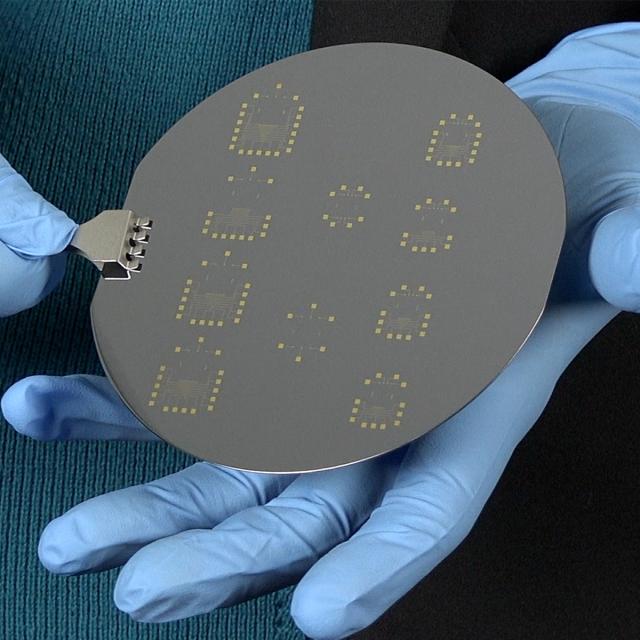
How can we create nano-structures that are 10,000 times smaller than the diameter of a human hair? How can we “see” at the nano-scale? Through instruction and lab demonstrations, in this course you will obtain a rich understanding of the capabilities of nanotechnology tools, and how to use this equipment for nano-scale fabrication and characterization.

Aug 10th 2026
5-12 Weeks
Engineering of Structures: Tension and Compression (Coursera) Coursera
Dartmouth College

Engineering of Structures: Tension and Compression (Coursera)

This course deals with tension and compression. After going through this course, you will understand why tensegrity structures and sculptures are different from other structures. You will also explore tension and compression in different types of trusses. Additionally you will understand determinacy and realize how it applies to trusses.

Aug 3rd 2026
3 Weeks
Engineering of Structures: Compression (Coursera) Coursera
Dartmouth College

Engineering of Structures: Compression (Coursera)

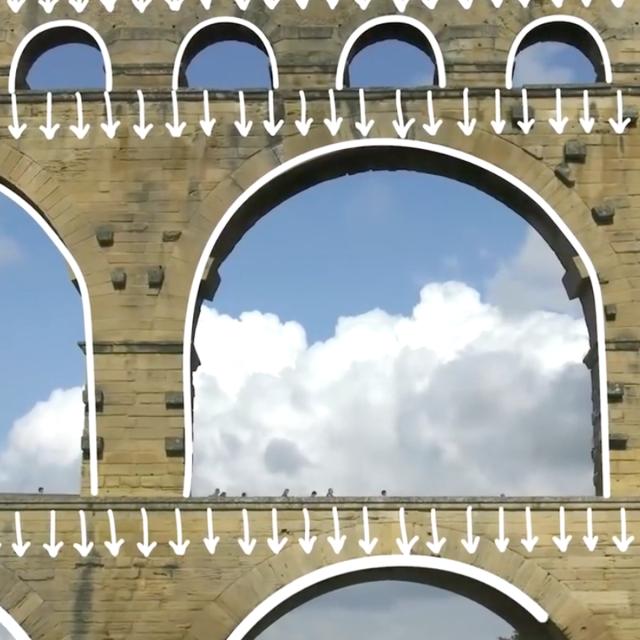
This course deals with compression. When we push an object, it compresses. Compression is what's going to hold up our building. Arches, vaults, domes, and anti-funicular forms help resist compression. In this course, you will learn about different columns and arches and their role in resisting compression. You'll also build anti-funicular forms.

Aug 3rd 2026
3 Weeks
Engineering Practices for Building Quality Software (Coursera) Coursera
University of Minnesota

Engineering Practices for Building Quality Software (Coursera)

Agile embraces change which means that team should be able to effectively make changes to the system as team learns about users and market. To be good at effectively making changes to the system, teams need to have engineering rigor and excellence else embracing change becomes very painful and expensive. In this course, you will learn about engineering practices and processes that agile and traditional teams use to make sure the team is prepared for change. In additional, you will also learn about practices, techniques and processes that can help team build high quality software. You will also learn how to calculate a variety of quantitative metrics related to software quality.

Aug 3rd 2026
4 Weeks
Thermodynamique : fondements (Coursera) Coursera
École Polytechnique Fédérale de Lausanne

Thermodynamique : fondements (Coursera)

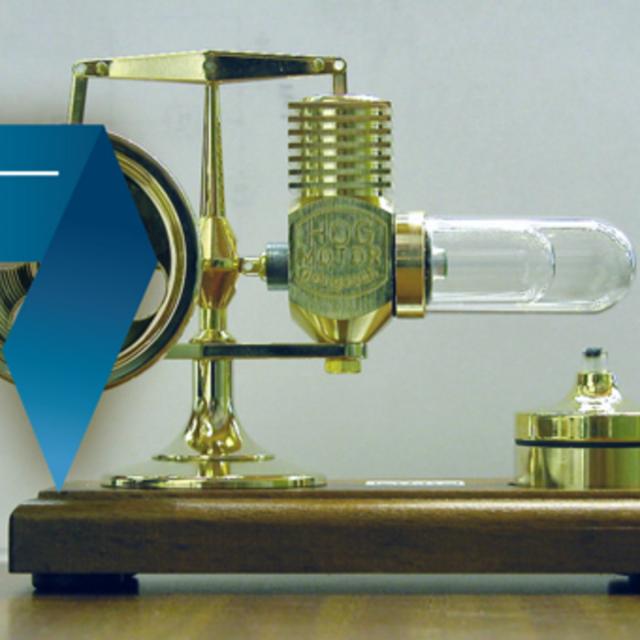
Ce cours vous apportera une compréhension des concepts fondamentaux de la thermodynamique du point de vue de la physique, de la chimie et de l’ingénierie. Il est scindé un deux MOOCs. Dans la première partie, le Professeur J.-Ph. Ansermet de l’EPFL et son collaborateur le Dr. Sylvain Bréchet ont rassemblé en quatre leçons tous les principes fondamentaux de la thermodynamique. La deuxième partie du MOOC illustre l’approche thermodynamique par une série d’applications présentées par des spécialistes provenant de diverses institutions partenaires du réseau RESCIF.

Aug 17th 2026
4 Weeks
Materials Science: 10 Things Every Engineer Should Know (Coursera) Coursera
University of California, Davis

Materials Science: 10 Things Every Engineer Should Know (Coursera)

We explore “10 things” that range from the menu of materials available to engineers in their profession to the many mechanical and electrical properties of materials important to their use in various engineering fields. We also discuss the principles behind the manufacturing of those materials. By the end of the course, you will be able to: recognize the important aspects of the materials used in modern engineering applications; explain the underlying principle of materials science: “structure leads to properties,”; identify the role of thermally activated processes in many of these important “things” – as illustrated by the Arrhenius relationship; relate each of these topics to issues that have arisen (or potentially could arise) in your life and work.

Aug 3rd 2026
5-12 Weeks
Image and video processing: From Mars to Hollywood with a stop at the hospital (Coursera) Coursera
Duke University

Image and video processing: From Mars to Hollywood with a stop at the hospital (Coursera)

In this course, you will learn the science behind how digital images and video are made, altered, stored, and used. We will look at the vast world of digital imaging, from how computers and digital cameras form images to how digital special effects are used in Hollywood movies to how the Mars Rover was able to send photographs across millions of miles of space.

Aug 10th 2026
5-12 Weeks
Interpersonal Communication for Engineering Leaders (Coursera) Coursera
Rice University

Interpersonal Communication for Engineering Leaders (Coursera)

This course covers communication skills that engineering leaders use every day to motivate, inspire, and support the people in their organizations. Speaking and writing are basic leadership communication skills. (We covered these topics in the Specialization course 1 and 3.) However, leaders also need to be skillful interpersonal communicators.

Aug 17th 2026
4 Weeks