EdX

Sustainable Urban Environments (edX)

Sustainable Urban Environments (edX)

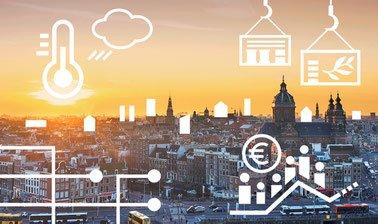
Learn how integrated systems and individual actions can shape sustainable cities, generating higher quality of life for the future. How can we strengthen sustainability? By empowering individuals and communities to transform and balance dynamic natural resources, economic prosperity, and healthy populations. In this course, you’ll explore productive and disruptive social, ecological, and economic intersections – the “triple bottom line.”

Class Deals by MOOC List - Click here and see EdX's Active Discounts, Deals, and Promo Codes.

You’ll investigate a spectrum of global, national, regional, municipal and personal relationships that are increasing resiliency. Most importantly, you’ll learn how to effectively locate your interests, and to leverage optimistic change within emerging 21st century urban environments.

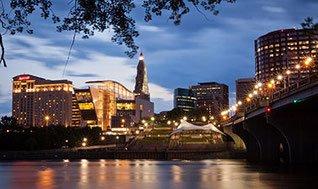
This course will describe fundamental paradigm shifts that are shaping sustainability. These include connectivity, diversity, citizen engagement, collaboration source tracing, mapping, transportation, and integrative, regenerative design. We will take examples from cities around the globe; making particular use of the complex evolution of site-specific conditions within the Connecticut River watershed. In addition we will present tools and strategies that can be utilized by individuals, communities, and corporations to orchestrate effective and collective change.
Each week, lessons will highlight the significance of clean water as a key indication of ecosystem, community and human health. Learners will be asked to investigate and share information about their local environment.
Finally, we will note the impact of such disruptive forces as industrial pollution, changing governance, privatization of public services, mining of natural resources, public awareness, and climate change. A fundamental course goal will be to characterize indicators of economic prosperity and happiness that relate to environmental sustainability – and the capacity of individuals to create change.

What you'll learn

  • Systems of thinking that can leverage change
  • How water is key to sustainability
  • Ways to trace sources of materials and knowledge
  • Identification of strategic urban infrastructure systems
  • How to strengthen sustainability, wherever you are

Syllabus

Week #1: Basic Concepts
This week will offer an introduction to basic concepts of urban sustainability and key course points. Various sustainability rating systems will be reviewed, with respect to the capacity of metrics to leverage environmental change and indicate quality-of-life benefits.

Week #2: Governance and Science
This week focuses on scientific and legal efforts to expand urban sustainability, as well as their impacts on human health, social and environmental justice, and both the management and stewardship of natural resources.

Week #3: Urban Planning for Everyday Routines
This week will emphasize the everyday world of urban sustainability, including tracing municipal services, urban parks and planning, as well as efforts to make cities more walkable. We will also explore links between sustainability and human happiness.

Week #4: Urgency and the Global Economy
We will look at the big picture to examine big corporations, development projects, and systems that can leverage climate change mitigation and adaptation, fair trade, food security, green finance – all at a planetary scale. The UN’s sustainable development goals (SDGs) will be reviewed along with international conservation and rapid urban development. We will analyze how our smart phones and computers are source of global information, and a physical trace of global resources and manufacturing.

Week #5: Adaptation and Individual Mitigation
This week, we will explore individual people’s strategies and capacities for addressing urban sustainability through consumption patterns, eating habits, health choices, energy usage, bicycling, recycling, and the new sharing economy.

Week #6:
The final week will focus on summarizing the course and completing all projects.

Go to Class
MOOC List is learner-supported. When you buy through links on our site, we may earn an affiliate commission.

Related Courses

Climate Change Science and Negotiations (edX) EdX
SDGAcademyX,SDG Academy

Climate Change Science and Negotiations (edX)

Humanity is up against a tight timeline to address climate change. Learn how we can deeply decarbonize the global energy systems, and put the world on a 2°C pathway. In this course, learn solutions to mitigate the effects of the global greenhouse gas emissions causing temperature rise, and how to apply these solutions in different national contexts improvements.

Self Paced
Self-Paced
The Biology of Water and Health - Sustainable Interventions (edX) EdX
OECx,Open Education Consortium - OEC

The Biology of Water and Health - Sustainable Interventions (edX)

Tufts University presents how to promote safe water conservation and implement sustainable solutions in order to improve public health. This water sustainability course from Tufts University focuses on the engineering and public health components needed to achieve the conservation of safe water locally and globally. Together, we will explore how to create sustainable interventions geared towards improving population health.

No sessions available
4 Weeks
Small Organisms, Big Solutions: Microbiomes & Sustainability (edX) EdX
National University of Singapore,NUS

Small Organisms, Big Solutions: Microbiomes & Sustainability (edX)

The course is an introduction to microbiomes and sustainability. It argues that global microbiomes are fundamentally relevant to sustainability. Topics include principles of sustainability, sustainable development, microbiomes in humans and the environment, bioremediation, and bioretention.

Apr 20th 2022
4 Weeks
Planetary Boundaries (edX) EdX
SDGAcademyX,SDG Academy

Planetary Boundaries (edX)

Can our planet continue to support the current scope of human activity? A thriving global society relies on the stability of the Earth and its resilience across oceans, forests, waterways, biodiversity, the atmosphere and more. So how do we shape sustainability at a global scale? The boundaries set by the planet’s natural resources, the resilience of those resources, and the human activities that impact sustainability all come into play.

Self Paced
Self-Paced
Explorer l’espace des humains: une introduction à la géographicité (edX) EdX
École Polytechnique Fédérale de Lausanne,EPFLx

Explorer l’espace des humains: une introduction à la géographicité (edX)

Explorer comment la géographie, la cartographie, l’urbanisation et la justice spatiale jouent un rôle dans la compréhension de l’espace des humains et des sociétés. Comment définir et comprendre la notion d’espace? Comment l’urbanisation, la mobilité, Internet et la mondialisation ont-ils influencé notre perception du temps et de l’espace? Ce cours a pour objectif de définir la notion d’espace en apportant des clés de lecture pour comprendre les sociétés qui nous entourent.

Self Paced
Self-Paced
Making Sense of Climate Science Denial (edX) EdX
University of Queensland,UQx

Making Sense of Climate Science Denial (edX)

Climate change is real, so why the controversy and debate? Learn to make sense of the science and to respond to climate change denial. In public discussions, climate change is a highly controversial topic. However, in the scientific community, there is little controversy with 97% of climate scientists concluding humans are causing global warming.

Self Paced
Self-Paced
Vernacular Architecture of Asia: Tradition, Modernity and Cultural Sustainability (edX) EdX
University of Hong Kong,HKUx

Vernacular Architecture of Asia: Tradition, Modernity and Cultural Sustainability (edX)

Learn about built environments in Asia and how we can better conserve and sustain vernacular architecture in the future. How do we deal with the challenges and threats to vernacular architecture and make sure that it is sustained in this modern urbanized world? This is the key question we will try to answer in this course.

No sessions available
5-12 Weeks
Industrial Biotechnology (edX) EdX
Delft University of Technology,DelftX

Industrial Biotechnology (edX)

Learn the basics of sustainable processing for biobased products to further understand their impact on global sustainability. As fossil-based fuels and raw materials contribute to climate change, the use of renewable materials and energy as an alternative is increasingly important and common. This transition is not a luxury, but rather a necessity.

Self Paced
Self-Paced