Sustainable Development Goal 14: Life Below Water (CanopyLAB)

Offered by SDG LAB,
Sustainable Development Goal 14: Life Below Water (CanopyLAB)

You might not constantly think about it, but oceans are a crucial part of the ecosystem that makes Earth habitable for humans. More than half of the oxygen we breathe comes from algae, and the oceans absorb a large amount of the carbon dioxide released by human activities, thus mitigating the impact of climate change. The oceans are also a crucial source of food and livelihood for humans. Yet today, the oceans face multiple threats including climate change, environmental degradation, pollution, and overfishing. In this course, you will learn about the important role oceans play, their current state of deterioration, and what you can do to improve it.

Our planets’ bodies of water aren’t just awesome for swimming, fishing, sailing and diving- they actually KEEP US ALIVE! What are we doing to help life below water? Well, not much. So far, we are doing more harm (like marine pollution and overfishing) than good. But there is still time to change this and become a champion for Goal#14!
Unit 1 - What is Goal 14: Life Below Water?
Unit 2 - Healthy Oceans: What are the Targets and What Steps Need to Be Taken?
Unit 3 - Saving the Oceans - One Piece of Plastic at a Time?
Unit 4 - What Can You Do to Save the Oceans?
Go to Class
MOOC List is learner-supported. When you buy through links on our site, we may earn an affiliate commission.

Related Courses

Sustainable Development Goal 6: Clean Water and Sanitation (CanopyLAB) CanopyLAB
SDG LAB

Sustainable Development Goal 6: Clean Water and Sanitation (CanopyLAB)

In this course, we provide you with an introduction to the Sustainable Development Goal 6: Clean Water and Sanitation and all its related targets aiming to achieve the goal by the year 2030. We will also learn about how the United Nations, civil society, the private sector and governments work both independently and interdependently on this issue. We will be “visiting” countries such as Somalia, the U.S., India, Qatar, Palestine, Bosnia and Herzegovina and Chile to get a better understanding of the very different challenges each country faces. We will also do many fun exercises to help you analyze the knowledge you have gained, link theory to examples, and partake in the fight for water rights for all. Finally, we will look at what YOU can do to make a difference for Goal 6!

Self Paced
Self-Paced
Ecosystem Services: a Method for Sustainable Development (Coursera) Coursera
University of Geneva

Ecosystem Services: a Method for Sustainable Development (Coursera)

Ecosystem services are a way of thinking about – and evaluating – the goods and services provided by nature that contribute to the well-being of humans. This MOOC will cover scientific (technical), economic, and socio-political dimensions of the concept through a mix of theory, case-studies, interviews with specialists and a serious-game.

Oct 5th 2026
5-12 Weeks
Developing Innovative Ideas for New Companies: The First Step in Entrepreneurship (Coursera) Coursera
University of Maryland, College Park

Developing Innovative Ideas for New Companies: The First Step in Entrepreneurship (Coursera)

This course assists aspiring and active entrepreneurs in developing great ideas into great companies. With strong economies presenting rich opportunities for new venture creation, and challenging economic times presenting the necessity for many to make their own job, the need to develop the skills to develop and act on innovative business opportunities is increasingly vital.

Oct 5th 2026
4 Weeks
Sustainable Development Goal 10: Reduced Inequalities (CanopyLAB) CanopyLAB
SDG LAB

Sustainable Development Goal 10: Reduced Inequalities (CanopyLAB)

What does "inequality" mean? Goal 10 takes a holistic approach to the concept of inequality, which means that it recognizes inequality not just in terms of income but also in many other aspects of life such as unequal access to decent healthcare, quality education, good infrastructure and fairly paid jobs. In this course, we will investigate the consequences of inequality in theories, and see how they play out in the real world by looking at the rich and poor gap in examples of countries around the world, from the United Kingdom and the United States to Brazil, Indonesia, and Nigeria.

Self Paced
Self-Paced
Nanotechnology and Nanosensors, Part 2 (Coursera) Coursera
Technion - Israel Institute of Technology

Nanotechnology and Nanosensors, Part 2 (Coursera)

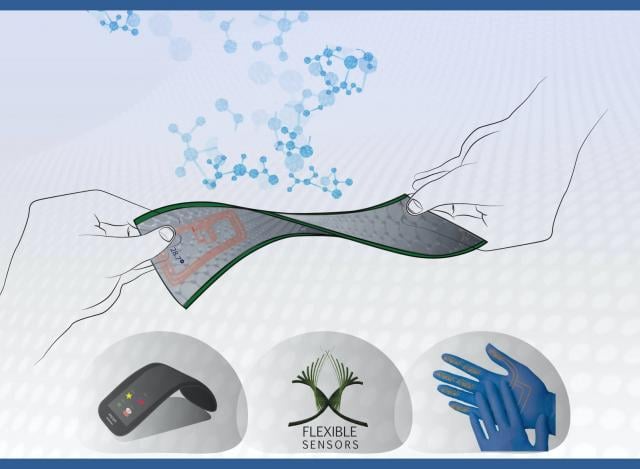
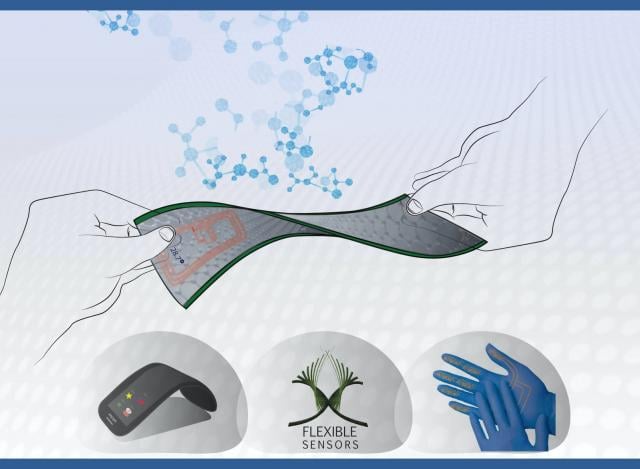
Learn about novel sensing tools that make use of nanotechnology to screen, detect and monitor various events in personal or professional life. Together, we will lay the groundwork for infinite innovative applications, starting from diagnosis and treatments of diseases, continuing with quality control of goods and environmental aspects, and ending with monitoring security issues.

Oct 5th 2026
5-12 Weeks
Sustainable Development Goal 1: No Poverty (CanopyLAB) CanopyLAB
SDG LAB

Sustainable Development Goal 1: No Poverty (CanopyLAB)

Ending poverty is one of the cross-cutting issues of the 17 Sustainable Development Goals because it is related to many other goals on the list such as decent jobs, quality education, and improving infrastructure and access to health care. It is also a cross-cutting issue in the sense that it concerns every country and every person, no matter rich or poor, young or old and any other differences in conditions of life. This is because poverty is not an isolated phenomenon; rather it is a state that anyone could all fall into if there is not a system to protect them. In this course, you will learn about the various forms that poverty can take, and how it can be battled, by the United Nations, governments, companies, humanitarian organizations, and last but not least, you.

Self Paced
Self-Paced
Nanotechnology and Nanosensors, Part 1 (Coursera) Coursera
Technion - Israel Institute of Technology

Nanotechnology and Nanosensors, Part 1 (Coursera)

Nanotechnology and nanosensors are broad, interdisciplinary areas that encompass (bio)chemistry, physics, biology, materials science, electrical engineering and more. The present course will provide a survey on some of the fundamental principles behind nanotechnology and nanomaterials and their vital role in novel sensing properties and applications. The course will discuss interesting interdisciplinary scientific and engineering knowledge at the nanoscale to understand fundamental physical differences at the nanosensors.

Oct 5th 2026
5-12 Weeks
Sustainable Development Goal 17: Partnerships for the Goals (CanopyLAB) CanopyLAB
SDG LAB

Sustainable Development Goal 17: Partnerships for the Goals (CanopyLAB)

The Sustainable Development Goals present an ambitious vision for the future ad it calls on many stakeholders to work in tandem and support each other. From government to civil society, from private companies to social enterprises, each must acknowledge their responsibility and embrace their role in making the goals a reality. Thus, the final goal, Goal 17, is about achieving partnerships that go beyond good will. These partnerships must drive in results, and fortunately, emerging trends in co-creation within the public and private sphere are making it easier than ever for stakeholders to work shoulder-to-shoulder.

Self Paced
Self-Paced
Innovar (Coursera) Coursera
Arizona State University

Innovar (Coursera)

La innovación ha cobrado una importancia significativa en las corporaciones de hoy, y con frecuencia es vista como un motor importante de crecimiento y éxito en una organización. En este curso introductorio, usted aprenderá sobre el significado, la importancia, el proceso e impacto de la innovación.

Oct 5th 2026
5-12 Weeks
Wood Science: Beyond Building (Coursera) Coursera
West Virginia University

Wood Science: Beyond Building (Coursera)

The central question of this course: “why study wood?” If “why study wood” is the question, one answer would be that it is the only raw material available to us that is truly renewable in human life span terms. Wood is as important to society today as it ever was, despite the development of many man-made substitute materials, changing resource availability, and the changing needs of society.

Oct 5th 2026
4 Weeks
The 17 Sustainable Development Goals (CanopyLAB) CanopyLAB
SDG LAB

The 17 Sustainable Development Goals (CanopyLAB)

This is the first course in a series about all of the 17 Sustainable Development Goals. Through the course, you will get to know the different goals and their corresponding targets, how they come about, and what can be done by 2030 to achieve the goals. After taking this course, you will be equipped with the knowledge about the Sustainable Development Goals, and inspired to reflect on how you can take actions that contribute to the goals.

Self Paced
Self-Paced