Sustainable Consumption and Health (Coursera)

Sustainable Consumption and Health (Coursera)

This course is an introductory and foundational course on sustainable consumption and health. In the first part of this course, we briefly review definitions of sustainability and the relationship between the three dimensions of sustainability and the UN-Environment Sustainable Environment Goals (SDGs), target and indicators.

Class Deals by MOOC List - Click here and see Coursera's Active Discounts, Deals, and Promo Codes.

We then look at frameworks, indicators and footprint requirements to adequately measure sustainability, offering the opportunity to the participants to assess their own carbon and environmental footprint and make recommendation on how to reduce it. We then address the theme of sustainable consumption, looking at our main domains of consumption and at the key conditions to reach sustainable consumption and avoid rebounds effects that tend to reduce the benefits of increased product efficiency. We finally look at "what is good enough" for a given product or activity, in relationship with absolute sustainability and planetary boundaries.
In the second part focusing on health, we will first identify the main factors affecting health, define DALYs (disability-adjusted life years) as a key metric to measure health burden, and use the rich information made available by the Global Burden of Disease (GBD). We will then use the GBD visualization tool to quantify and compare the respective burdens associated with 70 risks factors and numerous disease causes, in every country of the world and even at the state level for the US. We finally analyze the health impact associated with global trade, evaluating the fraction of the health impacts due to fine particulate in Asia, that are induced by Western consumption.

Syllabus

WEEK 1
Introduction to Sustainable Consumption
This course is an introductory and foundational course on sustainable consumption and health. In the first part of this course, we briefly review definitions of sustainability and the relationship between the three dimensions of sustainability and the UN-Environment Sustainable Environment Goals (SDGs), target and indicators. We then look at frameworks, indicators and footprint requirements to adequately measure sustainability, offering the opportunity to the participants to assess their own carbon and environmental footprint and make recommendation on how to reduce it. We then address the theme of sustainable consumption, looking at our main domains of consumption and at the key conditions to reach sustainable consumption and avoid rebounds effects that tend to reduce the benefits of increased product efficiency. We finally look at "what is good enough" for a given product or activity, in relationship with absolute sustainability and planetary boundaries.
In the second part focusing on health, we will first identify the main factors affecting health, define DALYs (disability-adjusted life years) as a key metric to measure health burden, and use the rich information made available by the Global Burden of Disease (GBD). We will then use the GBD visualization tool to quantify and compare the respective burdens associated with 70 risks factors and numerous disease causes, in every country of the world and even at the state level for the US. We finally analyze the health impact associated with global trade, evaluating the fraction of the health impacts due to fine particulate in Asia, that are induced by Western consumption.

WEEK 2
Consumption Environmental Impacts vs Costs, and Absolute Sustainability
This section focuses looks at the key conditions for sustainable consumption providing an overview of the impacts generated by consumers and by the participants themselves. After establishing our personal carbon footprint, we first relate impacts and costs and identify the critical conditions towards sustainable consumption accounting for rebounds effects. We then discuss how far we have been able to decouple environmental from GDP in different regions of the world. We finally discuss what is good enough and what the product specific targets can be to meet sustainable consumption objectives, not to exceed planetary boundaries.

WEEK 3
Main Risk Factors Affecting Health
We will now look at the dietary impacts of multiple foods to then analyze trade-offs and targeted change that can bring substantial health and environmental benefits with less than 10% caloric change. We finally address the health and sustainable performances of various diets, looking at disparities between gender, races and diets.
Then, equipped with the knowledge and skills you developed throughout our course, you will conclude with two final exercises. First, you will develop a 6-point action plan to feed our planet in a healthy and sustainable way as part of a peer-reviewed assignment.


Go to Class
MOOC List is learner-supported. When you buy through links on our site, we may earn an affiliate commission.

Related Courses

La Solución del Conflicto Ético (Coursera) Coursera
Universidad Nacional Autónoma de México

La Solución del Conflicto Ético (Coursera)

En este curso los participantes lograrán identificar y tomar decisiones sobre casos clínicos con conflictos éticos en el área de la salud por medio de la aplicación del razonamiento ético desde una perspectiva universal y considerando los aspectos médicos y éticos, el marco jurídico y la decisión ética.

Oct 5th 2026
5-12 Weeks
Global Health Policy (Coursera) Coursera
The University of Tokyo

Global Health Policy (Coursera)

In this course, learners will become familiar with principles and theories of global health problems, and major challenges and controversies in improving global population health as well as practical applications of quantitative methods to analyze and interpret issues and challenges for policy. Topics will include health and foreign policy, health governance, acute disease surveillance, non-communicable diseases, burden of disease, universal health coverage, health systems strengthening, health financing, and human resources for health and ageing.

Oct 5th 2026
4 Weeks
Whole genome sequencing of bacterial genomes - tools and applications (Coursera) Coursera
Technical University of Denmark - DTU

Whole genome sequencing of bacterial genomes - tools and applications (Coursera)

This course will cover the topic of Whole genome sequencing (WGS) of bacterial genomes which is becoming more and more relevant for the medical sector. WGS technology and applications are high on international political agenda, as the classical methods are being replaced by WGS technology and therefore bioinformatic tools are extremely important for allowing the people working in this sector to be able to analyze the data and obtain results that can be interpreted and used for different purposes.

Oct 5th 2026
5-12 Weeks
Wood Science: Beyond Building (Coursera) Coursera
West Virginia University

Wood Science: Beyond Building (Coursera)

The central question of this course: “why study wood?” If “why study wood” is the question, one answer would be that it is the only raw material available to us that is truly renewable in human life span terms. Wood is as important to society today as it ever was, despite the development of many man-made substitute materials, changing resource availability, and the changing needs of society.

Oct 5th 2026
4 Weeks
Corporate Sustainability. Understanding and Seizing the Strategic Opportunity (Coursera) Coursera
Università Bocconi

Corporate Sustainability. Understanding and Seizing the Strategic Opportunity (Coursera)

In this course, thought leaders in a wide variety of management and economics fields illustrate how to assess and seize the opportunities offered by these global emergencies. They will offer new ways to understand the purpose and the logic of success of the business enterprise in this new context, providing ideas and examples on how to manage the transition process to realize the value creation potential from corporate sustainability for all involved stakeholders.

Oct 5th 2026
5-12 Weeks
Introduction to Systems Biology (Coursera) Coursera
Icahn School of Medicine at Mount Sinai

Introduction to Systems Biology (Coursera)

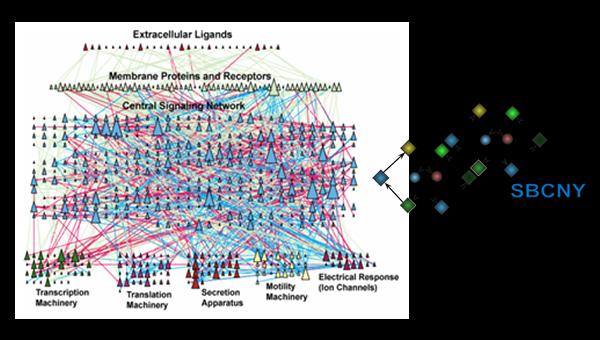
This course will introduce the student to contemporary Systems Biology focused on mammalian cells, their constituents and their functions. Biology is moving from molecular to modular. As our knowledge of our genome and gene expression deepens and we develop lists of molecules (proteins, lipids, ions) involved in cellular processes, we need to understand how these molecules interact with each other to form modules that act as discrete functional systems.

Oct 5th 2026
5-12 Weeks
Introduction to Faecal Sludge Management (Coursera) Coursera
École Polytechnique Fédérale de Lausanne

Introduction to Faecal Sludge Management (Coursera)

Do you want learn how to apply concepts of sustainable faecal sludge management (FSM) on a city-wide scale? This course starts with an overview of what faecal sludge is and an introduces you to the engineering fundamentals and required information for the design and selection of technologies. Sanitation solutions are prone to failure if an integrated planning approach that includes stakeholder involvement and the development of appropriate institutional, management and financial arrangements is not implemented.

Oct 5th 2026
5-12 Weeks
Circular Economy - Sustainable Materials Management (Coursera) Coursera
Lund University,Delft University of Technology,EIT RawMaterials,VITO,Geological Survey of Denmark and Greenland - GEUS,National Technical University of Athens - NTUA,Ghent University

Circular Economy - Sustainable Materials Management (Coursera)

This course looks at where important materials in products we use every day come from and how these materials can be used more efficiently, longer, and in closed loops. This is the aim of the Circular Economy, but it doesn’t happen on its own. It is the result of choices and strategies by suppliers, designers, businesses, policymakers and all of us as consumers.

Oct 5th 2026
5-12 Weeks
Greening the Economy: Lessons from Scandinavia (Coursera) Coursera
Lund University

Greening the Economy: Lessons from Scandinavia (Coursera)

How can we live a good life on one planet with over seven billion people? This course will explore greening the economy on four levels – individual, business, city, and nation. We will look at the relationships between these levels and give many practical examples of the complexities and solutions across the levels. Scandinavia, a pioneering place advancing sustainability and combating climate change, is a unique starting point for learning about greening the economy. We will learn from many initiatives attempted in Scandinavia since the 1970s, which are all potentially helpful and useful for other countries and contexts.

Oct 5th 2026
5-12 Weeks