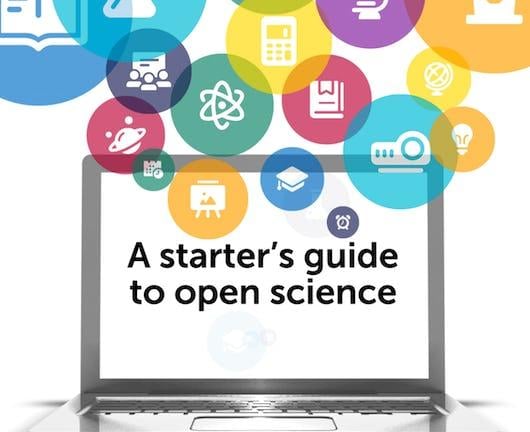
A starter’s guide to Open Science (Coursera)

A starter’s guide to Open Science (Coursera)

Welcome to the Erasmus University Rotterdam Open Science MOOC! This course aims to empower researchers and research support professionals with foundational knowledge to conduct, support, and disseminate research efficiently and responsibly.

Class Deals by MOOC List - Click here and see Coursera's Active Discounts, Deals, and Promo Codes.

This MOOC consists of 8 modules that cover the most common open science practices. At the end of this MOOC, you will be able to define open science and its main values, identify the main open science movements and practices, and recognize open science practices that you can incorporate in your workflow.

Syllabus

Module 1 - Introduction to Open Science
In this module, we will talk about the history and foundational ideas of open science. We will then explore similarities between open science principles and ethical standards of research. Finally, we will highlight the benefits of open science for individual researchers, research disciplines, and society.

Module 2 - Open Access
In this module, we will talk about the definition and history of open access. We will learn the most common types of open access, and we will highlight the benefits of open access for individual researchers and society.

Module 3 - Open Data 
In this module, we will talk about the definition of research data and what does open data means. We will then learn about the FAIR principles and finally we will talk about data repositories.

Module 4 - Open Materials
In this module, we will talk about the definition of research materials and what does open materials is. We will then learn about examples of materials and how can researchers share these materials.

Module 5 - Preregistration and Registered Reports 
In this module, we will introduce preregistration and highlight its usefulness by using clinical trials as an example. We will also introduce a special article format called Registered Reports and show how it can help mitigate cognitive biases and issues associated with current incentives in academic publishing.

Module 6 - Open Educational Resources 
In this module, we will introduce open educational resources, we will present a few examples and discuss the benefits and challenges of creating and using Open Educational Resources.

Module 7 - Open Engaged Research
In this module, we will explore the connection between engaged and open research, we will present ways and examples of this connection and discuss the process and challenges of Open Engaged Research.

Module 8 - Open Evaluation 
In this module, we will explore some new trends in the evaluation of research performance. We will briefly describe the current evaluation practices to highlight why open science offers a new perspective on research evaluation on three different levels: individual, institutional, and international.


Go to Class
MOOC List is learner-supported. When you buy through links on our site, we may earn an affiliate commission.

Related Courses

América Latina en los cambios internacionales: amenazas y oportunidades. (Coursera) Coursera
Universidad de Chile

América Latina en los cambios internacionales: amenazas y oportunidades. (Coursera)

El curso busca que comprendas y analices la mayor participación de América Latina en la política internacional. Además, te ayudará a conocer el entorno macro-estratégico en el cual se desarrolla la región, incluyendo la dimensión política, económica, cultural, social, además de las nuevas amenazas y oportunidades. El curso entrega un mapa general de las diferencias entre las distintas regiones de América Latina y sus contribuciones en sus políticas exteriores con los centros de poder mundial.

Aug 24th 2026
4 Weeks
Foundations of Teaching for Learning: Being a Teacher (Coursera) Coursera
Commonwealth Education Trust

Foundations of Teaching for Learning: Being a Teacher (Coursera)

The Foundations of Teaching for Learning programme is for anyone who is teaching, or who would like to teach, in any subject and any context - be it at school, at home or in the workplace. With dynamic lessons taught by established and respected professionals from across the Commonwealth, this eight course programme will see you develop and strengthen your skills in teaching, professionalism, assessment, and more. As you carry on through the programme, you will find yourself strengthening not only your skills, but your connection with colleagues across the globe. A professional development opportunity not to be missed.

Aug 24th 2026
5-12 Weeks
Designing with Open Educational Resources (OER) (edX) EdX
University System of Maryland - USM,University of Maryland University College - UMUC,USMx,UMUC

Designing with Open Educational Resources (OER) (edX)

Learn about Open Education, Creative Commons attributions, and how to identify, evaluate, design and publish OER. Today’s classrooms are dynamic, engaging and active learning spaces and our resources should be as well. Sadly, many of the available learning resources are too expensive or not dynamic or too broad to meet our instructional needs. An essential skill for educators is to be able to infuse Open Educational Resources to meet the specific needs of their learners.

No sessions available
5-12 Weeks
Do-It-Yourself Geo Apps (Esri) Esri
Esri

Do-It-Yourself Geo Apps (Esri)

You don’t have to be a software developer to build valuable geo-enabled apps that make your communities smarter and businesses more successful. This course will show you how to combine location and narrative in one application to better communicate and broadcast your story, create custom web applications that solve problems in your community, and build powerful native applications for iOS and Android devices without touching a piece of code.

Jan 26th 2022
4 Weeks
Using Open Data for Digital Business (FutureLearn) FutureLearn
Royal Holloway, University of London

Using Open Data for Digital Business (FutureLearn)

Discover the power of Open Data and learn how you can use it to transform business. Open Data is data that anyone can access, use or share and when used well it can be extremely powerful. It enables businesses, citizens, developers and researchers to harness resources that can make crucial improvements to their communities and the economy. It can also help with the development of new products and services, improve business efficiency and create economic value.

No sessions available
3 Weeks
Introduction to International Criminal Law (Coursera) Coursera
Case Western Reserve University

Introduction to International Criminal Law (Coursera)

From the Nuremberg trial to the case against Saddam Hussein, from the prosecution of Al-Qaeda terrorists to the trial of Somali pirates – no area of law is as important to world peace and security as international criminal law. Taught by one of the world’s leading experts in the field, this course will educate students about the fundamentals of international criminal law and policy. We will explore the contours of international crimes such as genocide, war crimes, terrorism, and piracy. We will examine unique modes of international criminal liability and specialized defenses. And we will delve into the challenges of obtaining custody of the accused and maintaining control of the courtroom.

Aug 24th 2026
5-12 Weeks
Foundations of Virtual Instruction (Coursera) Coursera
University of California, Irvine

Foundations of Virtual Instruction (Coursera)

Welcome to Foundations of Virtual Instruction! This course will help you 'up' your game and develop the advanced skills and techniques that elude even some of the most experienced virtual teachers in the K-12 space. Examine pitfalls and learn how to overcome them by focusing on the fundamentals that have the most significant impact on student learning in a blended or online environment.

Aug 24th 2026
5-12 Weeks
Cities are back in town : sociologie urbaine pour un monde globalisé (Coursera) Coursera
Sciences Po

Cities are back in town : sociologie urbaine pour un monde globalisé (Coursera)

La mondialisation et l'européanisation favorisent le développement rapide des villes à travers le monde. L'urbanisation atteint de nouveaux sommets aujourd’hui avec l'essor des mégacités (plus de 15 millions d'habitants) comme Calcutta, Los Angeles, Dhaka, Le Caire, Tokyo, New York, Shanghai, Mexico ou Séoul. Au-delà de la métropole moderne, les chercheurs tentent de donner un sens à ces grandes régions urbaines au moyen de concepts divers tels que « post-métropoles », « villes globales », et « régions métropolitaines globales ».

Aug 24th 2026
5-12 Weeks
The City and You: Find Your Best Place (Coursera) Coursera
University of Toronto

The City and You: Find Your Best Place (Coursera)

Welcome to The City and You: Find Your Best Place. I'm excited to have you in the class and look forward to your contributions to the other learners in our community. This free course will provide the knowledge and the tools needed to understand what cities do, why they matter, the forces shaping the greatest wave of urbanization in history, and how to pick the right place for you.

Aug 31st 2026
5-12 Weeks
Villes africaines: Environnement et enjeux de développement durable (Coursera) Coursera
École Polytechnique Fédérale de Lausanne

Villes africaines: Environnement et enjeux de développement durable (Coursera)

Le cours propose une lecture de l’environnement urbain en Afrique à travers les thématiques les plus pertinentes pour mesurer le niveau de développement d’un pays : eau et vie urbaine, assainissement (eaux usées et pluviales), gestion des déchets solides, agriculture urbaine. Après avoir analysé les différents enjeux de celles-ci, nous aborderons les liens entre environnement urbain et santé.

Aug 24th 2026
5-12 Weeks