Semiconductor Physics (Coursera)

Semiconductor Physics (Coursera)

This course introduces basic concepts of quantum theory of solids and presents the theory describing the carrier behaviors in semiconductors. The course balances fundamental physics with application to semiconductors and other electronic devices.

Class Deals by MOOC List - Click here and see Coursera's Active Discounts, Deals, and Promo Codes.

At the end of this course learners will be able to:

  1. Understand the energy band structures and their significance in electric properties of solids
  2. Analyze the carrier statistics in semiconductors
  3. Analyze the carrier dynamics and the resulting conduction properties of semiconductors

Course 1 of 3 in the Semiconductor Devices Specialization.

Syllabus

WEEK 1
Quantum Theory Of Semiconductors
In this module we will introduce the course and the Semiconductor Devices specialization. In addition, we will review the following topics: Type of solids, Bravais lattices, Lattice with basis, Point defects, Dislocation, Bulk crystal growth, Epitaxy, Energy levels of atoms and molecules, Energy bands of solids, Energy bands in real space, Energy bands in reciprocal lattice, Energy band structures of metal and insulator, Definition of semiconductor, Electrons and holes, and Effective mass.

WEEK 2
Carrier Statistics
In this module, we will cover carrier statistics. Topics include: Currents in semiconductors, Density of states, Fermi-Dirac probability function, Equilibrium carrier concentrations, Non-degenerate semiconductors, Intrinsic carrier concentration, Intrinsic Fermi level, Donor and acceptor impurities, Impurity energy levels, Carrier concentration in extrinsic semiconductor, and Fermi level of extrinsic semiconductors.

WEEK 3
Currents in Semiconductor
This module introduces you to currents in semiconductors. Topics we will cover include: Thermal motion of carriers, Carrier motion under electric field, Drift current, Mobility and conductivity, Velocity saturation, Diffusion of carriers, General expression for currents in semiconductor, Carrier concentration and mobility, and the Van der Pauw technique.

WEEK 4
Carrier Dynamics
In this module we explore carrier dynamics. Topics include: Electronic transitions in semiconductor, Radiative transition, Direct and indirect bandgap semiconductors, Roosbroeck-Shockley relationship, Radiative transition rate at non-equilibrium, Minority carrier lifetime, Localized states, Recombination center and trap, Shockley-Hall-Reed recombination, Surface recombination, Auger recombination, Derivation of continuity equation, Non-equilibrium carrier concentration, Quasi-Fermi level, Current and quasi-Fermi level, Non-uniform doping, and Non-uniform bandgap.
Go to Class
MOOC List is learner-supported. When you buy through links on our site, we may earn an affiliate commission.

Related Courses

Introduction to Thermodynamics: Transferring Energy from Here to There (Coursera) Coursera
University of Michigan

Introduction to Thermodynamics: Transferring Energy from Here to There (Coursera)

This course provides an introduction to the most powerful engineering principles you will ever learn - Thermodynamics: the science of transferring energy from one place or form to another place or form. We will introduce the tools you need to analyze energy systems from solar panels, to engines, to insulated coffee mugs. More specifically, we will cover the topics of mass and energy conservation principles; first law analysis of control mass and control volume systems; properties and behavior of pure substances; and applications to thermodynamic systems operating at steady state conditions.

Jul 27th 2026
5-12 Weeks
Particle Physics: an Introduction (Coursera) Coursera
University of Geneva

Particle Physics: an Introduction (Coursera)

This course introduces you to subatomic physics, i.e. the physics of nuclei and particles. More specifically, the following questions are addressed: What are the concepts of particle physics and how are they implemented?; What are the properties of atomic nuclei and how can one use them?; How does one accelerate and detect particles and measure their properties?; What does one learn from particle reactions at high energies and particle decays?; How do electromagnetic interactions work and how can one use them?; How do strong interactions work and why are they difficult to understand?; How do weak interactions work and why are they so special?; What is the mass of objects at the subatomic level and how does the Higgs boson intervene?; How does one search for new phenomena beyond the known ones?; What can one learn from particle physics concerning astrophysics and the Universe as a whole?

Aug 10th 2026
5-12 Weeks
The Diversity of Exoplanets (Coursera) Coursera
University of Geneva

The Diversity of Exoplanets (Coursera)

In this MOOC, you will have the opportunity to practice several methods of detection and characterisation of exoplanets. You will discover their statistical properties and the current state of knowledge we have in this very recent field of research. You will also understand the limitations and biases of the different detection techniques.

Jul 27th 2026
5-12 Weeks
Foundation of Structural Dynamics (Coursera) Coursera
ISAE-SUPAERO

Foundation of Structural Dynamics (Coursera)

A course with variable geometry where everyone, we hope, will find personal benefits. The parts can be studied sequentially or independently; and inside each part, elementary learning items can be picked up. Globally, this course proposes a deep knowledge of fundamental dynamics, with possible explicit and implicit applications in structural dynamics, but also in physics and control of any dynamic system (automatics, …).

Aug 10th 2026
5-12 Weeks
Fundamentals of Fluid-Solid Interactions (Coursera) Coursera
École Polytechnique

Fundamentals of Fluid-Solid Interactions (Coursera)

What is fluid-solid interactions ? It is what happens when the motions of a fluid and of a solid are somehow coupled. This happens all the time, around you when leaves flutter in the wind, inside you when your heart beats, above you when wings of a plane vibrate, under the sea... The idea behind this MOOC is to give you the basic tools to be able to predict and eventually mitigate things called flutter, galloping, sloshing, vortex-induced vibrations, added mass, to cite a few. We are going to consider any possible domains of applications such as civil engineering, aerospace engineering, nuclear engineering , ocean engineering, biomechanics and even food processing !

Aug 10th 2026
5-12 Weeks
Nanotechnology and Nanosensors, Part 1 (Coursera) Coursera
Technion - Israel Institute of Technology

Nanotechnology and Nanosensors, Part 1 (Coursera)

Nanotechnology and nanosensors are broad, interdisciplinary areas that encompass (bio)chemistry, physics, biology, materials science, electrical engineering and more. The present course will provide a survey on some of the fundamental principles behind nanotechnology and nanomaterials and their vital role in novel sensing properties and applications. The course will discuss interesting interdisciplinary scientific and engineering knowledge at the nanoscale to understand fundamental physical differences at the nanosensors.

Aug 10th 2026
5-12 Weeks
The Sun and the Total Eclipse of August 2017 (Coursera) Coursera
University of Colorado Boulder

The Sun and the Total Eclipse of August 2017 (Coursera)

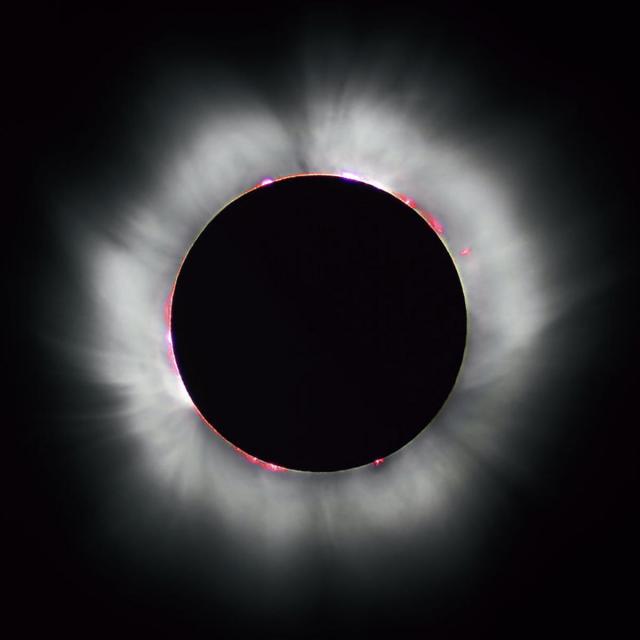
A total eclipse is one of the most spectacular sights you can ever see! It looks like the end of the world may be at hand. There is a black hole in the sky where the sun should be. Pink flames of solar prominences and long silver streamers of the sun's corona stretch across the sky. It gets cold, and animals do strange things. People scream and shout and cheer, and remember the experience their whole life. But total eclipses are important scientifically as well.

Aug 3rd 2026
5-12 Weeks
Introduction to Semiconductor Devices 1 (Coursera) Coursera
Korea Advanced Institute of Science and Technology - KAIST

Introduction to Semiconductor Devices 1 (Coursera)

This course aims to provide a general understanding of semiconductor devices. This course explores the principles and the operation mechanism of semiconductor, such as charge transfer, p-n junction, junction capacitors, and Metal-Oxide-Semiconductor Field Effect Transistors(MOSFETs).

Jul 27th 2026
5-12 Weeks
Vers l'infiniment petit (Coursera) Coursera
École Polytechnique

Vers l'infiniment petit (Coursera)

Partez à la découverte de l'infiniment petit, en compagnie de physiciens et de physiciennes qui vont vous faire découvrir les secrets de la matière quand on l'étudie aux distances les plus courtes, aux énergies les plus élevées. Vous vous initierez aux progrès les plus récents de la recherche en physique nucléaire et de la physique des particules, et vous découvrirez les principes des accélérateurs et des détecteurs avec lesquels on a pu étudier la matière à ces échelles, pour arriver jusqu'à la découverte du boson de Higgs en 2012 auprès du collisionneur de particules du CERN, le LHC.

Jul 27th 2026
4 Weeks
Introduction to Semiconductor Process 1 (Coursera) Coursera
Korea Advanced Institute of Science and Technology - KAIST

Introduction to Semiconductor Process 1 (Coursera)

This course aims to provide a general understanding of semiconductor process. This course explores the principles and basic theory of semiconductor device and process. Furthermore, the students will learn the overall semiconductor process such as oxidation, diffusion, ion implantation, lithography, etching, thin film deposition, plasma, metallization, and packaging.

Aug 10th 2026
5-12 Weeks
Density Functional Theory (Coursera) Coursera
École Polytechnique

Density Functional Theory (Coursera)

The aim of this course is to give a thorough introduction to Density Functional Theory (DFT). DFT is today the most widely used method to study interacting electrons, and its applicability ranges from atoms to solid systems, from nuclei to quantum fluids. In this course, we introduce the most important concepts underlying DFT, its foundation, and basic ideas. We will in particular stress the features and reasons that lead DFT to become the dominant method for simulating quantum mechanical systems.

Jul 27th 2026
3 Weeks