Risk Management (saylor.org)

Offered by Saylor.org,
Risk Management (saylor.org)

This elective course will allow you to incorporate risk management principles into your individual management style. Risk management refers to the process of identifying, assessing, and prioritizing risks.

The Business Administration major is designed to prepare you for a leadership role in today’s highly competitive, global business environment. This elective course will allow you to incorporate risk management principles into your individual management style. Risk management refers to the process of identifying, assessing, and prioritizing risks. This course will teach you how to accurately assess the consequences of uncertain events; the ultimate goal for risk managers is to reduce and control the likelihood of such occurrences. Personal attitudes toward risk vary widely (for example, attitudes can range from risk-averse to risk-seeking). You are advised to approach this course from the perspective of a business manager (i.e., as a decision maker).

Unforeseen circumstances can occur in various contexts, including natural disaster, collapses in financial markets, and accidents. As a business manager, you will need to use risk management tools to minimize and control the probability and impact of unfortunate events. Global events from the past few years provide ample evidence of the challenges associated with managing risk.

In this course, you will engage with case studies that address the catastrophes of the first decade of the new millennium, including the credit crisis of 2008–2009. These cases illustrate the importance of risk management and demonstrate how missed opportunities in effective risk management can and have led to monumental negative consequences. You will learn how and why risk management is a primary strategy for sustainability and success in our uncertain and complex world.

Upon successful completion of this course, the student will be able to:

Identify and discuss various types of risks.
Define risk as a consequence of uncertainty and within a continuum of decision-making roles.
Perform quantitative risk analysis using risk measurement techniques to assess the severity and consequences of a given risk as well as its overall threat.
Identify the most common risk management mistakes by considering how Utility Theory impacts attitudes toward risk.
Explain and use techniques to manage risk in a holistic, global, and integrated manner.
Use tools such as predictive analytics, modeling, and simulation to improve risk management.


Go to Class
MOOC List is learner-supported. When you buy through links on our site, we may earn an affiliate commission.

Related Courses

Managing Project Risks and Changes (Coursera) Coursera
University of California, Irvine

Managing Project Risks and Changes (Coursera)

This course will help you manage project risk effectively by identifying, analyzing, and communicating inevitable changes to project scope and objectives. You will understand and practice the elements needed to measure and report on project scope, schedule, and cost performance. You will be equipped with the tools to manage change in the least disruptive way possible for your team and other project stakeholders.

Oct 12th 2026
5-12 Weeks
Corporate Finance II: Financing Investments and Managing Risk (Coursera) Coursera
University of Illinois at Urbana-Champaign

Corporate Finance II: Financing Investments and Managing Risk (Coursera)

In this course you will learn how companies decide on how much debt to take, and whether to raise capital from markets or from banks. You will also learn how to measure and manage credit risk and how to deal with financial distress. You will discuss the mechanics of dividends and share repurchases, and how to choose the best way to return cash to investors. You will also learn how to use derivatives and liquidity management to offset specific sources of financial risk, including currency risks. Finally, You will learn how companies finance merger and acquisition decisions, including leveraged buyouts, and how to incorporate large changes in leverage in standard valuation models.

Oct 12th 2026
4 Weeks
Epidemics (Coursera) Coursera
University of Hong Kong

Epidemics (Coursera)

“If history is our guide, we can assume that the battle between the intellect and will of the human species and the extraordinary adaptability of microbes will be never-ending.” Despite all the remarkable technological breakthroughs that we have made over the past few decades, the threat from infectious diseases has significantly accelerated. In this course, we will learn why this is the case by looking at the fundamental scientific principles underlying epidemics and the public health actions behind their prevention and control in the 21st century.

Oct 12th 2026
5-12 Weeks
Financing and Investing in Infrastructure (Coursera) Coursera
Università Bocconi

Financing and Investing in Infrastructure (Coursera)

Learn how debt and equity can be used to finance infrastructure investments and how investors approach infrastructure investments. The course focuses on how private investors approach infrastructure projects from the standpoint of equity, debt, and hybrid instruments. The course concentrates on the practical aspects of project finance: the most frequently used financial techniques for infrastructure investments. The repeated use of real life examples and case studies will allow students to link the theoretical background to actual business practices.

Oct 19th 2026
5-12 Weeks
Mercados financieros (Coursera) Coursera
Yale University

Mercados financieros (Coursera)

Una síntesis de las ideas, métodos e instituciones que permiten que la sociedad humana pueda gestionar los riesgos y promover la actividad empresarial. Un énfasis en las habilidades de liderazgo con conocimientos financieros profundos. Descripción de las prácticas actuales y el análisis de prospectos a futuro. Introducción a los principios de gestión de riesgos y de las finanzas conductuales para comprender el funcionamiento en el mundo real de las industrias de valores, seguros y el sector bancario.

Oct 12th 2026
5-12 Weeks
Engineering Project Management: Risk, Quality, Teams, and Procurement (Coursera) Coursera
Rice University

Engineering Project Management: Risk, Quality, Teams, and Procurement (Coursera)

Many Project Managers focus only on the scope, schedule and budget. However, a successful project requires that you manage risk, control the quality of the deliverables, engage and manage people and procure goods and services. This course will focus on these key support functions that make the difference between a highly successful project and an average one. During the course, you will prepare a Qualitative Risk Analysis and Evaluate the Cost of Quality for a provided Case Study.

Oct 26th 2026
5-12 Weeks
Qualitative and Quantitative Analysis of Disaster Risk (Coursera) Coursera
Inter-American Development Bank - IDB

Qualitative and Quantitative Analysis of Disaster Risk (Coursera)

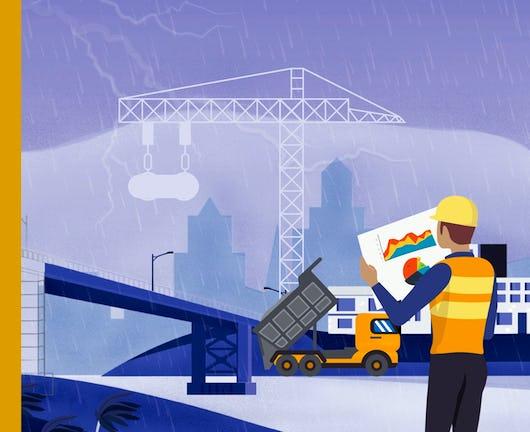
This course will teach you how to identify and analyze the risks of natural disasters in infrastructure projects. You will learn about different types of qualitative and quantitative analysis, as well as the methodologies and tools used to conduct these analyses in order to apply the knowledge. You will review risk models and comprehensive risk management.

Oct 12th 2026
2 Weeks
Gestión con enfoque en riesgos en proyectos de desarrollo (Coursera) Coursera
Inter-American Development Bank - IDB

Gestión con enfoque en riesgos en proyectos de desarrollo (Coursera)

¿Sabías que cada decisión que tomamos en nuestras acciones diarias implica riesgos? Hasta el mejor de los proyectos está expuesto a imprevistos por lo que aprender a gestionar riesgos es importante para maximizar las oportunidades y reducir las amenazas. Este curso te brindará los conocimientos fundamentales para aprender a gestionar anticipadamente los eventos positivos y negativos que pueden afectar la ejecución de un proyecto de desarrollo.

Oct 12th 2026
3 Weeks