Responsible News Consumption in the Digital Age: Strategies for Citizens of Post-Soviet States (Coursera)

Responsible News Consumption in the Digital Age: Strategies for Citizens of Post-Soviet States (Coursera)

In the idea of responsible consumption, a driven force is the maturity of consumers and their responsibility to preserve the planet's ecosystem. Our course proposes you a concept of responsible news consumption that puts the integrity of the information ecosystem of civil society at the forefront. In this ecosystem, each participant - a citizen - realizes not only the importance of receiving reliable information for making decisions and taking actions but also the responsibility to members of his or her large and small communities for the credibility of information shared with them.

Class Deals by MOOC List - Click here and see Coursera's Active Discounts, Deals, and Promo Codes.

In today's digital age of deceptive information abundance, news consumers can be lost in a flood of misinformation, viral cliches, ad and propaganda. This five-week course gives you the critical thinking techniques for the conscious work with this increasing flood.
Also, we'll cover the internal principles of production and distribution of quality news - the main journalism product that helps the democratic system to resist such diseases as a crisis of confidence, populism or radicalism. These skills are quite useful for any responsible citizen but they are crucial for civil societies in the post-Soviet space, where independent journalism is still quite young and often unable to fully counteract pressure from corporations and authorities.

What You Will Learn:

  • distinguish verified journalistic reports from similar information products like ads, propaganda, or entertainment
  • determine the degree of reliability of the news by analyzing its structure, presentation, evidence, sources and language

Syllabus

WEEK 1: Responsible news consumption as the basis for the development of civil society
WEEK 2: News in post-soviet realm
WEEK 3: Journalistic verification: how it works
WEEK 4: Between fairness and balance
WEEK 5: Fake news and post-truth as alternative vision of news
Go to Class
MOOC List is learner-supported. When you buy through links on our site, we may earn an affiliate commission.

Related Courses

Ongoing U.S. Settler Colonialism & Native Peoples Teach-Out (Coursera) Coursera
Johns Hopkins University

Ongoing U.S. Settler Colonialism & Native Peoples Teach-Out (Coursera)

Increasingly, terms such as “colonialism,” “decolonization,” and “social structures,” appear in media, conversations, and educational spaces, often without nuanced explanations of these concepts and how they relate to current U.S. society and the individuals in it. To provide a space to think, learn, and feel about these concepts as realities connected to everyone, this course offers many entry points to deepen understandings about the U.S. as a current settler colonial nation, to engage with contemporary Indigenous Peoples/Native Nations, and to recognize how participants’ own lives, interests, and professional domains intersect with settler colonialism.

Nov 2nd 2026
5-12 Weeks
Reputation Crisis? Facebook meets Cambridge Analytica (Coursera) Coursera
Erasmus University Rotterdam

Reputation Crisis? Facebook meets Cambridge Analytica (Coursera)

Do you remember when you first created your Facebook account? Do you know what happens to the data and stories you share on Facebook? Are you aware of the Facebook – Cambridge Analytica crisis and its ramifications? In this course, you will take a deep dive into reputation management by tackling a case study on the crisis, the effects of which are still unravelling for Facebook, the tech industry, and society at large. You will explore the concept of corporate reputation, and touch upon topics such as data privacy implications for the big tech or the importance of leadership and culture, and how Mark Zuckerberg’s leadership might have affected Facebook in particular. In the final project, you will be asked to link theory and practice to provide an analysis of events and make recommendations for Facebook, going forward.

Oct 26th 2026
5-12 Weeks
Introducción a UML (Coursera) Coursera
Universidad de los Andes

Introducción a UML (Coursera)

Bienvenidos a este curso de introducción al Lenguaje de Modelado Unificado, o UML por su sigla en inglés. Este curso surge como respuesta a la necesidad de los ingenieros de software de desarrollar la habilidad de abstraer y representar en un modelo problemas o soluciones. Esta habilidad es especialmente importante en el mundo del software donde las tecnologías son tan cambiantes. Un modelo te provee una forma de comunicar y validar un entendimiento, independiente de la tecnología en la que construirás una solución.

Oct 26th 2026
4 Weeks
Making Sense of the News: News Literacy Lessons for Digital Citizens (Coursera) Coursera
University of Hong Kong,The State University of New York

Making Sense of the News: News Literacy Lessons for Digital Citizens (Coursera)

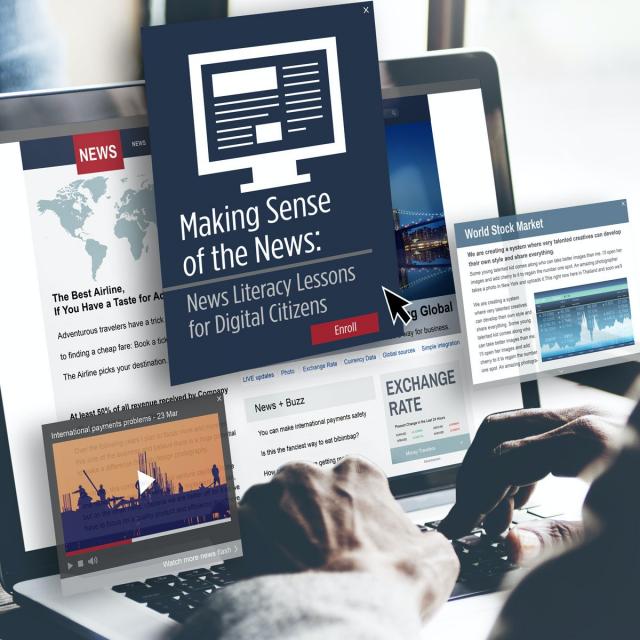
Never before has the need for News Literacy been more urgent. As news consumers are bombarded with a constant stream of fake news, propaganda, hoaxes, rumors, satire, and advertising — that often masquerade as credible journalism — it is becoming more and more difficult to distinguish fact from fiction. While the public’s faith in the news media erodes, purveyors of misinformation have helped give rise to troubling cultural trends and alarming political movements.

Nov 2nd 2026
5-12 Weeks
Science Literacy (Coursera) Coursera
University of Alberta

Science Literacy (Coursera)

Fake news or good science? In a world where we have access to unlimited information, it is hard to sift through the echo chamber of opinions fueled by emotions and personal biases, rather than scientific evidence. Science Literacy will teach you about the process of science, how to think critically, how to differentiate science from pseudoscience, how indigenous wisdom can inform science, how to understand and design a scientific study, and how to critically evaluate scientific communication in the media.

Oct 19th 2026
5-12 Weeks
Quantitative Formal Modeling and Worst-Case Performance Analysis (Coursera) Coursera
EIT Digital

Quantitative Formal Modeling and Worst-Case Performance Analysis (Coursera)

Welcome to Quantitative Formal Modeling and Worst-Case Performance Analysis. In this course, you will learn about modeling and solving performance problems in a fashion popular in theoretical computer science, and generally train your abstract thinking skills. After finishing this course, you have learned to think about the behavior of systems in terms of token production and consumption, and you are able to formalize this thinking mathematically in terms of prefix orders and counting functions. You have learned about Petri-nets, about timing, and about scheduling of token consumption/production systems, and for the special class of Petri-nets known as single-rate dataflow graphs, you will know how to perform a worst-case analysis of basic performance metrics, like throughput, latency and buffering.

Oct 19th 2026
4 Weeks
ODS y sostenibilidad: una mirada desde los colegios (Coursera) Coursera
Universidad de los Andes

ODS y sostenibilidad: una mirada desde los colegios (Coursera)

En este curso veremos cómo podemos generar cambios y transformaciones (a nivel individual, organizacional y social) para la sostenibilidad desde la educación formal y no-formal. Partiremos del concepto de los Objetivos de Desarrollo Sostenible (ODS) como un marco potente para generar reflexiones críticas, que nos lleven a generar acciones colectivas desde la escuela en pro de la sostenibilidad.

Oct 26th 2026
4 Weeks
Training and Learning Online (Coursera) Coursera
University of Leeds

Training and Learning Online (Coursera)

Have you considered completing online training programmes and courses? Or perhaps you have to work online for your studies and you are not sure how to do it? Learning online is very different from face-to-face learning, as it often involves independent study and a different set of skills. On this course, you will develop effective online learning strategies that work for you, whether you are learning for work, leisure or for your studies, so that you can make the most of it.

Oct 19th 2026
3 Weeks
Entreprendre dans les Industries Culturelles à l'ère du numérique (Coursera) Coursera
Sciences Po

Entreprendre dans les Industries Culturelles à l'ère du numérique (Coursera)

À travers son fil pédagogique riche d’interviews d'experts et de cours d'enseignants, le MOOC Entreprendre dans les industries culturelles à l'ère du numérique proposé par l'École d'affaires publiques de SciencesPo et le Ministère de la Culture, invite à découvrir les clés de l'entrepreunariat culturel à l'aune du monde numérique. Suivre la chaîne de valeur de l’entreprise culturelle conduit à aborder successivement la présentation du secteur des industries culturelles (IC) dans ses grandes lignes, les caractéristiques des publics et les tendances de consommation.

Nov 2nd 2026
5-12 Weeks
Compreender as dimensões interculturais na vida cotidiana (Coursera) Coursera
Universidad de los Andes

Compreender as dimensões interculturais na vida cotidiana (Coursera)

Este MOOC é o resultado de uma Co construção e pesquisa por professoras da Universidad Sorbonne-Nouvelle Paris 3 e da Universidad de los Andes (Colômbia). Seu principal objetivo é fornecer ferramentas para desenvolver dimensões interculturais na vida cotidiana. O curso é destinado a estudantes e profissionais de diferentes áreas além do ensino de idiomas (humanidades e ciências sociais, educação, clínica intercultural, estudos de arte e administração) que têm que enfrentar situações da vida cotidiana e relações com outros, onde ferramentas de reflexão são necessárias para ter uma abordagem intercultural.

Oct 26th 2026
4 Weeks