Religion, Radicalisation, Resilience (FutureLearn)

Religion, Radicalisation, Resilience (FutureLearn)

Understand religious radicalisation and violence and learn strategies to build resilience in communities and schools. Understand violent radicalisation and religiously attributed violence. Through this course you will explore issues related to religiously attributed violent radicalisation, learning how to build resilience within communities and schools.

Class Deals by MOOC List - Click here and see FutureLearn's Active Discounts, Deals, and Promo Codes.

You will examine terrorist events, their consequences and the stories of the perpetrators. You will hear from key experts seeking to explain how people were driven to become radicalised and engage in terrorist violence. You will consider the definition of radicalisation and what forms it takes. You will then get basic training in how to develop a community resilience programme against radicalisation and terrorism.

Syllabus

Week 1: What is violent radicalisation?
Week 2: Drivers and dynamics of violent radicalisation
Week 3: Addressing violent radicalisation through resilience

What will you achieve?
By the end of the course, you‘ll be able to...

  • Investigate current debates on violent religious radicalisation
  • Engage with different theoretical approaches that explain violent radicalisation and identify its causes
  • Explore the process through which a young person can be drawn into a spiral of violent radicalisation and extremism
  • Discuss what is resilience and how it is different from counter-radicalisation approaches
  • Compare specific approaches and experiences of building resilience within communities and countering violent radicalisation. Discuss whether and how they can be transposed to different settings (cities, countries)
  • Learn about how violent religiously attributed radicalisation emerges today in different parts of the world, understand why people are driven to engage in violent extremism and what resilience to it is
Go to Class
MOOC List is learner-supported. When you buy through links on our site, we may earn an affiliate commission.

Related Courses

Girls' Education: Teaching Strategies That Develop Confidence, Resilience and Collaboration (FutureLearn) FutureLearn
Girls' Day School Trust

Girls' Education: Teaching Strategies That Develop Confidence, Resilience and Collaboration (FutureLearn)

How can teachers help close the gender gap? Get guidance on helping girls achieve their potential with this free online course. The behaviours that the education system rewards – studying, careful preparation, patient climbing from one level to the next – seem to give women an advantage academically. Yet in the world of work, people hire and promote based on character as much as on formal qualifications.

No sessions available
4 Weeks
Community Preparedness, Recovery and Resilience: An Introduction (FutureLearn) FutureLearn
Coventry University

Community Preparedness, Recovery and Resilience: An Introduction (FutureLearn)

Explore disaster management and how communities can build resilience and cope after a disaster. Discover the challenges of building resilience in communities. A community can experience a range of direct and indirect impacts as a result of a disaster. On this course, you will be able to examine the ways communities recover from dramatic changes by preventing future risk and fostering positive developments with communities.

No sessions available
2 Weeks
Terrorism and Counterterrorism: Comparing Theory and Practice (Coursera) Coursera
Leiden University

Terrorism and Counterterrorism: Comparing Theory and Practice (Coursera)

Terrorism has arguably been one of the defining factors of our age. It frequently makes headlines, threatening or attacking governments, private business and ordinary citizens. And in many parts of the world, it has been one of the most important threats to peace, security and stability. But what does this exactly mean? What is the nature of this threat? Who or what is threatened, how, by whom and why? What can be done about it or how can we at least limit the impact of terrorism and make sure that terrorists do not make headlines and manage to scare us? These are just a handful of questions that will be addressed in this course that consists of three parts.

Aug 10th 2026
5-12 Weeks
Religious Transformation in Early China: the Period of Division (Coursera) Coursera
The Chinese University of Hong Kong

Religious Transformation in Early China: the Period of Division (Coursera)

This sequence of four courses will propose a multi-disciplinary approach to the study of Chinese cultural history conceived of as a succession of modes of rationality (philosophical, bureaucratic, and economic). The focus will be on the moments of paradigm shift from one mode of rationality to another. For each of these moments, cultural facts and artifacts—thought, literature, ritual—will be examined in relationship to changing social, political, and economic systems.

Aug 10th 2026
5-12 Weeks
Mindfulness Through Film (FutureLearn) FutureLearn
INTO FILM

Mindfulness Through Film (FutureLearn)

Explore how film watching and filmmaking can be used in secondary teaching to introduce mindfulness principles and exercises.  Support students' mental health through the power of film. Created in partnership with the Mental Health Foundation, this course includes a variety of film-based strategies to enable you and your learners to confidently engage with mindfulness. Discover how film can help you tap into the mental health benefits of mindfulness, such as enhancing focus, promoting self-regulation, increasing resilience, and improving interpersonal skills. 

Self Paced
2 Weeks
Religions From The Inside: Improving Interreligious Dialogue (FutureLearn) FutureLearn
Università della Svizzera italiana

Religions From The Inside: Improving Interreligious Dialogue (FutureLearn)

Explore the value of cooperation between faiths and learn how the five main world religions’ core beliefs relate to each other. Learn how to encourage and benefit from respectful interfaith dialogue. This short course, led by the Faculty of Theology of Lugano in collaboration with USI, will develop your knowledge of what interfaith dialogue means from a philosophical and epistemological point of view, and teach how to enjoy productive interfaith dialogue.

Oct 4th 2021
5-12 Weeks
Religion and Conflict (FutureLearn) FutureLearn
University of Groningen

Religion and Conflict (FutureLearn)

Understand and analyze the role of religion in conflicts and peacebuilding in present-day societies, with this free online course. Many conflicts in the world today are framed in terms of religion, but there is much discussion and confusion concerning the precise role religion plays in these conflicts. According to some, conflict and violence are inherent to religion. Others claim that religion is only the guise under which social, economic or political conflicts are fought out. The first step to solving religiously framed conflicts is understanding the role of religion in them, and that is what this free online course is about.

No sessions available
5-12 Weeks
Drugs, Peace, and Development: Rethinking Policy (FutureLearn) FutureLearn
SOAS University of London

Drugs, Peace, and Development: Rethinking Policy (FutureLearn)

Gain insights into the relationships between illicit drug economies, peacebuilding, and development in borderland regions. Explore new ways to tackle drugs, development, and peacebuilding challenges. There is growing awareness that the ‘war on drugs’ has failed and that there is a need for reformed drug policies. But what does this mean in practice? On this five-week course from SOAS University of London, you’ll delve into the latest debates in global drug policy and the current efforts to integrate drugs, development, and peacebuilding policies.

Jun 6th 2022
5-12 Weeks
Christian-Muslim Relations (FutureLearn) FutureLearn
University of Edinburgh

Christian-Muslim Relations (FutureLearn)

Uncover important themes in the history of Christian-Muslim relations and understand the politics that continue to shape it. Gain an insight into the academic study of Christian-Muslim Relations. On this innovative four-week course, you’ll be introduced to the academic study of Christian-Muslim Relations with the School of Divinity at the University of Edinburgh.

Oct 3rd 2022
4 Weeks
Why Religion Matters: Religious Literacy, Culture and Diversity (FutureLearn) FutureLearn
The Open University

Why Religion Matters: Religious Literacy, Culture and Diversity (FutureLearn)

Discover why religion is important for understanding and engaging with global challenges. Consider the ways religion affects personal and political decision-making. Religion not only influences personal behaviours and ethics, but it’s also relevant to international conflicts and domestic policy decisions. On this course, you will gain a broader understanding of why religion matters in society and in different cultures.

Self Paced
4 Weeks
Forced Marriage: Challenges and Dilemmas (FutureLearn) FutureLearn
University of Strathclyde

Forced Marriage: Challenges and Dilemmas (FutureLearn)

Develop your knowledge of human rights and societal issues as you explore the impact of forced marriage and measures to combat it. Learn how to define forced marriages. Forced marriage is recognised internationally as a violation of women and children’s human rights and as a form of violence against women. This course will explore the meaning and impact of forced marriage on the individual and communities where it takes place.

May 30th 2022
4 Weeks
Violence Against Healthcare (Coursera) Coursera
University of Geneva

Violence Against Healthcare (Coursera)

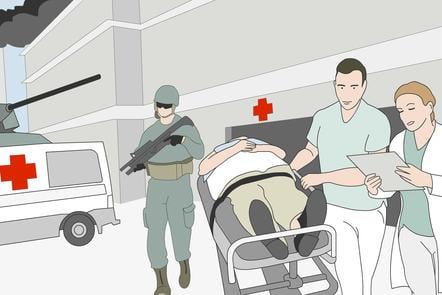
At the global level, there are many countries marked by violence affecting health care. The 'Health care in danger' project aims to establish practical measures and recommendations that can be implemented on the ground by policy-makers, humanitarian organizations and health professionals. In view of the multiplicity of actors and latitudes concerned, it is essential to be able to make available the tools needed to make informed decisions, guide behaviour in high-risk areas and provide everyone the means to create and optimize the dialogue between humanitarian professionals and health on the one hand and relevant authorities or other armed actors.

Aug 10th 2026
5-12 Weeks