Drugs, Peace, and Development: Rethinking Policy (FutureLearn)

Drugs, Peace, and Development: Rethinking Policy (FutureLearn)

Gain insights into the relationships between illicit drug economies, peacebuilding, and development in borderland regions. Explore new ways to tackle drugs, development, and peacebuilding challenges. There is growing awareness that the ‘war on drugs’ has failed and that there is a need for reformed drug policies. But what does this mean in practice? On this five-week course from SOAS University of London, you’ll delve into the latest debates in global drug policy and the current efforts to integrate drugs, development, and peacebuilding policies.

Class Deals by MOOC List - Click here and see FutureLearn's Active Discounts, Deals, and Promo Codes.

You’ll learn about the tensions and trade-offs between different policy goals and how these can be navigated to work towards more humane drug policies.
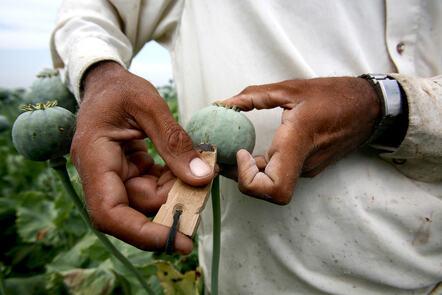
This course draws on world-leading research conducted in Afghanistan, Colombia, and Myanmar – countries that account for more than 90% of the world’s illicit opium production and more than half of the world’s cocaine production. In-depth case studies will take you into the lives of those involved in illicit drug economies.

Discover the complex relationships between illegal drugs, development, and peacebuilding in borderlands
You’ll learn how drugs, development, and peacebuilding intersect with one another in complex and surprising ways, and the consequences for people who depend upon illicit economies at the margins.

Explore the opportunities and challenges for more development-oriented drug policies
You’ll examine creative approaches and new policy directions for responding to illicit drugs. Within this, you’ll identify interventions that can generate more humane and inclusive outcomes for those involved in illicit drug economies.

Learn from experts at SOAS University of London and a global network of researchers
SOAS is a centre of excellence in research and policy approaches to drugs, development, and peacebuilding.

Drawing upon SOAS’s global networks, you’ll learn from a diverse range of experts that have worked on drug issues.

Syllabus

Week 1: Drugs, development and peacebuilding: the trilemma
Week 2: Drugs and drug policies
Week 3: Peacebuilding, violence and conflict
Week 4: Development
Week 5: Applying trilemma thinking

What will you achieve?
By the end of the course, you‘ll be able to...

  • Investigate the relationship between illicit drugs, conflict, and development, drawing on evidence from the borderlands of three major drug-producing regions of the world: Afghanistan, Colombia and Myanmar
  • Identify policy linked to the wars on drugs and their different impacts on some of the world’s most marginalised populations
  • Engage with contemporary debates on global drug policy and efforts to integrate drugs, development and peacebuilding policy
  • Assess the tensions and trade-offs surrounding policy goals of a drug-free world, the promotion of peace and sustainable development
  • Apply the concept of a policy ‘trilemma’ to navigate tensions and trade-offs between policy goals, and to devise more humane ways to tackle drugs, development and peacebuilding challenges

Who is the course for?
This course is designed for those involved or interested in the fields of conflict, peace, development, global security, public health, and drug programmes. Activists, researchers, policy makers and individuals working for NGOs will all find it valuable.
Go to Class
MOOC List is learner-supported. When you buy through links on our site, we may earn an affiliate commission.

Related Courses

Occupational Health in Developing Countries (FutureLearn) FutureLearn
University of Bergen,Addis Ababa University,MUHAS

Occupational Health in Developing Countries (FutureLearn)

Get a global perspective on occupational health and safety and learn how it reduces workplace injury on this CPD-certified course. Learn how to work on the issue of occupational health in a low-income setting. Occupational health is a neglected part of public health in many developing countries where industrial activity is increasing. On this course, you’ll broaden your knowledge of occupational health and learn how to prevent diseases and injuries caused by working conditions in developing countries.

Mar 13th 2023
5-12 Weeks
Gender and Labour in the Global South (FutureLearn) FutureLearn
University of Basel,University of Bern, Interdisciplinary Centre for Gender Studies (ICFG)

Gender and Labour in the Global South (FutureLearn)

Delve into the Global South's labour market to understand gender issues and impacts on sustainable development. Examine gender discrimination in the Global South’s labour market. Although women’s participation in the paid labour market has increased in recent decades, gender discrimination in access to decent work persists. Women, particularly in the Global South, have the lowest participation in the labour market due to a number of factors. This three-week course from the University of Basel will guide you in assessing the Global South’s labour market to understand the impact of gender inequality in labour.

Mar 14th 2022
3 Weeks
Gender and Development (FutureLearn) FutureLearn
Deakin University

Gender and Development (FutureLearn)

Does gender matter in international and community development? Find out in this free online course. Explore the relationship between gender and development. This online course explores why gender matters in contemporary international and community development, asking you to: explore the challenges for achieving gender justice throughout the world; examine the concepts of gender, development and what brings gender and development together.

Jul 3rd 2023
2 Weeks
Understanding Violence Against Women: Myths and Realities (FutureLearn) FutureLearn
University of Strathclyde

Understanding Violence Against Women: Myths and Realities (FutureLearn)

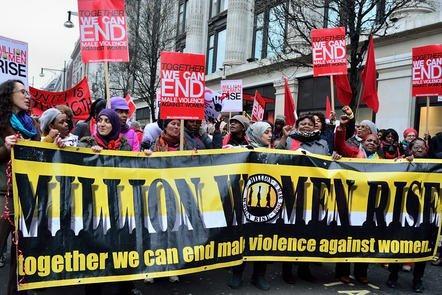
Learn how to challenge attitudes that lead to violence against women and develop your knowledge of this human rights issue. The United Nations considers violence against women to be a grave violation of human rights of epidemic proportions. Such violence has profoundly negative consequences for individuals, communities and entire societies. This is why violence against women is a priority issue for governments and societies around the world.

Apr 18th 2022
5-12 Weeks
Environmental Challenges: Scarcity and Conflict in the Natural Environment (FutureLearn) FutureLearn
University of Leeds

Environmental Challenges: Scarcity and Conflict in the Natural Environment (FutureLearn)

War and conflict can severely disrupt the governance of the environment. What is the impact on both people and the environment? This course explores three aspects of conflict and resource scarcity, and applies these to explore decision making and negotiation skills. Human conflict has both short and long term effects on the natural world.

Self Paced
2 Weeks
Identifying and Responding to Domestic Violence and Abuse (DVA) in Pregnancy (FutureLearn) FutureLearn
Coventry University

Identifying and Responding to Domestic Violence and Abuse (DVA) in Pregnancy (FutureLearn)

Discover how you can better support people experiencing domestic violence and abuse in pregnancy. Explore the challenges of providing care for DVA in the context of pregnancy. Around 1 in 12 people are exposed to domestic violence and abuse (DVA) during pregnancy. Health appointments during this time are a good opportunity for maternity staff and other health professionals to ask people about DVA and offer support. Maternity staff routinely screen for DVA, yet disclosure and referral rates remain low. On this course, you will discover the research, guidelines and techniques for screening for DVA more effectively.

Jan 16th 2023
2 Weeks
Religion, Radicalisation, Resilience (FutureLearn) FutureLearn
European University Institute - EUI,GREASE Project Consortium

Religion, Radicalisation, Resilience (FutureLearn)

Understand religious radicalisation and violence and learn strategies to build resilience in communities and schools. Understand violent radicalisation and religiously attributed violence. Through this course you will explore issues related to religiously attributed violent radicalisation, learning how to build resilience within communities and schools.

Oct 24th 2022
3 Weeks
Terrorism and Counterterrorism: Comparing Theory and Practice (FutureLearn) FutureLearn
Leiden University

Terrorism and Counterterrorism: Comparing Theory and Practice (FutureLearn)

Delve into the research behind terrorism as you unpack the assumptions and impacts of both terrorism and counterterrorism. Explore terrorism and counterterrorism studies. Terrorism has arguably been one of the defining factors of our age. It frequently makes headlines, threatening or attacking governments, private businesses, and ordinary citizens. In many parts of the world, it has been one of the most important threats to peace, security, and stability – but what does this mean exactly? On this six-week course from Leiden University, you’ll explore the essence of terrorism and discover why it is so difficult to define.

Apr 25th 2022
5-12 Weeks
Climate Change and Resilience in Food Systems (FutureLearn) FutureLearn
University of Leeds,Africap

Climate Change and Resilience in Food Systems (FutureLearn)

Learn new research-led strategies designed to mitigate the effects of climate change on agriculture and food systems. Learn about the effects of climate change and how to build resilience in agriculture and food systems. Even small climate changes can have large-scale consequences in agriculture and food systems with devastating effects for the people and their economies. On this course, you will learn strategies designed to mitigate the impact of climate change, develop resilient food systems and create sustainable development in local communities.

Self Paced
2 Weeks
Global Health, Conflict and Violence (FutureLearn) FutureLearn
University of Bergen

Global Health, Conflict and Violence (FutureLearn)

Understand the role of medical peace work, and consider the role of healthcare workers in times of conflict and violence. Explore the role of medics and healthcare workers in promoting peace. On this course you will learn about the key principles and different forms of medical peace work in the context of global health, conflict and violence.

Self Paced
3 Weeks