EdX

Reclaiming Broken Places: Introduction to Civic Ecology (edX)

Reclaiming Broken Places: Introduction to Civic Ecology (edX)

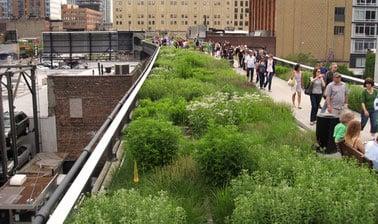
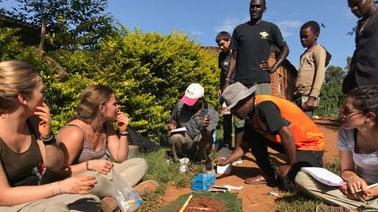
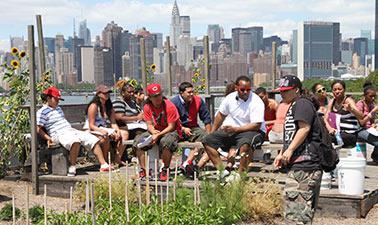
Explore why and how people come together to care for nature and community in cities and after disasters. The actions of ordinary people are often absent in studies of urban renewal and urban ecology. Around the world, people who are fed up with environmental degradation and the breakdown of their communities come together to transform blighted vacant lots, trashed-out stream corridors, polluted estuaries, and other “broken places.”

Class Deals by MOOC List - Click here and see EdX's Active Discounts, Deals, and Promo Codes.

Civic ecology practices—such as community gardening, wetlands restoration, river cleanups, and tree planting—are a means for people to express resilience and rebuild communities marked by disaster and disinvestment.
Civic ecology draws on psychology, sociology, political science, education, ecology, and social-ecological systems resilience to understand how and why people care for nature and their communities.

Throughout this course, you will:

  • Explore the people, places, and practices that restore nature and revitalize neighborhoods, making a difference in ways big and small.
  • Discuss and evaluate contemporary thinking in resilience, social-ecological systems, and the relationship between nature and human/community wellbeing.
  • Grasp an understanding of how civil ecology enables those with limited resources to defy and cope with daily struggles, including after disaster and war.
  • Acquire the knowledge and skill set to enact change in your own community.
  • Participate in a civic ecology service learning project to turn classroom learning into real-life application.

This course is ideal for a learner who is intrigued by both social and environmental concerns, or simply has a desire to dive into an emerging 21st century, cross-disciplinary subject area. You will complete this course with a keener awareness of social-ecological issues and concerns, as well as a greater knowledge of the practical steps required to rebuild and maintain community and nature in a world marked by inequality, conflict, and climate change.

What you'll learn

  • Define civic ecology and its practices
  • Describe a diverse range of civic ecology practices, stewards, and places

Identify the commonalities among civic ecology practices, including how they emerge and their components, interactions with large systems, and policy implications

  • Apply the conservation ethic and civic engagement foundations of civic ecology in your everyday life
  • Observe, participate in, develop plans for, and/or initiate local civic ecology practices in your community
  • Create a multimedia "story" of civic ecology practice of your choosing
  • Form networks with other course participants interested in continuing to explore civic ecology

Syllabus

Week 1
. Civic Ecology - What and Why?
. Principles of Civic Ecology
. Broken Places

Week 2
. Love of Life, Love of Place
. Learning Like Bees

Week 3
. Creating Community, Creating Connections
. Oyster Spat and Live Oaks – Memories

Week 4
. Ecosystem Services
. Stewardship, Health, and Well-being

Week 5
. Governance
. Resistance, Remembrance, Revolt, and Resilience

Week 6
. Policy Frameworks – Scaling Up and Out
. Conclusions
Go to Class
MOOC List is learner-supported. When you buy through links on our site, we may earn an affiliate commission.

Related Courses

Introduction to Environmental Science (edX) EdX
DartmouthX,Dartmouth College

Introduction to Environmental Science (edX)

A scientific study of the natural world and how it is influenced by people. Major topics include: food, energy, human population, biodiversity and global change. Environmental science is the study of patterns and processes in the natural world and their modification by human activity. To understand current environmental problems, we need to consider physical, biological and chemical processes that are often the basis of those problems.

No sessions available
4 Weeks
Sustainable Food Security: The value of systems thinking (edX) EdX
Wageningen University,WageningenX

Sustainable Food Security: The value of systems thinking (edX)

Learn how to solve the ‘Rubik’s cube’ of systems thinking and how it’s applied to improve the environmental sustainability of food production systems! Have you ever considered how many aspects of food production affect the natural environment? Every aspect needs to be considered in attaining the future goal to produce enough food for the growing population while at the same time preserving our planet. It’s as difficult as solving a Rubik’s cube; changing one aspect may affect the environment in a major way.

Self Paced
Self-Paced
Environmental Protection and Sustainability (edX) EdX
IsraelX

Environmental Protection and Sustainability (edX)

Uncover better solutions to help manage a wide range of environmental problems and challenges facing our world today. Do you want to understand more about the environmental problems we currently face? Do you want to learn ways we can reduce the negative effects of these problems, and keep our environment more sustainable? If so, this course is for you.

Self Paced
Self-Paced
Ethical Decision-Making: Cultural and Environmental Impact (edX) EdX
Georgetown University,GeorgetownX

Ethical Decision-Making: Cultural and Environmental Impact (edX)

International corporations can trigger significant cultural shifts and environmental impacts. For example, when foreign corporations set up large mineral extraction operations in developing countries, both culture and environment are altered. Ethical concerns arise when manipulative marketing techniques are used to mislead foreign consumers, especially about potentially harmful products. In this course, you will consider the ethics of these types of global influence.

Self Paced
Self-Paced
Nature Based Metropolitan Solutions (edX) EdX
Wageningen University,Delft University of Technology,DelftX,WageningenX

Nature Based Metropolitan Solutions (edX)

Discover the potential benefits of nature-based solutions (NBS) in metropolitan areas and develop strategies for their implementation. How can ecosystems contribute to quality of life and a more livable, healthier and more resilient urban environment? This course establishes the priorities and highlights the direct values of including principles based on natural processes in urban planning and design.

Oct 27th 2021
5-12 Weeks
Designing a Climate Neutral World: An Introduction (edX) EdX
Delft University of Technology,DelftX

Designing a Climate Neutral World: An Introduction (edX)

Learn about climate change strategies and the basic tools used for evaluating alternative options for mitigating greenhouse gas emissions.Mitigation of climate change is one of the most important challenges of our times. To prevent irreversible damage to human societies and the environment, it was agreed that world countries should limit the global average temperature rise. To avoid dangerous impacts of climate change, it is needed to limit global temperature rise to well below 2 °C or even to 1.5 °C above pre-industrial levels.

Self Paced
Self-Paced
Sustainability in Everyday Life (edX) EdX
Chalmers University of Technology,ChalmersX

Sustainability in Everyday Life (edX)

This course will arm you with the information and skills required to make more sustainable choices everyday! Daily headlines warn of new chemical dangers, species on the edge of extinction, global warming-- framing our planet as “at risk.” Some people stop listening, others get alarmed, while some others want to learn more in hopes of making a difference in the world.

No sessions available
5-12 Weeks
Environmental Engineering: Drinking Water Treatment (edX) EdX
Seoul National University,SNUx

Environmental Engineering: Drinking Water Treatment (edX)

Understand what makes water clean or dirty and what are being done at water treatment facilities to make water safe to drink. This course will cover fundamental science and engineering principles dealing with natural and water environmental systems. First, we focus on what influences water quality and what are sources, characteristics, and effects of water pollutants. Second, we will explore the basic chemical concepts needed to understand how pollutants may change their forms and influence water quality.

Self Paced
Self-Paced