Radical Spirituality: the Early History of the Quakers (FutureLearn)

Radical Spirituality: the Early History of the Quakers (FutureLearn)

Learn about the beginnings of this radical religious group as it emerged in 17th century England, with this free online course. When you think of the Quakers, it might bring to mind porridge oats, or pacifism, or perhaps prison reform. But there is much much more to the Quakers than any of these things. Through this course, we will be finding out about what lies at the heart of Quaker beginnings, who its main characters were, and how in a few weeks during the summer of 1652 the Quaker movement was formed in the north of England.

Class Deals by MOOC List - Click here and see FutureLearn's Active Discounts, Deals, and Promo Codes.

Explore exactly where the Quakers started
Almost from nothing, the Quakers were to become the most successful sect of the 1650s and 1% of the population of England were to become Quakers. It was a radical spirituality which appealed to thousands of people, hungry for new ways of thinking.
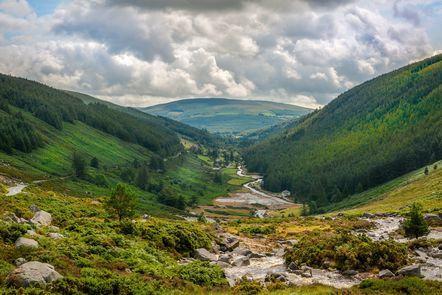
In this three week course, we will see how the events of 1652 unfolded and visit the key sites of Pendle Hill, Firbank Fell, and Swarthmoor Hall in the northwest of England. Each of these places marks a critical piece of the dramatic story of May and June 1652.
Learn about key figures in the Quaker movement
On Pendle Hill, George Fox, who will come to lead the movement, has a vision of a ‘great people to be gathered’. He finds and recruits hundreds preaching on Firbank Fell a few weeks later. And in Ulverston he meets Margaret Fell - who, convinced of the Quaker message, becomes a co-leader of the group and allows her home, Swarthmoor Hall, to become the headquarters of the new Quaker movement. Through this course you’ll meet and get to know the major figures who contributed to the Quaker movement.
Understand how the Quakers changed the face of England
Each week contains films, some accompanying readings of George Fox’s journal, a focus on a key text from the period to help us better understand the experience and message of early Quakerism, and some reflection exercises and quizzes.
Together, we will explore the beginnings of Quakerism and this critical piece of religious history of a group who gathered around a radical and outspoken spiritual message that was to change the face of 1650s England, and has since remained a distinctive part of the religious landscape.
By the end of the course, you will be able understand the beginnings of the Quaker movement and explain its key ideas and radical nature; and be able to reflect on the consequences of Quaker spirituality.

What topics will you cover?

  • The context of the English Civil War
  • The religious ideas of George Fox and other early Quakers
  • The importance of Fox’s Pendle Hill Experience
  • The role of travel in the start of the Quaker movement
  • Fox’s sojourn in Sedbergh
  • The interiorised nature of Quaker spirituality
  • The popularity and unpopularity of Quakerism
  • Margaret Fell’s role in early Quakerism
  • Quaker history post 1652
  • Quakerism as a global faith

What will you achieve?

  • Develop an understanding of the civil war context of the beginnings of Quakerism
  • Engage with the key ideas of George Fox and the early Quakers
  • Explore the mode and content of early Quaker writing
  • Reflect on the consequences of key Quaker theological ideas
  • Assess the importance of the location of the beginnings of Quakerism
  • Develop an understanding of Quaker history after 1652
Go to Class
MOOC List is learner-supported. When you buy through links on our site, we may earn an affiliate commission.

Related Courses

The Living Picture Craze: An Introduction to Victorian Film (FutureLearn) FutureLearn
The British Film Institute - BFI

The Living Picture Craze: An Introduction to Victorian Film (FutureLearn)

Film takes a starring role in this course exploring the emergence of a new medium that was set to capture the world's imagination. Explore the birth of film and the end of Queen Victoria’s epic reign. Roll up! Roll up! Take your seats for the ‘Living Picture’ craze! In this course we journey back to the end of the Victorian era; a time of intense modernisation and unprecedented change.

Self Paced
3 Weeks
An Introduction to Japanese Subcultures (FutureLearn) FutureLearn
Keio University

An Introduction to Japanese Subcultures (FutureLearn)

Explore Japanese subcultures and learn about their history from the 1970s to today. Subcultures have existed for a long time: the greasers of 1950s America, the mods and rockers of the 1960s and 70s in England, the grunge of the 1980s and 90s, to name a few. Each subculture sits within a broader ‘parent’ culture and can often give us an insight into cultural fears and hopes, especially in the youth of the population. On this course you will get an introduction to Japanese subcultures that have developed since the 1970s.

Self Paced
4 Weeks
Exploring Stone Age Archaeology: The Mysteries of Star Carr (FutureLearn) FutureLearn
University of York

Exploring Stone Age Archaeology: The Mysteries of Star Carr (FutureLearn)

Discover Star Carr, one of the world's most important archaeological sites, and learn what life was like over 10,000 years ago. Learn about the incredible discoveries at Star Carr. Star Carr is one of Britain’s most important archaeological sites. Because of extraordinary conditions of survival, we have uncovered the oldest known house in Britain, the earliest evidence of carpentry in Europe and the oldest complete bow in the world. These and other discoveries help us interpret what life might have been like over 10,000 years ago.

Self Paced
4 Weeks
From Waterloo to the Rhine: The British Army 1815-1945 (FutureLearn) FutureLearn
University of Kent,National Army Museum

From Waterloo to the Rhine: The British Army 1815-1945 (FutureLearn)

Examine one of the UK’s most storied institutions, and how 130 years of social, cultural and military change have shaped it. Explore the British Army’s part in the making of the modern world. With a legacy stretching back centuries, the British Army is proud of its hard-won reputation as one of the most formidable fighting forces in the world.

Self Paced
4 Weeks
A History of Royal Fashion (FutureLearn) FutureLearn
University of Glasgow,Historic Royal Palaces

A History of Royal Fashion (FutureLearn)

From Henry VIII to Queen Elizabeth II, explore how British kings and queens have influenced fashion over 500 years. Learn how royalty used fashion to entertain, control and impress. A History of Royal Fashion takes you into the wardrobes of British kings and queens across five royal dynasties from the Tudors, Stuarts and Georgians to the Victorians and Windsors.

Self Paced
5-12 Weeks
Irish 102: An Introduction to Irish Language and Culture (FutureLearn) FutureLearn
Dublin City University

Irish 102: An Introduction to Irish Language and Culture (FutureLearn)

Find out how to speak, write and understand basic words, phrases and dialogues in Irish. Develop your knowledge of the basics of the Irish language. Ireland is home to one of the oldest living languages in Europe. On this course, you’ll improve your understanding of basic spoken words, phrases and dialogues in Irish.

Self Paced
4 Weeks
Change of Era: The Origins of Christian Culture through the Lens of Archaeology (FutureLearn) FutureLearn
University of Padova

Change of Era: The Origins of Christian Culture through the Lens of Archaeology (FutureLearn)

Learn about innovative approaches to the study of early Christianity and discover its role in a crucial period of history. Delve into early Christianity. On this four-week course, you’ll gain a better understanding of a crucial period in history – one characterised by deep political, economic, cultural, and environmental transformations in the context of the end of the Western Roman Empire.

Self Paced
4 Weeks
New Zealand History, Culture and Conflict: A Museum Perspective (FutureLearn) FutureLearn
Museum of New Zealand Te Papa Tongarewa

New Zealand History, Culture and Conflict: A Museum Perspective (FutureLearn)

Discover the social history of Aotearoa New Zealand, learning how the country’s bicultural national consciousness was formed. Identify the factors that have contributed to New Zealand’s cultural identity. New Zealand’s social history is built on a foundation of exploration and colonial conflict. On this three-week course, you’ll access artefacts, treasures, and exhibitions within Te Papa Tongarewa’s collections to discover how New Zealand culture has evolved over time, identifying key historical moments that have impacted the formation of a national identity.

Self Paced
3 Weeks
Railway History: The Rise of the Railway Station (FutureLearn) FutureLearn
University of Strathclyde

Railway History: The Rise of the Railway Station (FutureLearn)

Gain a unique insight into British history as you explore the heritage and uses of railway stations from the 19th century to now. Go behind the scenes of York Railway Museum with the University of Strathclyde. Railway stations are an integral part of British history, helping to shape the economy and Britain’s built environment. On this four-week course, you’ll discover the heritage of railway stations and their significance in British history and culture.

Self Paced
4 Weeks
Travelling Books: History in Europe and Japan (FutureLearn) FutureLearn
British Library,Keio University

Travelling Books: History in Europe and Japan (FutureLearn)

Discover how travelling books sparked cultural exchanges between Europe and Japan, and how they live on in the digital era. Unlock the history of travelling books in Europe and Japan. Books are cultural artefacts that are easily transported and translated. As such, they have been important in fostering relationships between countries for hundreds of years. On this three-week course presented by Keio University and the British Library, you’ll learn more about the history of European and Japanese literature promoting cultural exchange, how this continues in the digital era, and how vital this exchange is.

Self Paced
3 Weeks
From World War to White Heat: the RAF in the Cold War (FutureLearn) FutureLearn
Royal Holloway, University of London

From World War to White Heat: the RAF in the Cold War (FutureLearn)

Explore the role that the Royal Air Force played in the Cold War through the collections of the RAF Museums at Hendon and Cosford. This free online course is a collaboration between the Royal Air Force (RAF) Museums and the Department of History at Royal Holloway, University of London. It will introduce you to some of the major turning points in the history of Britain in the post-1945 era.

Self Paced
5-12 Weeks
Accounting for Death in War: Separating Fact from Fiction (FutureLearn) FutureLearn
Royal Holloway, University of London,Every Casualty Counts

Accounting for Death in War: Separating Fact from Fiction (FutureLearn)

Discover the main methods used to account for war deaths, how they've been used and practice using them yourself. Calculating the number of deaths during a war is a difficult, but necessary, task - having accurate information is crucial for political and societal debates and decisions. On this course you will explore the methods currently used to account for war deaths and then apply these methods to particular wars.

Self Paced
3 Weeks