Political Governance and Public Policy in Russia (Coursera)

Political Governance and Public Policy in Russia (Coursera)

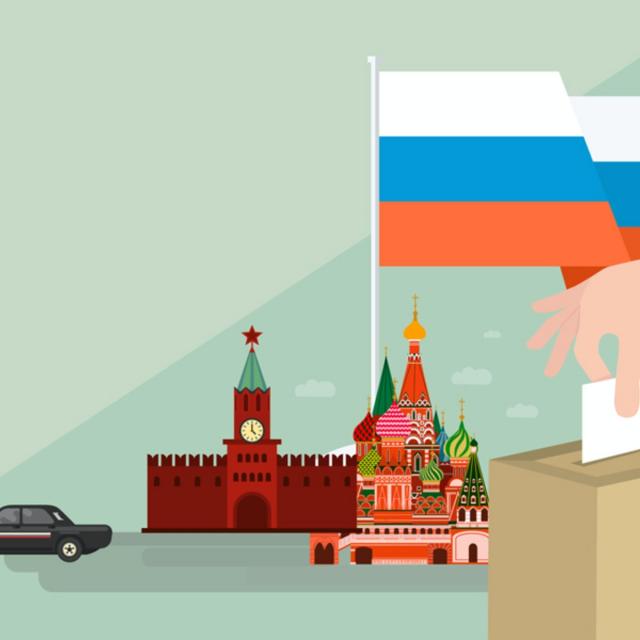
The course is designed to study the features of the political structure of modern Russia. It contains both general information on the institutional, procedural and value components of the political system and public policy in Russia, as well as a description of the problems, contradictions and prospects for the political development of the country. The course contains three main modules: (1) the political system and regime in Russia: state institutions, political parties, civil society; (2) the public policy process in Russia: the mechanisms for elaborating, adopting and implementing policies and decisions; (3) directions and problems of economic and social policy in Russia: development based on stabilization.

Class Deals by MOOC List - Click here and see Coursera's Active Discounts, Deals, and Promo Codes.

The course is aimed at those listeners who want to gain systematic knowledge of politics in Russia, as well as those who are focused on studying Russia's political development in complex and uncertain contexts. Studying the course students can choose the level of the course (general or in-depth), focusing on video material, information, discussions, forums, evaluations and interactive communication with teachers. The advanced level of the course development assumes the active participation of students in discussions, forums and project assignments. The overall mission of the course is to develop students' objective political knowledge about Russia and their ability to make critical scientific analysis and assessment.

Syllabus

WEEK 1
Russian Political System: Constitutional Design and Regime Constellation

WEEK 2
Russian party system and civic society

WEEK 3
Russian Public Policy Stages: From Stabilization and ‘2GDP’ to Modernization and Development

WEEK 4
Public Administration System: Institutional Capacity Building in Russia

WEEK 5
Citizens’ Engagement for Improved Policy-Making in Russia

WEEK 6
Russian public policy and development

Go to Class
MOOC List is learner-supported. When you buy through links on our site, we may earn an affiliate commission.

Related Courses

Introduction to the Nonprofit Sector, Nonprofit Organizations, Nonprofit Leadership and Governance (Coursera) Coursera
The State University of New York

Introduction to the Nonprofit Sector, Nonprofit Organizations, Nonprofit Leadership and Governance (Coursera)

This course introduces you to the nonprofit sector, nonprofit organizations, and the concepts of leadership and governance. While this course has been developed with North American culture in mind, we do appreciate that in other parts of the world the nature of the nonprofit sector, nonprofit organizations, nonprofit leadership and governance may not be the same. Nevertheless, it is our hope that much of the course content will still be of value to those in other parts of the world.

May 25th 2026
5-12 Weeks
Data and Urban Governance (Coursera) Coursera
Sciences Po

Data and Urban Governance (Coursera)

Since the beginning of the 2000s, cities have witnessed a massive influx of data, transforming how cities are governed. Data has an impact on how city life is structured, as it influences coalitions, actors, instruments, policies, and forms of regulation. In this MOOC, we will look at this shift more closely: what has the advent of big data done to urban governance? Have platforms disrupted local authorities? How has big data changed local politics? How do we govern using algorithms? What is the place of citizens in the digital city? Is it still possible to be anonymous in the city?

May 25th 2026
4 Weeks
Chinese Politics Part 1 - China and Political Science (Coursera) Coursera
The Hong Kong University of Science and Technology - HKUST

Chinese Politics Part 1 - China and Political Science (Coursera)

This course offers a conceptual framework for understanding China that highlights the intersection of politics and economics. It shows that rather than develop into a full blown market economy, state and party officials at all levels of the political system maintain significant influence in economic development. Such a “political” economy has had both positive and negative outcomes, which we will assess in detail.

May 25th 2026
5-12 Weeks
The GRC Approach to Managing Cybersecurity (Coursera) Coursera
University System of Georgia

The GRC Approach to Managing Cybersecurity (Coursera)

Managing cybersecurity is about managing risk, specifically the risk to information assets of valued by an organization. This course examines the role of Governance, Risk Management, and Compliance (GRC) as part of the Cybersecurity management process, including key functions of planning, policies, and the administration of technologies to support the protection of critical information assets.

Jun 1st 2026
5-12 Weeks
The Roles and Responsibilities of Nonprofit Boards of Directors within the Governance Process (Coursera) Coursera
University at Buffalo,The State University of New York

The Roles and Responsibilities of Nonprofit Boards of Directors within the Governance Process (Coursera)

This course provides a more in-depth look at the roles and responsibilities of boards of directors in the governance of nonprofit organizations. While the course has been developed with North American culture in mind, we do appreciate that in other parts of the world, the nature of the roles and responsibilities of boards of directors may not be the same. Nevertheless,it is our hope that much of the course content will still be of value to those in other parts of the world.

Jun 3rd 2026
5-12 Weeks
Paradoxes of War (Coursera) Coursera
Princeton University

Paradoxes of War (Coursera)

The Paradoxes of War teaches us to understand that war is not only a normal part of human existence, but is arguably one of the most important factors in making us who we are. Through this course, I hope that you will come to appreciate that war is both a natural expression of common human emotions and interactions and a constitutive part of how we cohere as groups. That is, war is paradoxically an expression of our basest animal nature and the exemplar of our most vaunted and valued civilized virtues.

Jun 1st 2026
13-24 Weeks
Using Public Policy for Social Change (Coursera) Coursera
University of Michigan

Using Public Policy for Social Change (Coursera)

Using Public Policy for Social Change provides a comprehensive introduction to public policy and its role in addressing societal challenges, with a focus on social inequalities. You’ll explore various areas of policy work, including social welfare, public health, the environment, education, and criminal justice. Learn the fundamentals of public policy design and analysis, and how policymaking functions across all levels of government in democracies worldwide.

May 25th 2026
4 Weeks
AI Strategy and Governance (Coursera) Coursera
University of Pennsylvania

AI Strategy and Governance (Coursera)

In this course, you will discover AI and the strategies that are used in transforming business in order to gain a competitive advantage. You will explore the multitude of uses for AI in an enterprise setting and the tools that are available to lower the barriers to AI use. You will get a closer look at the purpose, function, and use-cases for explainable AI. This course will also provide you with the tools to build responsible AI governance algorithms as faculty dive into the large datasets that you can expect to see in an enterprise setting and how that affects the business on a greater scale.

May 25th 2026
4 Weeks
Identity Protection and Governance  (Coursera) Coursera
Microsoft

Identity Protection and Governance  (Coursera)

Microsoft Azure provides a comprehensive suite of security tools and services to help you safeguard your organization's data and applications. Identity Protection and governance is the right course for you if you want to become an Azure security engineer. In this course, you will learn how to protect identities in Azure AD, the core principles of enterprise governance, and Azure role-based access control (RBAC).

Jun 1st 2026
4 Weeks
European Citizenship (Coursera) Coursera
University of Copenhagen

European Citizenship (Coursera)

All citizens in the EU are granted a European Citizenship on top of their national citizenship. The European citizenship was formally established when written into the Treaty of Maastricht in 1993, but had gradually matured through a longer historical process. Over time, it has developed into becoming a very important, substantive right in the European Union but also one, which is challenged and contested. This course has a threefold aim: to explore the development, application and current challenges of European citizenship. This aim is examined through three modules.

Jun 1st 2026
3 Weeks