Ocean Science in Action: Addressing Marine Ecosystems and Food Security in the Western Indian Ocean (FutureLearn)

Ocean Science in Action: Addressing Marine Ecosystems and Food Security in the Western Indian Ocean (FutureLearn)

Explore how innovative marine technologies can tackle the challenges of the sustainable management of marine ecosystems. Discover the new technologies that can aid marine resource management. Journey to the Western Indian Ocean alongside experts at the UK’s National Oceanography Centre to learn how we can measure and monitor the oceans in order to better protect them.

Class Deals by MOOC List - Click here and see FutureLearn's Active Discounts, Deals, and Promo Codes.

Explore how ocean science can contribute to achieving the UN Sustainable Development Goals
The United Nations has declared the decade of 2021 to 2030 a Decade of Ocean Science for Sustainable Development, designed to reverse the decline in ocean health. On this course, you’ll learn what the critical challenges of sustainable development are in the framework of the Ocean Science Decade and the wider Sustainable Development Goals.
You’ll examine the latest advances in marine technologies, including marine robotics, remote sensing, and ocean modelling, exploring their use via three real-world case studies from the Western Indian Ocean.

Learn how climate change impacts ocean ecosystems
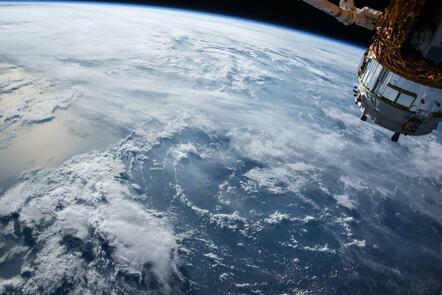
Learning via engaging digital animations and video lectures, you’ll understand how we can use earth observation satellites to inform sustainable coastal development and marine resource management.
You’ll dive into the principles behind ocean models and explore the modelled world of ocean circulation, marine ecosystems, as well as the impact of climate change on the marine environment.
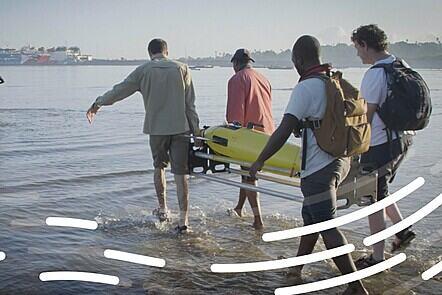
Exploring the advances in marine autonomous robotic systems and their role in observing our 3D oceans, you’ll investigate how these technologies can be deployed to address the global challenges of food security and sustainable use of living marine resources.

What topics will you cover?

  • Introduction to numerical modelling, earth observation satellites and marine robotics and how they are used to address the challenges of sustainable use of living marine resources in a range of case studies in the Western Indian Ocean.
  • The principles behind ocean models and how they can help explain the dynamics of marine ecosystems.
  • How we measure and monitor the oceans using earth observation satellites and how the information they provide can inform sustainable coastal development and marine resource management.
  • Advances in Marine Autonomous Robotic Systems and their role in observing our 3D oceans.
  • The North Kenya Banks fishery and mechanisms behind the upwelling system that makes it so productive.
  • The environmental changes responsible for the collapse of the Chokka squid fishery in South Africa, and how marine technologies can help us to understand the future dynamics of the squid population.
  • Small pelagic fisheries of the Pemba Channel and their importance for food security in Tanzania.
  • The importance of the United Nations Sustainable Development Goals and how evidence-based environmental management can contribute to achieving them.

What will you achieve?
By the end of the course, you‘ll be able to...

  • Explain how we measure and monitor the oceans using numerical models, ocean robots, and earth observation satellites
  • Apply your understanding of how marine technologies are used in order to address the challenges of sustainable use of living marine resources
  • Describe climate change impacts on the marine environment
  • Identify unique features of oceanography, ecosystems and marine economy of the Western Indian Ocean
  • Summarise the foundation pillars of Food Security
  • Reflect on the importance of the United Nations Sustainable Development Goals (SDGs)
  • Discuss how ocean science can contribute to the United Nations Decade of Ocean Science for Sustainable - Development (2021-2030)
  • Explore your interests in ocean science and the marine technologies used to study the ocean

Who is the course for?
This course is designed to be accessible to anyone with an interest in ocean management and conservation, the technology used to study the ocean, and the impact of climate change on the marine environment.
It would particularly appeal to people working within marine-related industries, such as fisheries, in the Western Indian Ocean, and those who study this ocean region.
Go to Class
MOOC List is learner-supported. When you buy through links on our site, we may earn an affiliate commission.

Related Courses

Making Climate Adaptation Happen: Governing Transformation Strategies for Climate Change (FutureLearn) FutureLearn
University of Groningen,Global Center on Adaptation

Making Climate Adaptation Happen: Governing Transformation Strategies for Climate Change (FutureLearn)

Explore how adaptive governance could help policymakers plan for and manage sudden environmental changes. Learn the governance tools to respond to climate change. Climate change is one of the biggest challenges facing governing bodies across the globe. On this course, you will be introduced to climate science, the societal effects of climate change, and the responses already available in the form of climate adaptation.

Self Paced
4 Weeks
Climate Intelligence: Using Climate Data to Improve Business Decision-Making (FutureLearn) FutureLearn
University of Reading

Climate Intelligence: Using Climate Data to Improve Business Decision-Making (FutureLearn)

Build climate resilience in your business as you learn how climate intelligence helps make decisions that mitigate risks. How exposed is your organisation to climate risk? Climate and weather projections hold the data that businesses need both to evaluate the risk climate change poses and to mitigate that risk. However, interpreting this data can be challenging. On this two-week course, you’ll learn how to identify relevant and reliable climate data for your business and explore how that raw data can be converted into information that connects with the particular operational and financial decisions you face.

Self Paced
2 Weeks
Planet Earth: Understanding and Protecting our Environment (FutureLearn) FutureLearn
University of Leeds

Planet Earth: Understanding and Protecting our Environment (FutureLearn)

Learn about the physical geography of Earth and discover how to use this knowledge to protect our natural environment. Discover the Earth’s natural systems and how human activity affects them. On this two-week course from the University of Leeds, you will discover the processes of the hydrosphere, the geosphere, and the biosphere and explore the impact of human activity and climate change on our planet.

Self Paced
2 Weeks
Causes of Climate Change (FutureLearn) FutureLearn
University of Bergen

Causes of Climate Change (FutureLearn)

Learn the physical processes behind climate variation around the world to better understand the causes of climate change. Uncover the past, present, and future of the causes of climate change. This free online course provides the basis for understanding the underlying physical processes governing climate variations in the past, present and future.

Self Paced
3 Weeks
Maqasid Al-Shariah and Sustainable Development (FutureLearn) FutureLearn
University of Malaya

Maqasid Al-Shariah and Sustainable Development (FutureLearn)

Discover how religion, particularly Islamic teachings, and scientific knowledge can work together towards sustainable solutions. Use a blend of religion and science to explore sustainability. Sustainable Development is one of the most comprehensive worldwide concepts today in the quest to safeguard the environment. This principle of sustainability has been discovered to be intrinsically linked to the concept of Shariah, which emphasises the importance of continuity not just in this world, but also in the afterlife.

Self Paced
3 Weeks
Learning for a Sustainable Future (FutureLearn) FutureLearn
University of Edinburgh,British Council,Learning for a Sustainable Scotland

Learning for a Sustainable Future (FutureLearn)

Join a personal and professional global learning journey towards a sustainable future. What on Earth could be more important? Grow your knowledge of sustainability. Climate change, gender equality, health, social equity, and inclusion are issues that affect us all, impacting human well-being and economic stability. How to live a sustainable life affects – and connects - us all.

Mar 13th 2023
5-12 Weeks
Climate Solutions: India (FutureLearn) FutureLearn
University of Edinburgh,Climate Solutions,Edinburgh Climate Change Institute(ECCI)

Climate Solutions: India (FutureLearn)

Explore the effects of climate change and how to address the biggest challenge to our civilisation in the 21st century. Tackle the climate emergency in India. Climate Change is one of the greatest threats we face. The impacts of climate change are already being felt around the world, affecting both natural and human systems, and these impacts are expected to become greater in years to come.

Self Paced
5-12 Weeks
Learning for a Sustainable Future: Live at COP26 (FutureLearn) FutureLearn
University of Edinburgh

Learning for a Sustainable Future: Live at COP26 (FutureLearn)

Explore global issues during COP26 and be part of the call for collective action. What on Earth could be more important? Live at COP26. The 26th UN Climate Change Conference (COP26) is being held in Glasgow, Scotland between 31st October and 12th November 2021. It will bring together heads of state, climate experts and campaigners to agree and accelerate coordinated global action on climate change.

Nov 7th 2022
2 Weeks
Creating Ethical and Sustainable Cities at the Local Level (FutureLearn) FutureLearn
RMIT University,EIT Community

Creating Ethical and Sustainable Cities at the Local Level (FutureLearn)

See how frameworks for ethical and sustainable cities can be localised, fostering resilient cities for the future. Learn how you can contribute to the sustainable cities of tomorrow. It’s widely accepted that, as we look towards the future, we need to actively create cities that are ethical, sustainable, inclusive, and well-governed. To do this, we need to localise frameworks and principles such as the Sustainable Development Goals (SDGs), the European Green Deal and New European Bauhaus to make tangible differences. Knowing how to start this localisation can be daunting, which is why this course from RMIT is so valuable.

Self Paced
2 Weeks
Tackling Environmental Challenges for a Sustainable Future (FutureLearn) FutureLearn
University of York

Tackling Environmental Challenges for a Sustainable Future (FutureLearn)

Discover how environmental research can inform how we respond to and solve the major global environmental issues of today. Explore sustainable solutions to environmental issues like changing glaciers. Our energy use is unsustainable, we’re producing waste plastic that’s endangering oceans, and large parts of the natural world are disappearing. We know our planet is facing huge environmental challenges, but what are we doing to solve them?

Self Paced
4 Weeks