FUN

From neuron to behavior (FUN)

Offered by Institut Pasteur,
From neuron to behavior (FUN)

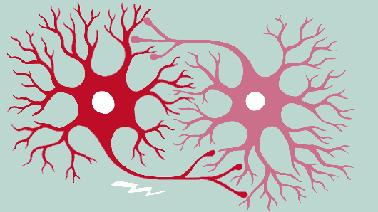
Brain function determines our behavior and dictates who we are. Our brain function governs our every thoughts and every action. The brain processes information through the concerted activity of many neurons, which communicate with each other through contacts we call synapses organized in highly dynamic networks. In this course, we are taking a bottom up approach to studying the brain, starting from molecules to end with behaviors and mental disorders.

Understanding how the brain works is one of the greatest remaining mysteries that challenge mankind. This challenge is so huge that some people even think that it will never be possible to really understand how the brain functions. But modern neuroscience is making remarkable progress, so intense that we can feel to be part of a scientific revolution to a similar extent than the Copernican Revolution or Darwinian Revolution.
Brain and behavior are inextricably linked in neuroscience. The function of the brain is to govern behavior, and the aim of this course is to causally link brain development to brain functions and their related behaviors. The brain processes information through the concerted activity of many neurons, which communicate with each other through synapses organized in highly dynamic networks.
The course is devoted to describe how the brain develops and then functions to perceive the external world and learn from our experiences. Thus, this course aims for a causal and mechanistic explanation of brain functions that depend on two key players: the external world of course but also our internal states, of which the microbiota is an important component.
Goals:
The first goal of the course is to gain a detailed understanding of the structure and function of the fundamental building blocks of the mammalian brain.
The second goal is to understand how a given neural stem cell could give raise to fully organized brain circuits.
The third goal is to bring you to the fascinating world into which groups of neurons work together as interconnected neural cells.
The fourth goal is to approach neuronal disorders as consequences of brain circuit dysfunctions. We are going to consider what happens when the brain goes wrong with dramatic consequences for the individual and society as a whole.
The fifth goal places the brain inside a body interacting both with the external world and the internal state.


Go to Class
MOOC List is learner-supported. When you buy through links on our site, we may earn an affiliate commission.

Related Courses

The Neuroscience of Personal Excellence (Coursera) Coursera
University of Colorado Boulder

The Neuroscience of Personal Excellence (Coursera)

Many of us struggle to understand our actions and behavior in any given situation. Especially when pressure and stress are highest. What if we could make better decisions, create healthy habits more easily, regulate our emotions, become more mentally tough and perform well under pressure? There are certain defining moments in your life, in this course you'll learn to tap into your personal excellence when it matters. The reason we struggle often comes down to the fact that we are unaware how our engine works. The engine, in this metaphor, is our brain. It is the driving force behind our actions and behavior. Understanding how it works best is crucial to perform at your best.

Jun 1st 2026
5-12 Weeks
Liderança Criativa e Inclusiva (Coursera) Coursera
FIA Business School

Liderança Criativa e Inclusiva (Coursera)

Nossas boas-vindas ao Curso Liderança Criativa e Inclusiva. Neste curso, você aprenderá sobre conteúdos de liderança, bem como do pensamento criativo e inclusivo. Serão apresentados os conceitos básicos de liderança e as bases teóricas do processo criativo baseado na neurociência, ferramentas de desbloqueio criativo e como é possível trabalhar seus hábitos mentais.

Jun 8th 2026
4 Weeks
Neurosciences : audition, langage et musique (FUN) FUN
Université libre de Bruxelles

Neurosciences : audition, langage et musique (FUN)

De la berceuse chantée au bébé jusqu’au discours enflammé du politicien et ses intonations, du chanteur sous la douche au pianiste virtuose, le langage et la musique font partie de notre vie sociale, intellectuelle et affective tout au long de notre vie. Comment ces informations sont-elles traitées par le cerveau ? Comment est-on capable de déduire l’état émotionnel d’autrui à partir de la mélodie de sa voix, sa prosodie ? Comment la voix est-elle modifiée pendant un épisode émotionnel, quels sont les mécanismes cérébraux à l’œuvre ? Est-ce que l’apprentissage de la musique modifie la structure du cerveau ?

No sessions available
5-12 Weeks
Des neurones à la psyché, Introduction aux réseaux de neurones biologiques et artificiels (FUN) FUN
Communauté Université Grenoble Alpes

Des neurones à la psyché, Introduction aux réseaux de neurones biologiques et artificiels (FUN)

La thématique du cours porte sur la compréhension des réseaux de neurones biologiques et artificiels dans une perspective théorique (liens entre neurones et psyché, avantage d’un système parallèle distribué par rapport à une machine de Turing-Von Neumann) mais aussi méthodologique (implémentation concrète de réseaux de neurones artificiels).

No session available
4 Weeks
Philosophy and the Sciences: Introduction to the Philosophy of Cognitive Sciences (Coursera) Coursera
University of Edinburgh

Philosophy and the Sciences: Introduction to the Philosophy of Cognitive Sciences (Coursera)

What is our role in the universe as human agents capable of knowledge? What makes us intelligent cognitive agents seemingly endowed with consciousness? This is the second part of the course 'Philosophy and the Sciences', dedicated to Philosophy of the Cognitive Sciences. Scientific research across the cognitive sciences has raised pressing questions for philosophers. The goal of this course is to introduce you to some of the main areas and topics at the key juncture between philosophy and the cognitive sciences. Each week we will introduce you to some of these important questions at the forefront of scientific research. We will explain the science behind each topic in a simple, non-technical way, while also addressing the philosophical and conceptual questions arising from it.

Jun 1st 2026
4 Weeks
Decision-Making: Blending Art & Science (Coursera) Coursera
Dartmouth College

Decision-Making: Blending Art & Science (Coursera)

Why do smart people sometimes think they are right when they are very, very wrong? Our brains are designed to make quick decisions, and sometimes we miss out on what’s really going on. Knowing this, Professor Sydney Finkelstein walks you through the neuroscience behind decision-making, and teaches you to make conscious decisions that are right for you at work and in life. By teaching you to reflect and move forward even better than before, Professor Finkelstein will help you to be the best you possibly can at whatever you do.

Jun 1st 2026
4 Weeks
Understanding the Brain: The Neurobiology of Everyday Life (Coursera) Coursera
University of Chicago

Understanding the Brain: The Neurobiology of Everyday Life (Coursera)

Learn how the nervous system produces behavior, how we use our brain every day, and how neuroscience can explain the common problems afflicting people today. We will study functional human neuroanatomy and neuronal communication, and then use this information to understand how we perceive the outside world, move our bodies voluntarily, stay alive, and play well with others.

Jun 1st 2026
5-12 Weeks
Introducción a la Neurociencia (Coursera) Coursera
Universidad de Palermo

Introducción a la Neurociencia (Coursera)

¿Qué es la neurociencia? ¿Cuáles son sus objetivos? ¿Cómo está compuesto y cómo funciona tu cerebro? ¿De qué modo incide sobre tus conductas y comportamientos? ¿Cómo se interrelacionan el cerebro y la mente? ¿Qué son los neurotransmisores y qué tipos de neurotransmisores existen? ¿Qué son las neuronas?

Jun 8th 2026
3 Weeks
Advanced Neurobiology I (Coursera) Coursera
Peking University

Advanced Neurobiology I (Coursera)

Hello everyone! Welcome to advanced neurobiology! Neuroscience is a wonderful branch of science on how our brain perceives the external world, how our brain thinks, how our brain responds to the outside of the world, and how during disease or aging the neuronal connections deteriorate. We’re trying to understand the molecular, cellular nature and the circuitry arrangement of how nervous system works.

Jun 1st 2026
5-12 Weeks
The Neuroscience of Leading Transformational Organizations (Coursera) Coursera
University of Colorado Boulder

The Neuroscience of Leading Transformational Organizations (Coursera)

Organizations need to stay on the cutting edge of human performance to remain relevant, now and in the future. The way we've led the people in our organizations in the past is no longer sufficient for success. The landscape of human capital is changing, and a more human-centered approach is warranted to attract and keep the most talented workers. This course is part of the "Neuroscience of Leadership" specialization, which examines leadership techniques through the lens of social cognitive neuroscience and psychology. Utilizing the latest research, we develop a leadership practice based on the foundation of neuroscience.

Jun 1st 2026
5-12 Weeks
Know Thyself - The Value and Limits of Self-Knowledge: The Unconscious (Coursera) Coursera
University of Edinburgh

Know Thyself - The Value and Limits of Self-Knowledge: The Unconscious (Coursera)

A challenging but fascinating topic on the way to achieving self-knowledge is the unconscious. For well over a century, psychologists, philosophers, and many others have posited a level of mentality that is not immediately open to introspection; some would even say that certain unconscious elements cannot be known through introspection. This course will examine some of the most influential ideas about the unconscious starting with the work of Sigmund Freud, and follow the development of theories of the unconscious all the way to present research in experimental psychology.

Jun 1st 2026
4 Weeks