Modelling, Analysis and Design of Steel Buildings (Coursera)

Offered by L&T EduTech,
Modelling, Analysis and Design of Steel Buildings (Coursera)

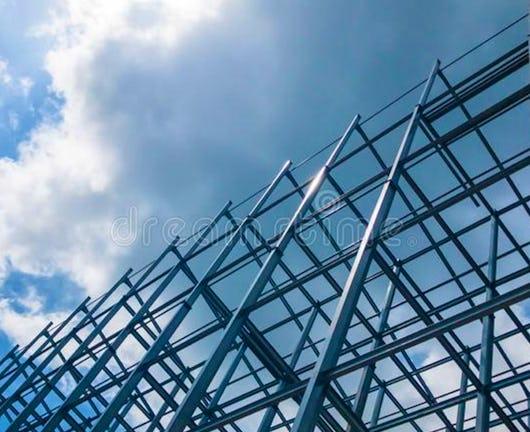
"Modelling, Analysis & Design of Steel Buildings" is an intensive course that covers a wide range of topics essential for understanding and designing steel structures. The course begins with establishing the building information and initial model settings, followed by a detailed exploration of building geometry and member properties. Participants learn to create member groups, utilize section libraries, and assign materials.

Class Deals by MOOC List - Click here and see Coursera's Active Discounts, Deals, and Promo Codes.

Creation and assignment of Vertical and lateral loads are thoroughly addressed, including the load combinations. Analysis and design parameters are discussed, with a focus on interpreting results from both manual and software-based approaches.
Beam design is extensively covered, encompassing manual design methods, software-assisted design processes, and optimization strategies. Special attention is given to addressing failures, optimizing designs, and integrating services within beams.
Column design is similarly detailed, with participants learning manual and software-based approaches, failure mitigation, and optimization techniques. The course also delves into beam-column design, considering the interaction between these structural elements and addressing base plates and anchor bolts design.
Tension members and bracings are explored in depth, covering types, grades, and design methodologies. Participants gain insights into designing façade supporting structures, including mullions, transoms, and architecturally exposed steel elements.
Finally, planning and design approaches for terrace floors are discussed, ensuring participants understand the unique considerations involved in this aspect of steel building design.
By the end of the course, participants emerge equipped with the knowledge and skills necessary to model, analyze, and design steel buildings effectively and efficiently.
This course is part of the Steel Multi Storey Building - System Design Specialization.

What you'll learn

  • Understanding steel building design: load application, analysis parameters, and design methods for different structural elements.
  • Utilize modeling, analysis, and design principles to solve steel building design problems and inform decision-making in diverse scenarios.
  • Evaluate design parameters, results, and output manually with software, assessing their impact on structural integrity, efficiency, serviceability.

Syllabus

Structural Models for Analysis
This module covers the software aided structural modelling using STAAD Pro, including building geometry, member groups, section libraries, material properties, member specification, support conditions, loads, load combinations, and the analysis and design process. The module also addresses the interpretation of analysis and design results, providing insights into output visualization and understanding.

Beam Design
This module focuses on beam design for buildings, presenting an overview of IS 800 standards, covering manual and software-based beam design. It addresses failure analysis, optimization, design of cantilever beams, service integration, built-up beams, torsion, and backup beam concepts. Additionally, the module explores simplified floor vibration analysis for comprehensive structural understanding.

Columns, Base Plate and Anchor Bolts
This module focuses on column design for buildings, covering manual and software-based approaches. It addresses failure analysis, optimization, and introduces a beam-column design approach. The content includes the design of beam-columns, base plates, and anchor bolts, providing a comprehensive overview of the structural design process for columns in building construction.

Tension Members, Bracings and Façade Supporting Elements
This module explores tension members in buildings, detailing types and grades. It covers the design of tension members, bracings, and façade supporting structures. Then the content delves into the design of mullions and transoms. Additionally the module also provides insights into the planning and design approach for terrace floors and architecturally exposed steel elements in building structures.

Go to Class
MOOC List is learner-supported. When you buy through links on our site, we may earn an affiliate commission.

Related Courses

Autonomous Aerospace Systems (Coursera) Coursera
University of Naples Federico II

Autonomous Aerospace Systems (Coursera)

The course aims to provide the knowledge needed to design and develop efficient driving and navigation solutions for autonomous vehicles. Driving can be strategic or tactical while navigation is the function that provides information about the position, speed and orientation of the vehicle. It is made by integrating measurement from different sources, such as sensors and receivers.

Aug 3rd 2026
5-12 Weeks
Big Data Modeling and Management Systems (Coursera) Coursera
University of California, San Diego

Big Data Modeling and Management Systems (Coursera)

Once you’ve identified a big data issue to analyze, how do you collect, store and organize your data using Big Data solutions? In this course, you will experience various data genres and management tools appropriate for each. You will be able to describe the reasons behind the evolving plethora of new big data platforms from the perspective of big data management systems and analytical tools.

Aug 3rd 2026
5-12 Weeks
Averaged-Switch Modeling and Simulation (Coursera) Coursera
University of Colorado Boulder

Averaged-Switch Modeling and Simulation (Coursera)

This is Course #1 in the Modeling and Control of Power Electronics course sequence. The course is focused on practical design-oriented modeling and control of pulse-width modulated switched mode power converters using analytical and simulation tools in time and frequency domains. A design-oriented analysis technique known as the Middlebrook's feedback theorem is introduced and applied to analysis and design of voltage regulators and other feedback circuits.

Jul 27th 2026
3 Weeks
Quantitative Formal Modeling and Worst-Case Performance Analysis (Coursera) Coursera
EIT Digital

Quantitative Formal Modeling and Worst-Case Performance Analysis (Coursera)

Welcome to Quantitative Formal Modeling and Worst-Case Performance Analysis. In this course, you will learn about modeling and solving performance problems in a fashion popular in theoretical computer science, and generally train your abstract thinking skills. After finishing this course, you have learned to think about the behavior of systems in terms of token production and consumption, and you are able to formalize this thinking mathematically in terms of prefix orders and counting functions. You have learned about Petri-nets, about timing, and about scheduling of token consumption/production systems, and for the special class of Petri-nets known as single-rate dataflow graphs, you will know how to perform a worst-case analysis of basic performance metrics, like throughput, latency and buffering.

Jul 27th 2026
4 Weeks
Modeling in AWS (Coursera) Coursera
Whizlabs

Modeling in AWS (Coursera)

Modeling in AWS is the third course in the AWS Certified Machine Learning Specialty specialization. The major focus of this course is to train Machine learning Models by analyzing Modeling concepts in AWS. This course is divided into two modules and each module is further segmented by Lessons and Video Lectures.

Jun 8th 2026
2 Weeks
Precalculus: Mathematical Modeling (Coursera) Coursera
Johns Hopkins University

Precalculus: Mathematical Modeling (Coursera)

This course helps to build the foundational material to use mathematics as a tool to model, understand, and interpret the world around us. This is done through studying functions, their properties, and applications to data analysis. Concepts of precalculus provide the set of tools for the beginning student to begin their scientific career, preparing them for future science and calculus courses. This course is designed for all students, not just those interested in further mathematics courses.

Jul 27th 2026
4 Weeks
Introdução ao Controle Moderno (Coursera) Coursera
Instituto Tecnológico de Aeronáutica

Introdução ao Controle Moderno (Coursera)

Este curso lhe dará a base necessária para entender técnicas mais avançadas de controle moderno. Você aprenderá como representar a dinâmica de um sistema no espaço de estados, como analisar um sistema no espaço de estados, como projetar uma realimentação de estado e como projetar um observador de estado.

Jul 27th 2026
5-12 Weeks
Design of Transmission Line: Modelling and Performance (Coursera) Coursera
L&T EduTech

Design of Transmission Line: Modelling and Performance (Coursera)

This course is designed to provide a detailed exploration of the critical elements involved in transmission lines' design, modeling, and performance assessment. By enrolling in this course, participants will not only gain theoretical knowledge but also practical skills that are directly applicable in the field of transmission line engineering. Whether you're a student aspiring to enter the industry or a professional seeking to deepen your expertise, this course offers a unique blend of theoretical insights and hands-on applications, equipping you with the tools to excel in this dynamic field.

Aug 10th 2026
3 Weeks
Ferrous Technology I (Coursera) Coursera
Pohang University of Science and Technology - POSTECH

Ferrous Technology I (Coursera)

Steel, ever-evolving material, has been the most preeminent of all materials since it can provide wide range of properties that can meet ever-changing requirements. In this course, we explore both fundamental and technical issues related to steels, including iron and steelmaking, microstructure and phase transformation, and their properties and applications.

Aug 3rd 2026
5-12 Weeks
Customising your models with TensorFlow 2 (Coursera) Coursera
Imperial College London

Customising your models with TensorFlow 2 (Coursera)

Welcome to this course on Customising your models with TensorFlow 2! In this course you will deepen your knowledge and skills with TensorFlow, in order to develop fully customised deep learning models and workflows for any application. You will use lower level APIs in TensorFlow to develop complex model architectures, fully customised layers, and a flexible data workflow. You will also expand your knowledge of the TensorFlow APIs to include sequence models.

Aug 3rd 2026
5-12 Weeks
Modeling Risk and Realities (Coursera) Coursera
University of Pennsylvania

Modeling Risk and Realities (Coursera)

Useful quantitative models help you to make informed decisions both in situations in which the factors affecting your decision are clear, as well as in situations in which some important factors are not clear at all. In this course, you can learn how to create quantitative models to reflect complex realities, and how to include in your model elements of risk and uncertainty.

Jul 27th 2026
4 Weeks
Modeling and Control of Single-Phase Rectifiers and Inverters (Coursera) Coursera
University of Colorado Boulder

Modeling and Control of Single-Phase Rectifiers and Inverters (Coursera)

This is Course #5 in the Modeling and Control of Power Electronics Specialization. The course is focused on modeling and control of grid-tied power electronics. Upon completion of the course, you will be able to understand, analyze, model, and design low-harmonic rectifiers and inverters interfacing dc loads or dc power sources, such as photovoltaic arrays, to the single-phase ac power grid.

Aug 3rd 2026
3 Weeks