Mobile Applications Development (saylor.org)

Offered by Saylor.org,
Mobile Applications Development (saylor.org)

Technology continues to evolve and provide us with increasingly powerful mobile devices. As a result, applications that can run on a browser must also be written such that they are compatible with mobile devices, the majority of which are now web-enabled. Meanwhile, there is an increasing demand for native applications that can be downloaded to and run on mobile devices. This course will address these trends, teaching you to think about the unique design and deployment issues that must be taken into consideration when developing applications for mobile devices.

Technology continues to evolve and provide us with increasingly powerful mobile devices. As a result, applications that can run on a browser must also be written such that they are compatible with mobile devices, the majority of which are now web-enabled. Meanwhile, there is an increasing demand for native applications that can be downloaded to and run on mobile devices. This course will address these trends, teaching you to think about the unique design and deployment issues that must be taken into consideration when developing applications for mobile devices.

This course will expand upon what has been covered in CS305: Web Development. We will specifically look at the tools used to design mobile applications. We will learn about mobile platforms, mobile browsers, native applications, and best practices in terms of test usability.

Upon successful completion of this course, the student will be able to:
Define mobile computing and the types of mobile devices.
Detail the history of mobile computing.
Explain the basic theory behind networks and cellular networks.
Write HTML and JavaScript code for mobile devices.
Discuss user interface design considerations.
Explain the differences between HTML5 and HTML.
Develop apps for Android devices.
Develop apps for IOS devices.
Go to Class
MOOC List is learner-supported. When you buy through links on our site, we may earn an affiliate commission.

Related Courses

Problem Solving Using Computational Thinking (Coursera) Coursera
University of Michigan

Problem Solving Using Computational Thinking (Coursera)

Have you ever heard that computers "think"? Believe it or not, computers really do not think. Instead, they do exactly what we tell them to do. Programming is, "telling the computer what to do and how to do it." Before you can think about programming a computer, you need to work out exactly what it is you want to tell the computer to do. Thinking through problems this way is Computational Thinking. Computational Thinking allows us to take complex problems, understand what the problem is, and develop solutions. We can present these solutions in a way that both computers and people can understand.

Aug 17th 2026
5-12 Weeks
C++ Programming (saylor.org) Saylor Academy
Saylor.org

C++ Programming (saylor.org)

In the first unit, we will learn the mechanics of editing and compiling a simple program written in C++. We will begin with a discussion of the essential elements of C++ programming: variables, loops, expressions, functions, and string class. Next, we will cover the basics of object-oriented programming: classes, inheritance, templates, exceptions, and file manipulation. We will then review function and class templates and the classes that perform output and input of characters to/from files. This course will also cover the topics of namespaces, exception handling, and preprocessor directives. In the last part of the course, we will learn some slightly more sophisticated programming techniques that deal with data structures such as linked lists and binary trees.

Self Paced
Self-Paced
Web Development (saylor.org) Saylor Academy
Saylor.org

Web Development (saylor.org)

The World Wide Web (WWW) has become the primary means by which we conduct searches and perform billing transactions—events that can only occur with the support of specific applications. The purpose of this course is to introduce you to the design and development of such applications. This course will expose you to the basic fundamentals of the Internet and Web protocols, the different architectures that Web-related applications use, and the programming languages that enable the development of Web applications, placing particular emphasis on JavaScript, HTML, XML, AJAX, and Java Server Pages (JSP).

Self Paced
Self-Paced
Computing for Data Analysis (edX) EdX
Georgia Institute of Technology,GTx

Computing for Data Analysis (edX)

A hands-on introduction to basic programming principles and practice relevant to modern data analysis, data mining, and machine learning. The modern data analysis pipeline involves collection, preprocessing, storage, analysis, and interactive visualization of data. In the course, you’ll see how computing and mathematics come together.

Aug 24th 2026
13-24 Weeks
Introduction to Open Source Application Development (Coursera) Coursera
Illinois Tech

Introduction to Open Source Application Development (Coursera)

This course introduces basic concepts of systems programming using a modern open source language. You will learn to apply basic programming concepts toward solving problems, writing pseudocode, working with and effectively using basic data types, abstract data types, control structures, code modularization and arrays. You will learn to detect errors, work with variables and loops, and discover how functions, methods, and operators work with different data types. You will also be introduced to the object paradigm including classes, inheritance, and polymorphism.

Aug 17th 2026
5-12 Weeks
Programming Languages, Part A (Coursera) Coursera
University of Washington

Programming Languages, Part A (Coursera)

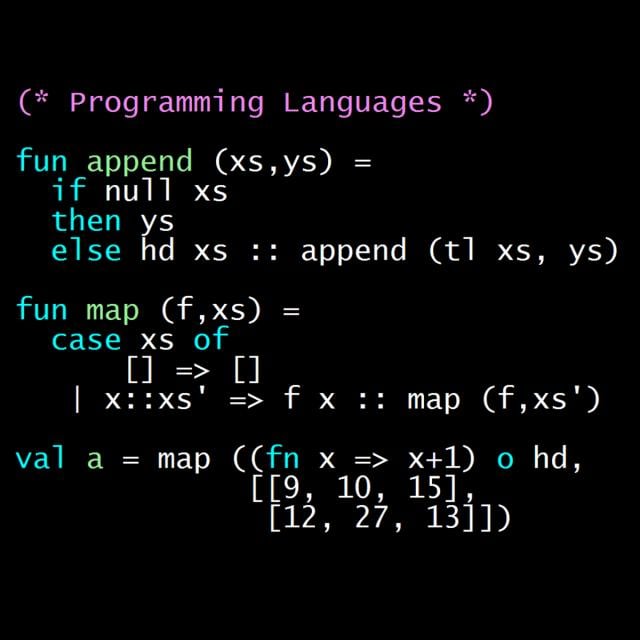
This course is an introduction to the basic concepts of programming languages, with a strong emphasis on functional programming. The course uses the languages ML, Racket, and Ruby as vehicles for teaching the concepts, but the real intent is to teach enough about how any language “fits together” to make you more effective programming in any language -- and in learning new ones.

Aug 10th 2026
5-12 Weeks
Learn HTML and CSS (Coursera) Coursera
Scrimba

Learn HTML and CSS (Coursera)

This course is perfect if you want to learn how to code websites from scratch. You will learn the basics of HTML and CSS through interactive challenges. Along the way, you will build multiple projects, like a Google.com clone, a Space Exploration page, and a fun birthday site filled with GIFs. While most of the challenges are done in Scrimba's interactive editor, you will also learn how to use professional tools like VS Code for code editing, GitHub for hosting your code, and Netlify for deploying your projects to the world wide web.

Aug 17th 2026
5-12 Weeks
Learn JavaScript (Coursera) Coursera
Scrimba

Learn JavaScript (Coursera)

This is perhaps the most interactive JavaScript course ever recorded. It contains 140+ coding challenges, meaning that you will finally build that ever-so-important JavaScript muscle memory. You will solve the challenges directly in the browser thanks to Scrimba's interactive video technology, so there's not setup needed. Say goodbye to "tutorial hell" and get ready to start feeling your JavaScript superpowers grow exponentially.

Aug 17th 2026
4 Weeks
Basic Modeling for Discrete Optimization (Coursera) Coursera
University of Melbourne,The Chinese University of Hong Kong

Basic Modeling for Discrete Optimization (Coursera)

Optimization is a common form of decision making, and is ubiquitous in our society. Its applications range from solving Sudoku puzzles to arranging seating in a wedding banquet. The same technology can schedule planes and their crews, coordinate the production of steel, and organize the transportation of iron ore from the mines to the ports. Good decisions in manpower and material resources management also allow corporations to improve profit by millions of dollars.

Aug 17th 2026
4 Weeks
Build a Modern Computer from First Principles: Nand to Tetris Part II (project-centered course) (Coursera) Coursera
Hebrew University of Jerusalem

Build a Modern Computer from First Principles: Nand to Tetris Part II (project-centered course) (Coursera)

In this project-centered course you will build a modern software hierarchy, designed to enable the translation and execution of object-based, high-level languages on a bare-bone computer hardware platform. In particular, you will implement a virtual machine and a compiler for a simple, Java-like programming language, and you will develop a basic operating system that closes gaps between the high-level language and the underlying hardware platform.

Aug 17th 2026
5-12 Weeks