The Lottery of Birth (FutureLearn)

Offered by The Open University,
The Lottery of Birth (FutureLearn)

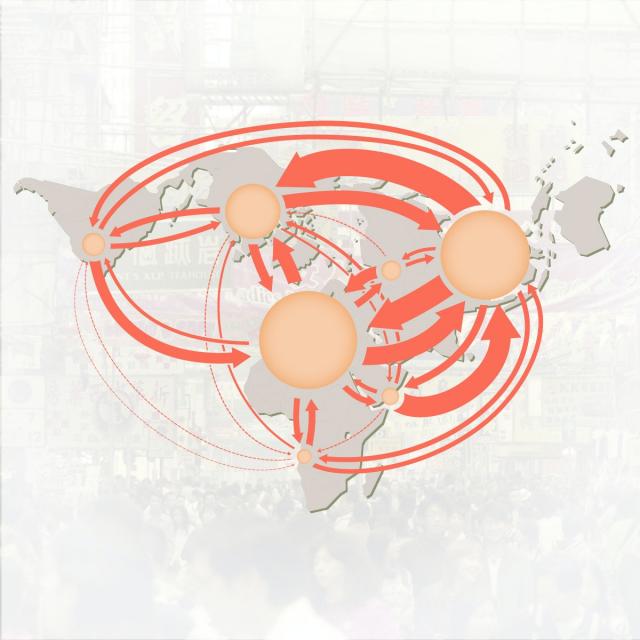
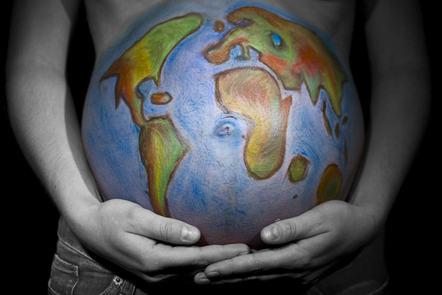
Birth is a lottery. Find out how your life chances are influenced by where, when and to whom you are born. This online course will look at the big picture of the lottery of birth and the smaller, human stories. You will examine key inequalities, such as being born rich or poor, female or male.

Class Deals by MOOC List - Click here and see FutureLearn's Active Discounts, Deals, and Promo Codes.

You will consider how individual countries and global organisations are responding to demographic changes and predictions, and how this plays out in the lives of individual women and men in different parts of the world.
The course draws on demography, health studies, sociology, comparative social policy, history, political science and economics, to bring new perspectives and fresh insights.

Who is the course for?
The course does not assume any prior knowledge of the issues surrounding birth or inequalities. It is post-graduate level and encourages personal research and data interpretation.
Please note that this course includes some content of a sensitive nature, including discussions around abortion and female genital mutilation (FGM).


Go to Class
MOOC List is learner-supported. When you buy through links on our site, we may earn an affiliate commission.

Related Courses

Creativity, Innovation, and Change (Coursera) Coursera
Pennsylvania State University

Creativity, Innovation, and Change (Coursera)

Our lives are being disrupted by pandemics, global warming, wars, political chaos, and technological innovations. We must prepare for an unpredictable and unknown future - and this is the goal of the course on Creativity, Innovation and Transformation (CIT)! CIT is an upgrade of the former Creativity, Innovation and Change (CIC) course, which is now streamlined and updated with a new module on Transformation.

Jun 22nd 2026
4 Weeks
Why We Post: the Anthropology of Social Media (FutureLearn) FutureLearn
University College London

Why We Post: the Anthropology of Social Media (FutureLearn)

Discover the varying uses of social media around the world and its consequences for politics, relationships and everyday life. This free online course is based on the work of nine anthropologists who each spent 15 months in fieldsites in Brazil, Chile, industrial and rural China, England, India, Italy, Trinidad and Turkey.

Self Paced
5-12 Weeks
Challenging Wealth and Income Inequality (FutureLearn) FutureLearn
The Open University

Challenging Wealth and Income Inequality (FutureLearn)

Explore the concerns about rising generational and economic inequality in developed countries, with this free online course. From religious leaders to heads of state, everyone is talking about economic inequality. What form can such inequality take in different countries? What impact does it have on society? And why should it matter to you?

Self Paced
4 Weeks
Global Sociology (edX) EdX
Wellesley College,WellesleyX

Global Sociology (edX)

Connect your personal biography to global history as you develop your sociological imagination. Ever wondered why some countries are rich and others poor? Or why some people believe hard work results in upward mobility and others don’t? To answer these questions, you need to “see” the world sociologically.

No sessions available
4 Weeks
Analyse de données quantitatives en sciences humaines et sociales (ADSHS) (FUN) FUN
Communauté Université Grenoble Alpes

Analyse de données quantitatives en sciences humaines et sociales (ADSHS) (FUN)

Pas besoin d’être matheux pour être confronté, au quotidien, à une profusion de chiffres et de données statistiques. Dans les médias, sur les réseaux sociaux ou même dans les conversations ordinaires, il est courant d’argumenter, chiffres à l’appui. Pourtant, sommes-nous sûrs de savoir d’où viennent et comment ont été produites ces fameuses « données chiffrées » qui semblent faire autorité, ou qui animent tout au moins le débat ? Ce cours en ligne propose d’abord de revenir sur les raisons qui ont poussé les premiers chercheurs en sciences humaines et sociales à introduire les données statistiques dans leurs raisonnements, stabilisant des méthodes d’investigation de l’opinion et des pratiques qui se sont par la suite vulgarisées dans l’espace social.

No sessions available
5-12 Weeks
Le racisme et l'antisémitisme (FUN) FUN
Fondation Maison des Sciences de l'Homme

Le racisme et l'antisémitisme (FUN)

Le racisme et l’antisémitisme sont des notions sujettes à bien des interprétations, analyses et discours. Elles nous sont familières, mais les difficultés surgissent dès qu’il s’agit de les définir avec précision. Ce Mooc propose d’abord un état des lieux, d’une part historique, et d’autre part consacré à l’actualité de ces phénomènes, avant de réfléchir à l’action antiraciste.

No sessions available
5-12 Weeks