Light and Materials (Coursera)

Offered by Rice University,
Light and Materials (Coursera)

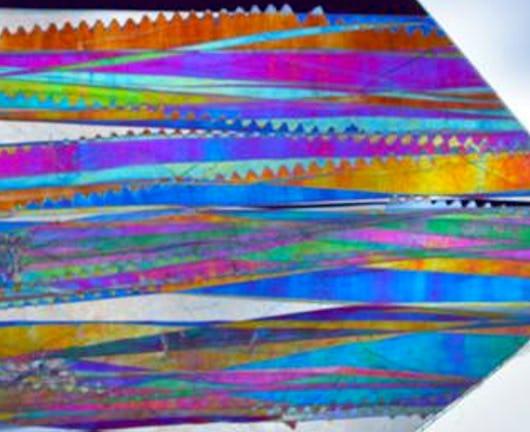
This second course serves as an introduction to the physics of waves and light. Upon completion, learners will understand how mathematical laws and conservation principles describe wave propagation and light in the context of both geometrical and physical optics. Learners will gain experience in solving physics problems with tools such as graphical analysis, algebra, vector analysis, and calculus.

Class Deals by MOOC List - Click here and see Coursera's Active Discounts, Deals, and Promo Codes.

This second course covers Electromagnetic Plane Waves, the Fresnel Equations, and Polarization. Each of the two modules contains complete video lectures, conceptual quizzes, and a set of homework problems. Once the modules are completed, the course ends with an exam. This comprehensive course is similar in detail and rigor to those taught on-campus at Rice. It will thoroughly prepare learners for their upcoming introductory physics courses or more advanced courses in physics.
This course is part of the Waves and Optics Specialization.

What you'll learn

  • Learners will be prepared to evaluate real-world data regarding light and its interactions with materials.
  • Learners can solve complicated mathematical problems related to light and its interactions with materials.
  • Learners will be prepared for more advanced courses in physics.

Syllabus

Light and Glass
Polarization
Light and Materials Exam
Go to Class
MOOC List is learner-supported. When you buy through links on our site, we may earn an affiliate commission.

Related Courses

Big History - From the Big Bang until Today (Coursera) Coursera
University of Amsterdam

Big History - From the Big Bang until Today (Coursera)

Welcome to this Big History course! In this course, renowned scientists and scholars from the University of Amsterdam and beyond will take you on a journey from the Big Bang until today while addressing key questions in their fields. After completing this journey you will have developed a better understanding of how you and everything around you became the way they are today.

Sep 28th 2026
4 Weeks
Decision Making - How to Choose the Right Problem to Solve (Coursera) Coursera
University of Leeds

Decision Making - How to Choose the Right Problem to Solve (Coursera)

Life is full of problems. The question is, which problems do you try to solve first and how? Learn powerful decision-making methods and how to cultivate problem-solving skills for a range of issues we all face in the workplace and beyond. In this course, you’ll evaluate your current problem-solving approach and learn techniques that will sharpen your analytical and critical skills required to help you quickly resolve issues.

Oct 5th 2026
3 Weeks
Electrodynamics: An Introduction (Coursera) Coursera
Korea Advanced Institute of Science and Technology - KAIST

Electrodynamics: An Introduction (Coursera)

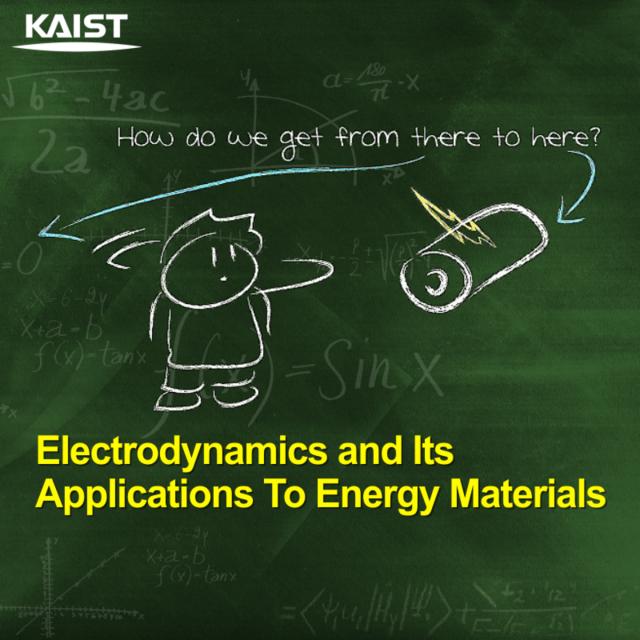
The depth and breadth of electromagnetism, the foundation for many fields including materials science, electrical engineering, and physical chemistry, requires a long, steep, and steady learning curve. This course aims to bridge the gap between the fundamental principles taught in electromagnetism and its practical application to specific fields such as materials, physics, and chemistry related to energy storage and harvesting.

Sep 28th 2026
5-12 Weeks
Data and Health Indicators in Public Health Practice (Coursera) Coursera
Johns Hopkins University

Data and Health Indicators in Public Health Practice (Coursera)

Epidemiology is often described as the cornerstone science in public health. Epidemiology in public health practice uses study design and analyses to identify causes in an outbreak situation, guides interventions to improve population health, and evaluates programs and policies. In this course, we'll define the role of the professional epidemiologist as it relates to public health services, functions, and competencies. With that foundation in mind, we'll introduce you to the problem solving methodology and demonstrate how it can be used in a wide variety of settings to identify problems, propose solutions, and evaluate interventions.

Oct 5th 2026
4 Weeks
Analyzing the Universe (Coursera) Coursera
Rutgers University

Analyzing the Universe (Coursera)

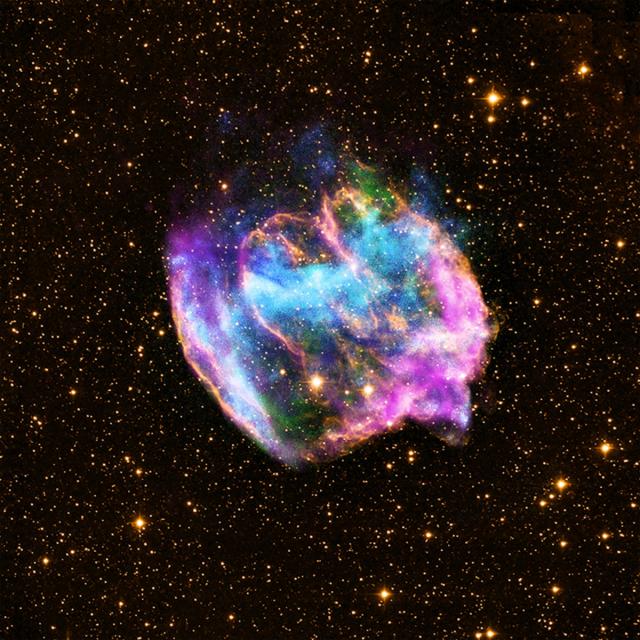
Using publicly available data from NASA of actual satellite observations of astronomical x-ray sources, we explore some of the mysteries of the cosmos, including neutron stars, black holes, quasars and supernovae. We will analyze energy spectra and time series data to understand how these incredible objects work. We utilize an imaging tool called DS9 to explore the amazing diversity of astronomical observations that have made x-ray astronomy one of the most active and exciting fields of scientific investigation in the past 50 years.

Sep 28th 2026
5-12 Weeks
Kinematics: Describing the Motions of Spacecraft (Coursera) Coursera
University of Colorado Boulder

Kinematics: Describing the Motions of Spacecraft (Coursera)

The movement of bodies in space (like spacecraft, satellites, and space stations) must be predicted and controlled with precision in order to ensure safety and efficacy. Kinematics is a field that develops descriptions and predictions of the motion of these bodies in 3D space. This course in Kinematics covers four major topic areas: an introduction to particle kinematics, a deep dive into rigid body kinematics in two parts (starting with classic descriptions of motion using the directional cosine matrix and Euler angles, and concluding with a review of modern descriptors like quaternions and Classical and Modified Rodrigues parameters).

Oct 5th 2026
4 Weeks
Understanding Modern Physics I: Relativity and Cosmology (Coursera) Coursera
The Hong Kong University of Science and Technology - HKUST

Understanding Modern Physics I: Relativity and Cosmology (Coursera)

The 20th century was known as the century of physics. In the past 120 years, concepts such as space, time, energy, entropy and particles were understood to much deeper levels. New paradigms of thinking such as relativity and quantum mechanics emerged. This course is the first course in the Understanding Modern Physics series, which covers an introduction to special relativity, general relativity and cosmology.

Sep 28th 2026
5-12 Weeks
Particle Physics: an Introduction (Coursera) Coursera
University of Geneva

Particle Physics: an Introduction (Coursera)

This course introduces you to subatomic physics, i.e. the physics of nuclei and particles. More specifically, the following questions are addressed: What are the concepts of particle physics and how are they implemented?; What are the properties of atomic nuclei and how can one use them?; How does one accelerate and detect particles and measure their properties?; What does one learn from particle reactions at high energies and particle decays?; How do electromagnetic interactions work and how can one use them?; How do strong interactions work and why are they difficult to understand?; How do weak interactions work and why are they so special?; What is the mass of objects at the subatomic level and how does the Higgs boson intervene?; How does one search for new phenomena beyond the known ones?; What can one learn from particle physics concerning astrophysics and the Universe as a whole?

Oct 5th 2026
5-12 Weeks
Introduction to Particle Accelerators (NPAP MOOC) (Coursera) Coursera
Lund University

Introduction to Particle Accelerators (NPAP MOOC) (Coursera)

Welcome to the Nordic Particle Accelerator Program's (NPAP) Massive Open Online Courses and to the fascinating world of particle accelerators! Did you know that in the year of 2000 there were more than 15 000 particle accelerators in the world? Yet, today it has grown to more than 30 000 of them! A third of the particle accelerators are dedicated to medical applications, such as radio therapy, and a half are used for ion implantation in semiconductor devices.

Sep 28th 2026
5-12 Weeks
Excel/VBA for Creative Problem Solving, Part 2 (Coursera) Coursera
University of Colorado Boulder

Excel/VBA for Creative Problem Solving, Part 2 (Coursera)

Excel/VBA for Creative Problem Solving, Part 2" builds off of knowledge and skills obtained in "Excel/VBA for Creative Problem Solving, Part 1" and is aimed at learners who are seeking to augment, expand, optimize, and increase the efficiency of their Excel spreadsheet skills by tapping into the powerful programming, automation, and customization capabilities available with Visual Basic for Applications (VBA).

Oct 5th 2026
4 Weeks
Fundamentals of waves and vibrations (Coursera) Coursera
École Polytechnique

Fundamentals of waves and vibrations (Coursera)

Waves are everywhere. On water of course, but also in the air as you hear a plane, and under your feet during an earthquake certainly. Vibrations, too, are everywhere In your bike as you go over a bump, in you guitar as you play, and of course in your smartphone. You can guess that there is something in common behind all this. This is exactly the purpose of this course !

Sep 28th 2026
5-12 Weeks