Learn SQL basic commands. (Coursera)

Learn SQL basic commands. (Coursera)

This project will teach you how to use SQL basic command in SQL server. SQL is an important query language, use in backend and frontend data manipulation and extraction. It's popular among software engineers, data analysts, data scientists, etc. This Guided Project was created by a Coursera community member.

Class Deals by MOOC List - Click here and see Coursera's Active Discounts, Deals, and Promo Codes.

In this Guided Project, you will:

  • Learn to download and install SQL Server and SSMS
  • Use of Data definition (DDL) commands
  • Learn to use basic statement and how to manipulate data in SQL server

Learn step-by-step

  • Introduction
  • Frist query: CREATE, INSERT and SELECT commands.
  • Third query: GROUPBY and ORDERBY
  • Setup SQL Server and SQL Server Management Studio.
  • Fourth query: UPDATE,DROP, DELETE and ALTER commands.
  • Second query: Using WHERE clause and HAVING clause with condition
  • Test yourself.
Go to Class
MOOC List is learner-supported. When you buy through links on our site, we may earn an affiliate commission.
Related Courses

Code Free Data Science (Coursera) Coursera
University of California, San Diego

Code Free Data Science (Coursera)

The Code Free Data Science class is designed for learners seeking to gain or expand their knowledge in the area of Data Science. Participants will receive the basic training in effective predictive analytic approaches accompanying the growing discipline of Data Science without any programming requirements. Machine Learning methods will be presented by utilizing the KNIME Analytics Platform to discover patterns and relationships in data.

Oct 26th 2026
4 Weeks
Practical Predictive Analytics: Models and Methods (Coursera) Coursera
University of Washington

Practical Predictive Analytics: Models and Methods (Coursera)

Statistical experiment design and analytics are at the heart of data science. In this course you will design statistical experiments and analyze the results using modern methods. You will also explore the common pitfalls in interpreting statistical arguments, especially those associated with big data. Collectively, this course will help you internalize a core set of practical and effective machine learning methods and concepts, and apply them to solve some real world problems.

Oct 12th 2026
4 Weeks
Experimentation for Improvement (Coursera) Coursera
McMaster University

Experimentation for Improvement (Coursera)

We are always using experiments to improve our lives, our community, and our work. Are you doing it efficiently? Or are you (incorrectly) changing one thing at a time and hoping for the best? In this course, you will learn how to plan efficient experiments - testing with many variables. Our goal is to find the best results using only a few experiments. A key part of the course is how to optimize a system.

Oct 12th 2026
5-12 Weeks
Machine Translation (Coursera) Coursera
Karlsruhe Institute of Technology - KIT

Machine Translation (Coursera)

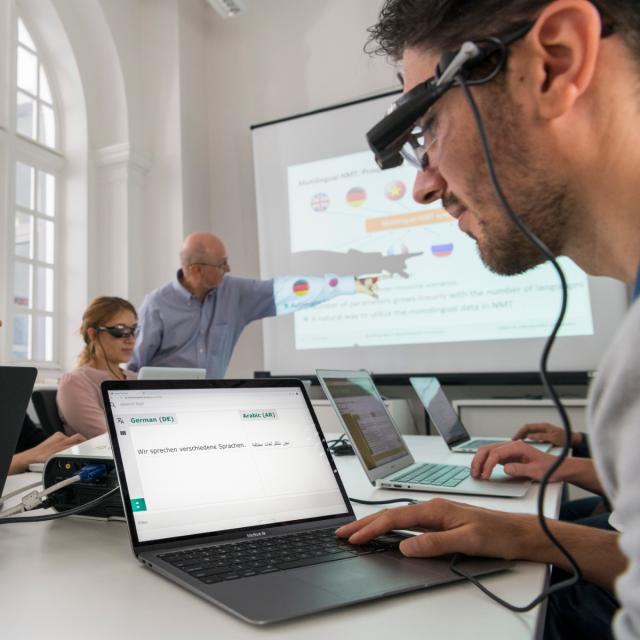
Welcome to the CLICS-Machine Translation MOOC. This MOOC explains the basic principles of machine translation. Machine translation is the task of translating from one natural language to another natural language. Therefore, these algorithms can help people communicate in different languages. Such algorithms are used in common applications, from Google Translate to apps on your mobile device.

Oct 26th 2026
5-12 Weeks
Relational Database Support for Data Warehouses (Coursera) Coursera
University of Colorado System

Relational Database Support for Data Warehouses (Coursera)

Relational Database Support for Data Warehouses is the third course in the Data Warehousing for Business Intelligence specialization. In this course, you'll use analytical elements of SQL for answering business intelligence questions. You'll learn features of relational database management systems for managing summary data commonly used in business intelligence reporting. Because of the importance and difficulty of managing implementations of data warehouses, we'll also delve into storage architectures, scalable parallel processing, data governance, and big data impacts. In the assignments in this course, you can use either Oracle or PostgreSQL.

Oct 12th 2026
5-12 Weeks
Avoiding AI Harm (Coursera) Coursera
Fred Hutchinson Cancer Center

Avoiding AI Harm (Coursera)

This course is designed for those in roles with decision making power, to help them understand major topics to consider for using and developing Artificial Intelligence (AI) responsibly, including popular Generative AI tools like ChatGPT and others. It covers real-world examples of situations where AI was used in variety of fields and situations in ways hat revealed ethical concerns. Strategies are suggested to avoid doing harm working with AI, including a framework for working responsibly with AI.

Oct 19th 2026
1 Week
Statistical Inference and Hypothesis Testing in Data Science Applications (Coursera) Coursera
University of Colorado Boulder

Statistical Inference and Hypothesis Testing in Data Science Applications (Coursera)

This course will focus on theory and implementation of hypothesis testing, especially as it relates to applications in data science. Students will learn to use hypothesis tests to make informed decisions from data. Special attention will be given to the general logic of hypothesis testing, error and error rates, power, simulation, and the correct computation and interpretation of p-values. Attention will also be given to the misuse of testing concepts, especially p-values, and the ethical implications of such misuse.

Nov 2nd 2026
5-12 Weeks
Big Data Analysis Deep Dive (Coursera) Coursera
Alibaba Cloud Academy

Big Data Analysis Deep Dive (Coursera)

The job market for architects, engineers, and analytics professionals with Big Data expertise continues to increase. The Academy’s Big Data Career path focuses on the fundamental tools and techniques needed to pursue a career in Big Data. This course includes: data processing with python, writing and reading SQL queries, transmitting data with MaxCompute, analyzing data with Quick BI, using Hive, Hadoop, and spark on E-MapReduce, and how to visualize data with data dashboards. Work through our course material, learn different aspects of the Big Data field, and get certified as a Big Data Professional!

Oct 26th 2026
5-12 Weeks
Introduction to Genomic Technologies (Coursera) Coursera
Johns Hopkins University

Introduction to Genomic Technologies (Coursera)

This course introduces you to the basic biology of modern genomics and the experimental tools that we use to measure it. We'll introduce the Central Dogma of Molecular Biology and cover how next-generation sequencing can be used to measure DNA, RNA, and epigenetic patterns. You'll also get an introduction to the key concepts in computing and data science that you'll need to understand how data from next-generation sequencing experiments are generated and analyzed.

Oct 12th 2026
4 Weeks