EdX

La Química Orgánica: un mundo a tu alcance (Parte 2) (edX)

La Química Orgánica: un mundo a tu alcance (Parte 2) (edX)

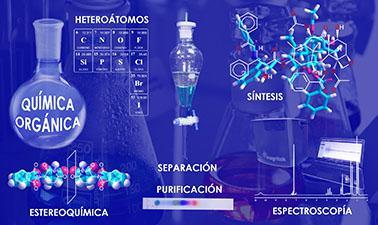
El alumno continuará adquiriendo importantes rudimentos de la Química Orgánica, sin darse cuenta y sin necesidad de conocimientos previos. Se satisfará la curiosidad del alumno sobre la estructura molecular de sustancias, tanto naturales como otras creadas por el Químico Orgánico. Percibirá su importancia sobre la preservación de la vida, el control de enfermedades y la producción eficiente de alimentos, así como las limitaciones que tenemos en la producción de energía y nuestra incidencia sobre el medio ambiente. Se introducirá en el apasionante arte de la separación, purificación y determinación de estructuras.

Class Deals by MOOC List - Click here and see EdX's Active Discounts, Deals, and Promo Codes.

What you'll learn

  • Rudimentos de la Química Orgánica
  • Entendimiento de la estructura molecular
  • Rudimentos de las técnicas de separación y purificación
  • Nociones de las técnicas de determinación de la estructura molecular
  • Comprensión de las moléculas esenciales para la vida

This course is part of the Fundamentos de Química Orgánica XSeries.

Syllabus

  1. Moléculas orgánicas IV: carbono, hidrógeno y nitrógeno (aminas y amidas); otros "heteroátomos"
  2. Isomería y Estereoquímica: Estereoisomería
  3. ¿Cómo se determina la estructura de un compuesto orgánico?
  4. ¿Cómo se separa, purifica y analiza un compuesto orgánico?
  5. Algunos compuestos orgánicos cotidianos y nociones de su preparación

Prerequisites
Es recomendable, pero no imprescindible, haber cursado la primera parte.
Go to Class
MOOC List is learner-supported. When you buy through links on our site, we may earn an affiliate commission.

Related Courses

La Química Orgánica: un mundo a tu alcance (edX) EdX
Universidad Autonoma de Madrid,UAMx

La Química Orgánica: un mundo a tu alcance (edX)

La Química Orgánica, hecha fácil, no es el problema sino la solución. Compruébalo en un mundo de moléculas bellas y funcionales. ¡La Química Orgánica está en todas partes! Simplemente nos rodea. ¿Te has dado cuenta que nosotros mismos somos Química Orgánica? Las moléculas biológicas son Química Orgánica. En este curso se introducen los fundamentos de la Química Orgánica y de la estructura molecular, sin que sea necesario tener ningún conocimiento previo de Química, ¡lo creas o no!

Self Paced
Self-Paced
Reacciones químicas y cálculos estequiométricos (edX) EdX
Universitat Politècnica de València,UPValenciaX

Reacciones químicas y cálculos estequiométricos (edX)

Aprenderás los conceptos básicos de las reacciones químicas y profundizarás en su estudio cuantitativo (estequiometría). Con este curso aprenderás los conceptos básicos relacionados con las reacciones químicas y profundizarás en su estudio desde el punto de vista cuantitativo, es decir su estequiometría. Entenderás el comportamiento de los gases y las disoluciones y aplicarás las leyes que regulan su comportamiento en los procesos químicos en los que participan.

Self Paced
Self-Paced
Reacciones rédox en la industria y la naturaleza (edX) EdX
Universitat Politècnica de València,UPValenciaX

Reacciones rédox en la industria y la naturaleza (edX)

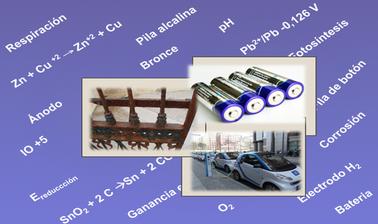
Las reacciones de oxidación-reducción son de las reacciones más frecuentes en el mundo que nos rodea. En el curso en línea las conocerás a traves de algunas de sus aplicaciones más comunes, como las pilas, las baterías o la forma de prevenir la corrosión. Las reacciones de oxidación-reducción (rédox) se explican como una transferencia de electrones entre diferentes especies químicas. Son, junto a los procesos ácido-base, los tipos de transformaciones químicas más habituales en el mundo que nos rodea.

Self Paced
Self-Paced
Introduction to Clinical Psychology (edX) EdX
University of Queensland,UQx

Introduction to Clinical Psychology (edX)

Learn about the principles underlying psychological therapy and the features and treatment of common mental disorders, including anxiety, depression and schizophrenia. Have you ever wondered what causes mental illness, or why we react to stress the way we do? Or what to expect as you get older? Clinical psychology is the study of psychological disorders and the treatments designed to improve the day-to-day lives of people suffering from them.

Self Paced
Self-Paced
Tropical Coastal Ecosystems (edX) EdX
University of Queensland,UQx

Tropical Coastal Ecosystems (edX)

Take the challenge and understand problems and solutions to managing tropical coastal ecosystems. Do you want to develop the skills and knowledge needed to help preserve tropical coastal ecosystems? These habitats provide goods and services for hundreds of millions of people but human activities have led to their global decline.

Self Paced
Self-Paced
Advanced Transport Phenomena (edX) EdX
Delft University of Technology,DelftX

Advanced Transport Phenomena (edX)

Learn how to tackle complex mass and heat transfer problems and apply the results in your own environment. How can you reduce the energy loss of your home? What is the underlying science of energy loss in pipes? Which heat and mass transfer problems do we have to tackle to make consumer products? In this engineering course, you will learn about the engineering principles that play an important role in all of these and more phenomena. You will learn about microbalances, radiation, convection, diffusion and more and their applications in everyday life.

Self Paced
Self-Paced
Case Studies in Functional Genomics (edX) EdX
HarvardX,Harvard University

Case Studies in Functional Genomics (edX)

Perform RNA-Seq, ChIP-Seq, and DNA methylation data analyses, using open source software, including R and Bioconductor. We will explain how to perform the standard processing and normalization steps, starting with raw data, to get to the point where one can investigate relevant biological questions.

Self Paced
Self-Paced
Managing Addiction: A Framework for Successful Treatment (edX) EdX
University of Adelaide,AdelaideX

Managing Addiction: A Framework for Successful Treatment (edX)

Understand how to manage addiction in practice and respond effectively to clients with drug and alcohol problems. Addiction is such a common problem today that clients experiencing alcohol, nicotine or other drug problems present in many different healthcare settings. The challenge of identifying effective ways to help people experiencing addiction is a serious one, and much depends on the quality of the clinical decisions we make. This course is intended to help you meet this challenge by increasing your understanding of the biology of addiction and the available treatment options in the different stages of the recovery journey.

Self Paced
Self-Paced
Introduction to Linear Models and Matrix Algebra (edX) EdX
HarvardX,Harvard University

Introduction to Linear Models and Matrix Algebra (edX)

Learn to use R programming to apply linear models to analyze data in life sciences. Matrix Algebra underlies many of the current tools for experimental design and the analysis of high-dimensional data. In this introductory data analysis course, we will use matrix algebra to represent the linear models that commonly used to model differences between experimental units. We perform statistical inference on these differences. Throughout the course we will use the R programming language.

Self Paced
Self-Paced
Industrial Biotechnology (edX) EdX
Delft University of Technology,DelftX

Industrial Biotechnology (edX)

Learn the basics of sustainable processing for biobased products to further understand their impact on global sustainability. As fossil-based fuels and raw materials contribute to climate change, the use of renewable materials and energy as an alternative is increasingly important and common. This transition is not a luxury, but rather a necessity.

Self Paced
Self-Paced
Super-Earths And Life (edX) EdX
HarvardX,Harvard University

Super-Earths And Life (edX)

Learn about the Earth, life, and how we can search for life elsewhere in the universe. Are we alone in this universe? What new information and observations on exoplanets have we discovered? In the past decade, astronomers have made incredible advances in the discovery of planets outside our solar system. Thirty years ago, we knew only of the planets in our own solar system. Now we know of thousands circling nearby stars.

Self Paced
Self-Paced