La legge di gravitazione universale (POK)

Offered by Politecnico di Milano,
La legge di gravitazione universale (POK)

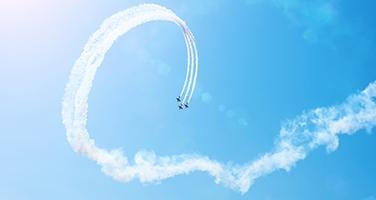
Indaghiamo assieme una delle leggi fisiche più belle dell’Universo, ma non solo! Sveliamo i concetti fondamentali della meccanica orbitale, del volo e della propulsione aerospaziale. La forza di gravità è ciò che dà la forma ad ogni oggetto e corpo presente nell’Universo. I pianeti stessi e le loro orbite sono soggetti a questa forza tanto potente quanto misteriosa, come scoprirete seguendo queste lezioni.

Grazie a questo corso potrete apprendere al meglio i punti di forza e di debolezza della legge di gravitazione Universale: dopo un breve excursus inerente ai grandi scienziati del passato, verranno studiate le tre leggi di Keplero, per poi arrivare alla forza di gravità di Newton e alle teorie contemporanee. Lo studente, avendo preso confidenza con i concetti fisici che stanno alla base della legge di gravitazione Universale, sarà invitato a riflettere sul come sfruttare la forza di gravità a suo favore: "Come è possibile che gli aerei riescano a volare?"", “Come è riuscito l’uomo ad uscire dall’atmosfera?”. La magia verrà svelata!

Il corso è strutturato in due week, che non corrispondono necessariamente a settimane di apprendimento, ma piuttosto a blocchi logici.
Week 1 – L’interazione gravitazionale
Week 2 - La gravità inedita
La prima Week si compone di due moduli. Il primo, di introduzione al corso, presenta le idee della comunità scientifica prima di Isaac Newton: si affrontano le peculiarità delle interazioni fondamentali di natura e le leggi di Keplero. Vi è un esperimento eseguito con un pendolo per dimostrare le idee sostenute da Galileo Galilei.
Il secondo modulo presenta una discussione incentrata sulla legge di gravitazione universale, che viene formulata in maniera matematica, senza trascurare il significato fisico delle formule presentate. Una lezione è dedicata al laboratorio “Viaggio al centro della Terra”, nel quale gli studenti sono invitati ad utilizzare un foglio di calcolo per stimare il tempo necessario per spostarsi da un polo terrestre all’altro.
La seconda week, anch'essa strutturata in due moduli, è dedicata alle idee e alla fisica adatta per “ingannare la gravità”. Il primo modulo è dedicato al volo e alla propulsione aerospaziale, ed in particolare come l’uomo è riuscito nonostante l’interazione gravitazionale ad uscire dall’atmosfera.
Il modulo conclusivo del corso prevede il passaggio dalla teoria newtoniana a quella di Albert Einstein, si discutono dunque le perplessità riguardanti la Legge di gravitazione Universale e si definiscono le onde gravitazionali. Inoltre, si presenta la forza di gravità in alcune opere letterarie e cinematografiche.
Go to Class
MOOC List is learner-supported. When you buy through links on our site, we may earn an affiliate commission.

Related Courses

Astro 101: Black Holes (Coursera) Coursera
University of Alberta

Astro 101: Black Holes (Coursera)

What is a black hole? Do they really exist? How do they form? How are they related to stars? What would happen if you fell into one? How do you see a black hole if they emit no light? What’s the difference between a black hole and a really dark star? Could a particle accelerator create a black hole? Can a black hole also be a worm hole or a time machine? In Astro 101: Black Holes, you will explore the concepts behind black holes. Using the theme of black holes, you will learn the basic ideas of astronomy, relativity, and quantum physics.

Aug 17th 2026
5-12 Weeks
Tesoros de la Física y sus Descubridores I (Coursera) Coursera
Universidad de los Andes

Tesoros de la Física y sus Descubridores I (Coursera)

¿Sabes cómo vuelan los aviones, tan pesados y no se caen mientras vuelan? ¿Sabes que viajamos por el espacio sobre el planeta Tierra que se traslada y gira muy rápido y no lo percibimos? ¿O acaso, notas efectos de su movimiento? ¿Cuál es nuestro lugar en el universo? ¿Podemos viajar en el tiempo? ¡Preguntas, muchas preguntas! Con espíritu de descubridores nuestra curiosidad nos motiva a buscar respuestas, a explorar nuestro entorno, a entrar a lo desconocido y hallar nuevo conocimiento.

Aug 3rd 2026
5-12 Weeks
Archaeoastronomy (POK) Polimi OPEN KNOWLEDGE
Politecnico di Milano

Archaeoastronomy (POK)

The science of stars and stones. Archaeoastronomy is the “science of stars and stones”: it studies the relationships between the ancient monuments and the sky, in order to gain a better understanding of the ideas of the architects of the past and of their religious and symbolic world. The course provides the first complete, easy introduction to this fascinating discipline.

Available
5-12 Weeks
Introduzione alla fisica sperimentale: elettromagnetismo, ottica, fisica moderna (POK) Polimi OPEN KNOWLEDGE
Politecnico di Milano

Introduzione alla fisica sperimentale: elettromagnetismo, ottica, fisica moderna (POK)

Il corso affronta le tematiche dell’elettromagnetismo e dell’ottica partendo dall’applicazione del metodo sperimentale, per prepararsi al meglio all'ingresso all'università. The course addresses the thematic of electromagnetism and optics, starting with the applications of the experimental method, to better start the academic learning path.


Available
4 Weeks
Física: Vectores, Trabajo y Energía (Coursera) Coursera
Tecnológico de Monterrey

Física: Vectores, Trabajo y Energía (Coursera)

Este curso provee al estudiante con conceptos y herramientas matemáticas para modelar problemas en física, que al aplicar podrá enfrentar con éxito los cursos de física universitarios. Así pues, la filosofía de este curso consiste en cubrir temas conceptuales relativos a la Física y desarrollar tu capacidad de aprender y aplicarlos en tu vida profesional.

Aug 17th 2026
5-12 Weeks
Quantum Optics 1 : Single Photons (Coursera) Coursera
École Polytechnique

Quantum Optics 1 : Single Photons (Coursera)

This course gives you access to basic tools and concepts to understand research articles and books on modern quantum optics. You will learn about quantization of light, formalism to describe quantum states of light without any classical analogue, and observables allowing one to demonstrate typical quantum properties of these states. These tools will be applied to the emblematic case of a one-photon wave packet, which behaves both as a particle and a wave.

Aug 10th 2026
5-12 Weeks
Electrodynamics: An Introduction (Coursera) Coursera
Korea Advanced Institute of Science and Technology - KAIST

Electrodynamics: An Introduction (Coursera)

The depth and breadth of electromagnetism, the foundation for many fields including materials science, electrical engineering, and physical chemistry, requires a long, steep, and steady learning curve. This course aims to bridge the gap between the fundamental principles taught in electromagnetism and its practical application to specific fields such as materials, physics, and chemistry related to energy storage and harvesting.

Aug 3rd 2026
5-12 Weeks
Conceptos y Herramientas para la Física Universitaria (Coursera) Coursera
Tecnológico de Monterrey

Conceptos y Herramientas para la Física Universitaria (Coursera)

Este curso provee al estudiante con conceptos y herramientas matemáticas para modelar problemas en física, que al aplicar podrá enfrentar con éxito los cursos de física universitarios. Así pues, la filosofía de este curso consiste en cubrir temas conceptuales relativos a la Física y desarrollar tu capacidad de aprender y aplicarlos en tu vida profesional.

Aug 17th 2026
5-12 Weeks
Introduction to Particle Accelerators (NPAP MOOC) (Coursera) Coursera
Lund University

Introduction to Particle Accelerators (NPAP MOOC) (Coursera)

Welcome to the Nordic Particle Accelerator Program's (NPAP) Massive Open Online Courses and to the fascinating world of particle accelerators! Did you know that in the year of 2000 there were more than 15 000 particle accelerators in the world? Yet, today it has grown to more than 30 000 of them! A third of the particle accelerators are dedicated to medical applications, such as radio therapy, and a half are used for ion implantation in semiconductor devices.

Aug 3rd 2026
5-12 Weeks
Kinematics: Describing the Motions of Spacecraft (Coursera) Coursera
University of Colorado Boulder

Kinematics: Describing the Motions of Spacecraft (Coursera)

The movement of bodies in space (like spacecraft, satellites, and space stations) must be predicted and controlled with precision in order to ensure safety and efficacy. Kinematics is a field that develops descriptions and predictions of the motion of these bodies in 3D space. This course in Kinematics covers four major topic areas: an introduction to particle kinematics, a deep dive into rigid body kinematics in two parts (starting with classic descriptions of motion using the directional cosine matrix and Euler angles, and concluding with a review of modern descriptors like quaternions and Classical and Modified Rodrigues parameters).

Aug 10th 2026
4 Weeks
Archaeoastronomy (Coursera) Coursera
Politecnico di Milano

Archaeoastronomy (Coursera)

Archaeoastronomy is the “science of stars and stones”: it studies the relationships between the ancient monuments and the sky, in order to gain a better understanding of the ideas of the architects of the past and of their religious and symbolic world. The course provides the first complete, easy introduction to this fascinating discipline.

Aug 17th 2026
5-12 Weeks