计算机系统基础(一) :程序的表示、转换与链接 (Coursera)

Offered by Nanjing University,
计算机系统基础(一) :程序的表示、转换与链接 (Coursera)

主要介绍高级语言程序中的数据类型及其运算、语句和过程调用等的机器级表示、转换与链接。

Class Deals by MOOC List - Click here and see Coursera's Active Discounts, Deals, and Promo Codes.

本课程主要介绍高级语言程序中的数据类型及其运算、语句和过程调用等是如何在计算机系统中实现的。主要包含三个主题:(1)表示。不同数据类型(如带符号整数、无符号整数、浮点数、数组、结构等)数据在寄存器或存储器中的表示和存储;指令的格式、编码及其在存储器中的存储;存储地址(指针)的表示。(2)转换。高级语言程序中的过程(函数调用)、循环、选择等语句与机器级代码之间的对应关系。(3)链接。多个可重定位目标文件如何链接生成可执行目标文件并加载到系统中。
通过本课程的学习,使学生能从程序员角度认识计算机系统,能够建立高级语言程序、ISA、OS、编译器、链接器等之间的相互关联,对指令在硬件上的执行过程和指令的底层硬件执行机制有一定的认识和理解,从而增强学生在程序调试、性能提升、程序移植和健壮性等方面的能力,并为后续的“计算机组成与设计”、“操作系统”、“编译原理”、“计算机体系结构”等课程打下坚实基础。

Go to Class
MOOC List is learner-supported. When you buy through links on our site, we may earn an affiliate commission.

Related Courses

Blockchain Scalability and its Foundations in Distributed Systems (Coursera) Coursera
The University of Sydney

Blockchain Scalability and its Foundations in Distributed Systems (Coursera)

Blockchain promises to disrupt industries once it will be efficient at large scale. In this course, you will learn how to make blockchain scale. You will learn about the foundational problem of distributed computing, consensus, that is key to create blocks securely. By illustrating limitations of mainstream blockchains, this course will indicate how to improve the technology in terms of security and efficiency. In particular, this course will help you: understand security vulnerabilities of mainstream blockchains; design consensus algorithms that tolerate attacks, and; design scalable blockchain systems.

Sep 28th 2026
5-12 Weeks
操作系统原理 (Operating Systems) (Coursera) Coursera
Peking University

操作系统原理 (Operating Systems) (Coursera)

操作系统原理》是针对计算机科学技术专业三年级本科生开设的一门专业基础课程。本课程着重学生系统观的培养,通过重点讲述操作系统的内部结构、工作原理及典型技术的实现,使学生建立起对操作系统的整体及各个功能模块的认识,从而系统掌握计算机的专业知识,进一步提升学生的软件开发能力乃至系统软件开发能力。

Sep 28th 2026
13-24 Weeks
Problem Solving, Python Programming, and Video Games (Coursera) Coursera
University of Alberta

Problem Solving, Python Programming, and Video Games (Coursera)

This course is an introduction to computer science and programming in Python. Important computer science concepts such as problem solving (computational thinking), problem decomposition, algorithms, abstraction, and software quality are emphasized throughout. The Python programming language and video games are used to demonstrate computer science concepts in a concrete and fun manner. However, a learner can take the knowledge and skills from this course and apply them to non-game problems, other programming languages, and other computer science courses.

Sep 21st 2026
5-12 Weeks
How Computers Work (Coursera) Coursera
University of London,Goldsmiths, University of London

How Computers Work (Coursera)

Computers are everywhere, they aren't just the desktops and laptops we use for work but the phones in our pockets and even the watches on our wrists are also computers. You probably use a computer every day and in fact you are reading this on a computer! Just because we use computers all the time, doesn't mean that we understand them, or find them easy to use. Computer Science is the science of computers, it is the field of knowledge that experts use to understand computer systems. Knowing a little computer science will help you understand the computers all around you.

Sep 21st 2026
4 Weeks
Introduction to Self-Driving Cars (Coursera) Coursera
University of Toronto

Introduction to Self-Driving Cars (Coursera)

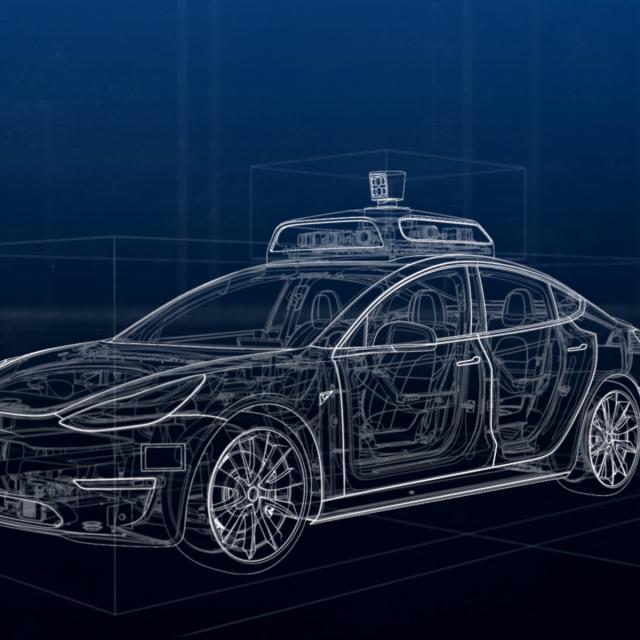
Welcome to Introduction to Self-Driving Cars, the first course in University of Toronto’s Self-Driving Cars Specialization. This course will introduce you to the terminology, design considerations and safety assessment of self-driving cars. By the end of this course, you will be able to: Understand commonly used hardware used for self-driving cars; Identify the main components of the self-driving software stack; Program vehicle modelling and control; Analyze the safety frameworks and current industry practices for vehicle development

Sep 21st 2026
5-12 Weeks
Principles of Computing (Part 2) (Coursera) Coursera
Rice University

Principles of Computing (Part 2) (Coursera)

This two-part course introduces the basic mathematical and programming principles that underlie much of Computer Science. Understanding these principles is crucial to the process of creating efficient and well-structured solutions for computational problems. To get hands-on experience working with these concepts, we will use the Python programming language. The main focus of the class will be weekly mini-projects that build upon the mathematical and programming principles that are taught in the class.

Oct 5th 2026
4 Weeks
Python and Machine Learning for Asset Management (Coursera) Coursera
EDHEC Business School

Python and Machine Learning for Asset Management (Coursera)

This course will enable you mastering machine-learning approaches in the area of investment management. It has been designed by two thought leaders in their field, Lionel Martellini from EDHEC-Risk Institute and John Mulvey from Princeton University. Starting from the basics, they will help you build practical skills to understand data science so you can make the best portfolio decisions.

Sep 21st 2026
5-12 Weeks
User Research and Design (Coursera) Coursera
University of Minnesota

User Research and Design (Coursera)

In this course you will learn and practice techniques of user research and early UI design exploration. First, you will learn and practice several techniques for user research, including in-person research and survey and log-analysis techniques. Then, you will learn to analyze and deliver user research in forms that support UI design, including personas, use cases, tasks, and scenarios. Finally, you will learn and practice ideation techniques that start from user research and broadly generate potential design ideas.

Sep 21st 2026
4 Weeks
Introduction to Graph Theory (Coursera) Coursera
University of California, San Diego,Higher School of Economics - HSE University

Introduction to Graph Theory (Coursera)

We invite you to a fascinating journey into Graph Theory — an area which connects the elegance of painting and the rigor of mathematics; is simple, but not unsophisticated. Graph Theory gives us, both an easy way to pictorially represent many major mathematical results, and insights into the deep theories behind them. In this course, among other intriguing applications, we will see how GPS systems find shortest routes, how engineers design integrated circuits, how biologists assemble genomes, why a political map can always be colored using a few colors. We will study Ramsey Theory which proves that in a large system, complete disorder is impossible!

Sep 21st 2026
5-12 Weeks
Visual Perception for Self-Driving Cars (Coursera) Coursera
University of Toronto

Visual Perception for Self-Driving Cars (Coursera)

Welcome to Visual Perception for Self-Driving Cars, the third course in University of Toronto’s Self-Driving Cars Specialization. This course will introduce you to the main perception tasks in autonomous driving, static and dynamic object detection, and will survey common computer vision methods for robotic perception. By the end of this course, you will be able to work with the pinhole camera model, perform intrinsic and extrinsic camera calibration, detect, describe and match image features and design your own convolutional neural networks.

Sep 21st 2026
5-12 Weeks
Architecting Smart IoT Devices (Coursera) Coursera
EIT Digital

Architecting Smart IoT Devices (Coursera)

This course will teach you how to develop an embedded systems device. In order to reduce the time to market, many pre-made hardware and software components are available today. You'll discover all the available hardware and software components, such as processor families, operating systems, boards and networks. You'll also learn how to actually use and integrate these components.

Sep 21st 2026
5-12 Weeks