Introduction to Translational Science (Coursera)

Introduction to Translational Science (Coursera)

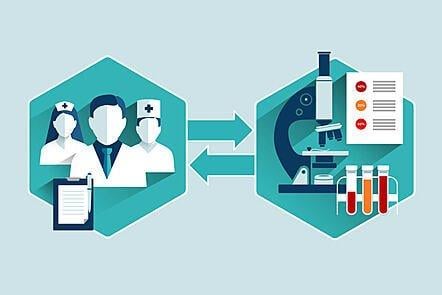
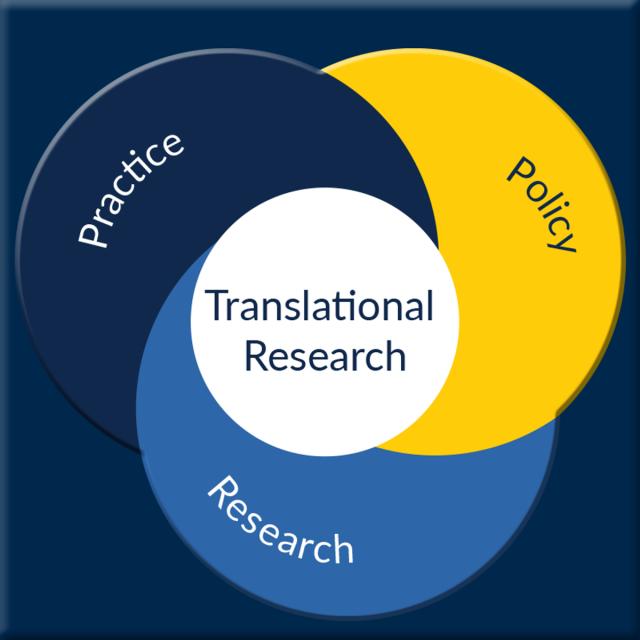
Translational science is the process of turning observations in the laboratory, clinic, and community into interventions that improve the health of individuals and populations. In this course, you’ll learn about the role of translational research in moving scientific discoveries into applications for improving human health.

Class Deals by MOOC List - Click here and see Coursera's Active Discounts, Deals, and Promo Codes.

With an understanding of the four stages of translational research, you’ll be able to assess team roles for each stage and explain the importance of rigorous research, responsible conduct of research, and the differences between them. Finally, you’ll learn about career opportunities within the in-demand field of translational research.
This is an ideal introduction for undergraduate or graduate students interested in the practical application of their research to improve the health of their community.
This is the first course of five in the “Translational Science” series.
Course 1 of 5 in the Translational Science Specialization.

Syllabus

WEEK 1
The Introduction to Translational Science course provides you with an overview of the spectrum of translational research. You will learn important terminology and concepts to use as you practice setting career goals for translational research. This week you will learn how to 1) define translational research and its role in moving scientific discoveries into applications for improving human health, 2) list the stages of translational research and describe specific examples of research conducted at each stage.

WEEK 2
Welcome to Week 2 of Introduction to Translational Science. This week you will learn how to 1) name the seven fundamental characteristics of a translational scientist, 2) identify team roles for research conducted in each stage of translational science, and 3) explain the importance of rigorous research.

WEEK 3
Welcome to Week 3 of Introduction to Translational Science. This week you will learn how to... 1) understand the importance of diversity in assembling your research team, 2) explain the importance of mentoring in conducting translational research.

WEEK 4
Welcome to Week 4 of Introduction to Translational Science. This week you will learn how to 1) give examples of strategies to address issues related to health disparities and inequities in translational research, 2) identify career opportunities in translational research.

Go to Class
MOOC List is learner-supported. When you buy through links on our site, we may earn an affiliate commission.

Related Courses

Genomic Medicine and Research: A Community Approach (FutureLearn) FutureLearn
University of Exeter

Genomic Medicine and Research: A Community Approach (FutureLearn)

Learn how translational research in genomics can deliver health, social, and scientific benefits to communities. Explore the benefits of a community approach to genomic medicine and research. On this course, you will explore the skills needed for translational research work and understand the meaning of community genetics. You will also learn the value of whole genome sequencing in the community context and the importance of community-specific medical research to patients.

Available now
3 Weeks
Introduction to Translational Research: Connecting Scientists and Medical Doctors (FutureLearn) FutureLearn
Taipei Medical University

Introduction to Translational Research: Connecting Scientists and Medical Doctors (FutureLearn)

Understand the emerging discipline of translational medicine and the process of taking research from ‘benchside’ to ‘bedside'. Translational medicine, also known as translational science or translational research, is a new, growing discipline in medicine that aims to ensure research flows from ‘benchside’ to ‘bedside’.

Self Paced
5-12 Weeks
Instructional Methods in Health Professions Education (Coursera) Coursera
University of Michigan

Instructional Methods in Health Professions Education (Coursera)

This course provides those involved in educating members of the health professions an asynchronous, interdisciplinary, and interactive way to obtain, expand, and improve their teaching skills. These skills can then be applied within their own professional context, with a variety of learners, extending across many stages.

Aug 24th 2026
5-12 Weeks
Global Health at the Human-Animal-Ecosystem Interface (Coursera) Coursera
University of Geneva

Global Health at the Human-Animal-Ecosystem Interface (Coursera)

The University of Geneva, Institute Pasteur, University of Montreal and Centre Virchow-Villermé/University Paris Descartes welcome you to this new MOOC on "Global Health at the Human-Animal-Ecosystem Interface"! Over the next 5 weeks, you will explore and learn about some of the major and current Global Health Challenges at the Human-Animal-Ecosystem Interface: zoonotic emerging infections (e.g. Ebola, Nipah, MERS, Avian Influenza), antimicrobial resistance, neglected tropical diseases (e.g. rabies, leishmaniasis, zoonotic TB), snakebite and other human-animal conflicts etc.

Aug 24th 2026
5-12 Weeks
Questionnaire Design for Social Surveys (Coursera) Coursera
University of Michigan

Questionnaire Design for Social Surveys (Coursera)

This course will cover the basic elements of designing and evaluating questionnaires. We will review the process of responding to questions, challenges and options for asking questions about behavioral frequencies, practical techniques for evaluating questions, mode specific questionnaire characteristics, and review methods of standardized and conversational interviewing.

Aug 24th 2026
5-12 Weeks
Getting started in cryo-EM (Coursera) Coursera
Caltech

Getting started in cryo-EM (Coursera)

This class covers the fundamental principles underlying cryo-electron microscopy (cryo-EM) starting with the basic anatomy of electron microscopes, an introduction to Fourier transforms, and the principles of image formation. Building upon that foundation, the class then covers the sample preparation issues, data collection strategies, and basic image processing workflows for all 3 basic modalities of modern cryo-EM: tomography, single particle analysis, and 2-D crystallography.

Aug 24th 2026
5-12 Weeks
Ebola : Vaincre ensemble ! (Coursera) Coursera
University of Geneva

Ebola : Vaincre ensemble ! (Coursera)

Il s’agit d’un MOOC sur la crise internationale sur Ebola partie d’Afrique de l’Ouest en 2014 ; d’une durée de 5 semaines, où interviendront plus de 30 professeurs des universités, chercheurs, responsables politiques, autorités sanitaires nationales et internationales, membres d’ONGs, et autres acteurs d’Europe et d’Afrique sur plus de 60 séquences vidéos. Les thèmes abordés se dérouleront selon une séquence hebdomadaire décrite ci-dessous (section « plan du cours »).

Aug 24th 2026
5-12 Weeks
Evaluation of Digital Health Interventions (Coursera) Coursera
Imperial College London

Evaluation of Digital Health Interventions (Coursera)

This course focuses on data, evaluation methods and the economic evaluation of digital health interventions. This module focuses on key data considerations for digital health including data management, data visualisation and methods for evaluating digital health interventions. The key focus is on experimental and quasi-experimental design approaches that can be applied to evaluating digital health interventions and key considerations for the economic evaluation of digital health interventions.

Aug 3rd 2026
4 Weeks
Translating Research to Communities (Coursera) Coursera
University of Michigan

Translating Research to Communities (Coursera)

Health research must positively impact the lives of the general population, so the public must receive and interpret research findings in a meaningful way. That is why translating research discoveries into practice is an important phase of the translational research spectrum. In this course, you’ll gain an introduction to the concepts of population health research and the ethical use of data science to drive advances in human health.

Aug 3rd 2026
3 Weeks
PrEParing: PrEP for Providers and Patients (Coursera) Coursera
Johns Hopkins University

PrEParing: PrEP for Providers and Patients (Coursera)

Pre-Exposure Prophylaxis (PrEP) using the antiretroviral medication emtricitibine/tenofovir approved in countries around the world is a highly effective means of reducing transmission of HIV through sexual encounters and needle sharing. This Johns Hopkins University course PrEPares you with essential information, concepts and practical advice regarding PrEP from leaders in the field. A first of its kind learning opportunity, both providers and patients learn from the same experts through content that meets the needs of both audiences, while facilitating the opportunity for a shared community space.

Aug 31st 2026
5-12 Weeks