Introduction to International Nuclear Law (Coursera)

Introduction to International Nuclear Law (Coursera)

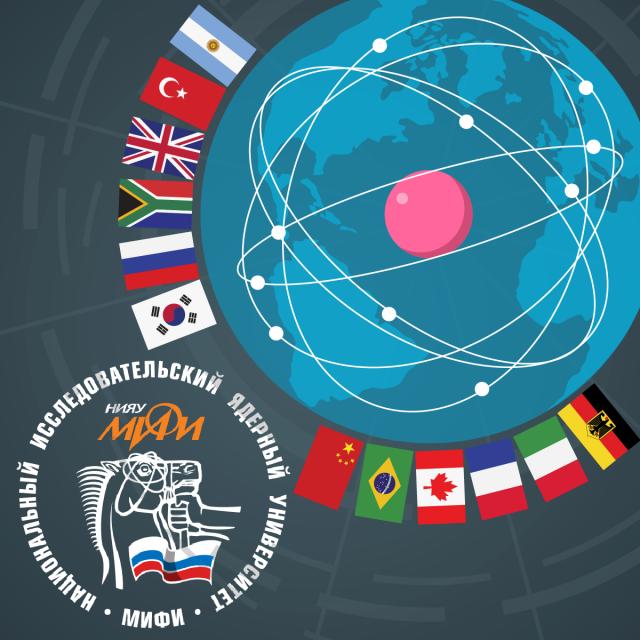
So, what is international nuclear law? What aspects of international cooperation exist in this direction? You will learn about this in our course. Nuclear power gives us hope and potential for significant benefits, in a variety of fields, from medicine and agriculture to electricity production and industry. At the same time, we all know that nuclear energy poses serious risks to the health and safety of humans and to the environment. These risks must be managed very carefully and thoroughly.

Class Deals by MOOC List - Click here and see Coursera's Active Discounts, Deals, and Promo Codes.

Course 1 of 5 in the Правовые основы и базы данных в ядерной отрасли Specialization
It is important to recognize that international legal norms for the regulation of nuclear energy are also a part of a State’s national legal system. In this course we will look at the most basic and fundamental areas and issues that need to be addressed when analyzing and developing legal norms for such a highly complex technology as nuclear power.

What You Will Learn

  • General Principles of International Law
  • International Public Law of Treaties
  • Principles of Nuclear Law

Syllabus

WEEK 1
International Law
In the module 1 we will talk about international law in general, we look what it is, what aspects it covers. Then we move on international nuclear law, its principle, its legal coverage. And then we will study which is the most interesting part, we’ll take a closer look at major subject in international and national nuclear law.

WEEK 2
General Principles of International Law and International Public Law of Treaties
This module is about general principles of international law recognized by civilized nations or more appropriate: the community of nations are a manifestation of international law. They can be found in the Declaration on Principles of International Law concerning friendly relations and co-operation among states in accordance with the Charter of the UN.

WEEK 3
International Public Law of Treaties
As we have already discussed, treaties are the principle source of public international law. In the third module we will look the content of treaties.

WEEK 4
International Nuclear Law
In this module we will look at the most basic and fundamental areas and issues that need to be addressed when analyzing and developing legal norms for such a highly complex technology as nuclear power.

WEEK 5
Principles of Nuclear Law
IAEA developed 11 legal principles applicable to the international nuclear law. This principles can be found in the IAEA Handbook on nuclear law. So, let’s take a look on them in module 5.

WEEK 6
The Liability of Nuclear Damage
Many States have long recognized the risk of a nuclear accident causing transboundary damage. In the 6 module we will discuss such important questions as liability for nuclear damage, transboundary damage, national regimes.


Go to Class
MOOC List is learner-supported. When you buy through links on our site, we may earn an affiliate commission.

Related Courses

International Water Law (Coursera) Coursera
University of Geneva

International Water Law (Coursera)

In recent decades, international law has undergone a series of major developments in order to accommodate the many new facets of freshwater management and protection. The adoption of universal, regional and basin instruments highlights how important it is to study the evolution of international water regulations and to be able to identify the main principles in this field. This course aims to provide the necessary background to understand and examine the regulation applicable to transboundary freshwaters especially to rivers, lakes and aquifers. It presents the principles and legal standards that govern the use, sharing, management and protection of these resources.

Sep 21st 2026
5-12 Weeks
El Abogado del Futuro: Legaltech y la Transformación Digital del Derecho (Coursera) Coursera
Universidad Austral

El Abogado del Futuro: Legaltech y la Transformación Digital del Derecho (Coursera)

La revolución digital cambió nuestra manera de comunicarnos, de comerciar y de relacionarnos. Ahora, está llegando al mundo del derecho. Este programa te ofrecerá una visión amplia de las principales tendencias que están afectando a la industria legal: - El nacimiento del mercado de legaltech y la aplicación de tecnología en el derecho. - El rol de la inteligencia artificial en la automatización del trabajo de los abogados. - La tecnología de blockchain y su impacto en la forma en que firmamos y ejecutamos contratos. - Las iniciativas para asegurar el acceso a la justicia a través de cortes virtuales y jueces robot.

Oct 5th 2026
5-12 Weeks
Employment Law: The Gig Economy (Coursera) Coursera
University of Pennsylvania

Employment Law: The Gig Economy (Coursera)

Gig work, a type of work that is done on a short-term or freelance basis, has exploded in popularity in recent years. The term gig work is commonly used to discuss work for businesses that facilitate peer-to-peer transactions. People usually think of ridesharing apps such as Uber and Lyft, but the categories of gig work have expanded rapidly. Although people are quick to identify gig work, the newness of the concept has left many gaps in the legal definitions of what gig work is and how gig workers should be protected. This course seeks to clear up misconceptions about gig workers through an examination of various legal cases, examining grey areas of the law and also providing possible alternatives.

Oct 5th 2026
4 Weeks
FinTech Law and Policy (Coursera) Coursera
Duke University

FinTech Law and Policy (Coursera)

Being a successful FinTech firm requires more than just great technology; it also requires an understanding of the laws and regulations applicable to your business. This course will provide you with that understanding. You will learn about the critical legal, regulatory, and policy issues associated with cryptocurrencies, initial coin offerings, online lending, new payments and wealth management technologies, and financial account aggregators.

Oct 5th 2026
5-12 Weeks
Cross-border road transport in EU law context (Coursera) Coursera
Erasmus University Rotterdam

Cross-border road transport in EU law context (Coursera)

Have you ever wondered which legal rules are applicable to cross-border EU road transport? Are you interested in the issues revolving around EU employment law in the international road transport sector? Then, on behalf of the University of Antwerp, Erasmus University Rotterdam, University of Gdańsk, University of Luxembourg and Tilburg University, we would like to welcome you to this MOOC on Cross-border Road Transport in EU law context. This MOOC is a part of the Erasmus + Project funded by the European Commission. In this MOOC, you will not only learn what the current legal framework is, but also, how it is applied in the road transport sector.

Sep 21st 2026
5-12 Weeks
刑法学总论 Criminal Law (Coursera) Coursera
Peking University

刑法学总论 Criminal Law (Coursera)

刑法是规定犯罪与刑罚的法律。刑法学是研究刑法的科学,主要研究犯罪的成立条件以及刑罚的种类与适用刑法的制度等问题。本课程的主要目的是简明完整地说明现代刑法学总论的基本概念、基本理论与基本方法,包括的主要内容有刑法与刑法学的基本概念,刑罚的正当性,罪刑法定原则,刑法解释,刑法的适用范围,犯罪与犯罪构成的概念,犯罪构成的主要内容,排除犯罪的根据,犯罪的未完成状态,共同犯罪,刑罚的概念与体系,量刑制度,数罪并罚,缓刑、减刑与假释。本课程通过理论说明与案例分析对有关问题进行讲解,鼓励同学们通过刑法发展来认识刑法的生命,通过刑法比较来认识刑法的国际标准,通过确立刑法理想来追求社会的公平正义。

Sep 21st 2026
13-24 Weeks
Introduction to Key Constitutional Concepts and Supreme Court Cases (Coursera) Coursera
University of Pennsylvania

Introduction to Key Constitutional Concepts and Supreme Court Cases (Coursera)

This course offers an introduction to the U.S. Constitution and landmark Supreme Court cases interpreting it. It explores the Constitution’s origins, its amendment over the years, and methods of constitutional interpretation. Topics include the nature and structure of the federal government, the powers of the federal government, and individual rights.

Oct 5th 2026
4 Weeks
Legal Tech and the Digital Transformation of Law (Coursera) Coursera
Universidad Austral

Legal Tech and the Digital Transformation of Law (Coursera)

The digital revolution changed the way we communicate and trade. Now, it is coming into the world of law. This program will give you a broad overview of the main trends that are affecting the legal industry: the birth of the legal tech market and the application of technology in law; the role of artificial intelligence in the automation of the work of lawyers; blockchain technology and its impact on the way we sign and execute contracts; initiatives to ensure access to justice through virtual courts and robot judges.

Oct 5th 2026
5-12 Weeks
ERPO: A Civil Approach to Gun Violence Prevention Teach-Out (Coursera) Coursera
Johns Hopkins University

ERPO: A Civil Approach to Gun Violence Prevention Teach-Out (Coursera)

Evidence shows that 1 life is saved for every 10-20 Extreme Risk Protection Orders (ERPOs) issued. ERPOs are legally issued civil orders that allow people on the front lines to ask a court to prevent a person at imminent risk of harm to themselves or others from purchasing or possessing firearms during a critical period of risk. As of October 2020, ERPO laws have been enacted by nineteen states and the District of Columbia and while some aspects differ by state, the general process for applying and issuing ERPOs are quite similar.

Sep 21st 2026
2 Weeks
Taiwan Law in Focus: Economy, Society and Democracy (Coursera) Coursera
National Taiwan University

Taiwan Law in Focus: Economy, Society and Democracy (Coursera)

“Taiwan Law in Focus” is the first online course provided by the College of Law, National Taiwan University. This course will give you an introduction to the legal system in Taiwan, which includes the topics of Constitution, administration law, criminal law, civil law, corporative law, and some related issues. You will learn about the brief history of Taiwan’s legal system and its transition in recent decades.

Oct 5th 2026
5-12 Weeks
International Humanitarian Law in Theory and Practice (Coursera) Coursera
Leiden University,Kalshoven-Gieskes Forum

International Humanitarian Law in Theory and Practice (Coursera)

“International Humanitarian Law in Theory and Practice” is the first MOOC of the Kalshoven-Gieskes Forum on International Humanitarian Law, which is the platform within the Grotius Centre for International Legal Studies of Leiden University for the research, teaching and dissemination of international humanitarian law (IHL).

Oct 5th 2026
5-12 Weeks
Corporate governance. Mitos y realidades (Coursera) Coursera
Universitat Autònoma de Barcelona

Corporate governance. Mitos y realidades (Coursera)

El corporate governance o gobierno corporativo es uno de los temas más relevantes de nuestro tiempo, tanto desde el punto de vista jurídico como económico. Se trata de una corriente universal, impulsada desde el ámbito anglosajón, pero fuertemente desarrollada en Europa y también en Iberoamérica, Asia o África.

Oct 5th 2026
4 Weeks