Introduction to Integrative Nursing (Coursera)

Introduction to Integrative Nursing (Coursera)

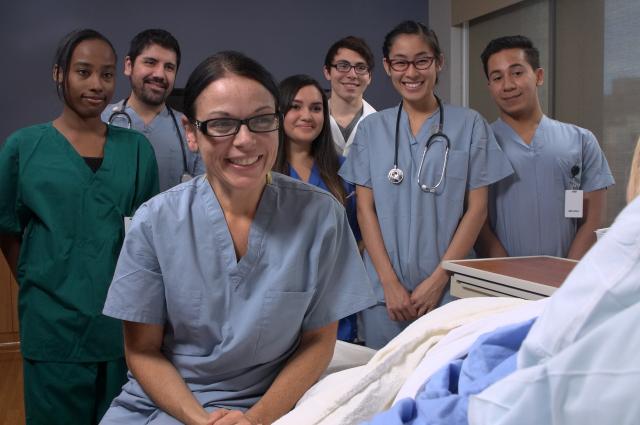
This course is designed for nurses who are drawn to practice in a different way – nurses who value whole-person care and know that the essence of nursing practice is truly caring and healing. You will learn about the principles and practices of Integrative Nursing and how you can be a healing presence to all you serve. Then, you will do an integrative assessment and apply the principles of Integrative Nursing to improve symptom management and overall patient outcomes.

Class Deals by MOOC List - Click here and see Coursera's Active Discounts, Deals, and Promo Codes.

Finally, you will explore ways to become a leader in Integrative Nursing and create new patient care models.
Course 1 of 4 in the Integrative Nursing Specialization.
What You Will Learn

  • Describe the six principles of Integrative Nursing and their key behavioral indicators.
  • Describe key elements and strategies of Integrative Nursing assessment.
  • Apply Integrative Nursing goals and strategies to improve symptom management in patients.
  • Apply Integrative Nursing principles and clinical decision-making within your scope of nursing practice.

Syllabus

WEEK 1: What Is Integrative Nursing and Why Is It Important?
WEEK 2: Principles of Integrative Nursing
WEEK 3: Integrative Nursing Assessment
WEEK 4: Setting Patient Care Goals
WEEK 5: Implementation of Integrative Nursing
Go to Class
MOOC List is learner-supported. When you buy through links on our site, we may earn an affiliate commission.

Related Courses

Psychological First Aid (Coursera) Coursera
Johns Hopkins University

Psychological First Aid (Coursera)

Learn to provide psychological first aid to people in an emergency by employing the RAPID model: Reflective listening, Assessment of needs, Prioritization, Intervention, and Disposition. Utilizing the RAPID model (Reflective listening, Assessment of needs, Prioritization, Intervention, and Disposition), this specialized course provides perspectives on injuries and trauma that are beyond those physical in nature. The RAPID model is readily applicable to public health settings, the workplace, the military, faith-based organizations, mass disaster venues, and even the demands of more commonplace critical events, e.g., dealing with the psychological aftermath of accidents, robberies, suicide, homicide, or community violence.

Oct 5th 2026
5-12 Weeks
Air Pollution – a Global Threat to our Health (Coursera) Coursera
University of Copenhagen

Air Pollution – a Global Threat to our Health (Coursera)

We all have to breathe to live. But the air we breathe is polluted both outdoors and indoors. Each year, this pollution costs 7 million lives across the globe – and a lot of suffering. 1 in 8 deaths is due to air pollution. This course will provide you with an introduction to the most recent research in the field of health effects of air pollution as well as a broader understanding of sources and spread of air pollution and what we should do about it.

Oct 5th 2026
3 Weeks
Communicating During Global Emergencies (Coursera) Coursera
Emory University

Communicating During Global Emergencies (Coursera)

In collaboration with the Rollins School of Public Health and the CDC's Division of Global Health Protection, Emergency Response, and Recovery Branch, this course introduces basic concepts and principles of communicating during a global crisis or emergency. It explores why communication during an emergency is different and the importance of adapting emergency messages to the needs of affected populations.

Oct 5th 2026
3 Weeks
Global Health Policy (Coursera) Coursera
The University of Tokyo

Global Health Policy (Coursera)

In this course, learners will become familiar with principles and theories of global health problems, and major challenges and controversies in improving global population health as well as practical applications of quantitative methods to analyze and interpret issues and challenges for policy. Topics will include health and foreign policy, health governance, acute disease surveillance, non-communicable diseases, burden of disease, universal health coverage, health systems strengthening, health financing, and human resources for health and ageing.

Oct 5th 2026
4 Weeks
Essentials of Global Health (Coursera) Coursera
Yale University

Essentials of Global Health (Coursera)

Essentials of Global Health is a comprehensive introduction to global health. It is meant to introduce you to this topic in well-structured, clear and easy to understand ways. Much of the course will focus on five questions: What do people get sick, disabled and die from; Why do they suffer from these conditions? Which people are most affected? Why should we care about such concerns? What can be done to address key health issues, hopefully at least cost, as fast as possible, and in sustainable ways?

Oct 5th 2026
5-12 Weeks
Saúde Baseada em Evidências (Coursera) Coursera
Universidade Estadual de Campinas - UNICAMP

Saúde Baseada em Evidências (Coursera)

Por que as informações na área da saúde são tão conflitantes? Existe algum lugar em que a informação sobre saúde é confiável? O que devo considerar ao deparar com alguma novidade que parece mágica? Como o sistema de saúde é afetado por essas questões? Essas e outras perguntas nortearam o curso Saúde Baseada em Evidências. Além dessas reflexões, são apontados aspectos sobre o desenvolvimento de pesquisas médicas que fornecem subsídios para uma interpretação mais apurada dos fatos.

Oct 5th 2026
5-12 Weeks
Introduction to Hearing Loss (Coursera) Coursera
Icahn School of Medicine at Mount Sinai

Introduction to Hearing Loss (Coursera)

Welcome to Introduction to Hearing Loss. Disorders of the ear range from simple, easily treated entities (such as wax or cerumen impaction) to the highly complex (such as permanent hearing loss). Many of these disorders manifest with similar symptoms and may be difficult to differentiate without a basic understanding of the anatomy of the ear and auditory pathway.

Oct 5th 2026
4 Weeks
Trabajar para ser feliz (Coursera) Coursera
Universidad Austral

Trabajar para ser feliz (Coursera)

En nuestra vida diaria nos movemos a toda velocidad por diferentes escenarios: la familia, el trabajo, la vida social. Muchas veces podemos quedar atrapados en la vorágine o en la rutina del día a día y olvidarnos de algo importante y que da sentido a todo lo que hacemos: cómo ser felices y cómo hacer felices a los que nos rodean en casa y en el trabajo. Hoy en día existe una confusión, porque estamos muy centrados en el “bienestar”. Vivimos en una cultura que tiende al consumismo, al activismo y nos olvidamos del “bienser”, entendido como ese sentido de plenitud que lleva a sentirse bien con uno mismo y con su entorno.

Oct 5th 2026
4 Weeks
Positive Psychiatry and Mental Health (Coursera) Coursera
The University of Sydney

Positive Psychiatry and Mental Health (Coursera)

In today’s world, mental illness and distress are common and these account for a significant burden of disability within our community. At the same time, there is a growing interest in understanding and enhancing positive mental health and wellbeing; particularly from developments in the fields of positive psychology and mental health promotion. Positive Psychiatry is a new term (Jeste et al 2016) that describes a dual approach to mental health, where we build strengths, supports and healthy lifestyles as well as treating illness and distress.

Oct 5th 2026
5-12 Weeks
Data and Health Indicators in Public Health Practice (Coursera) Coursera
Johns Hopkins University

Data and Health Indicators in Public Health Practice (Coursera)

Epidemiology is often described as the cornerstone science in public health. Epidemiology in public health practice uses study design and analyses to identify causes in an outbreak situation, guides interventions to improve population health, and evaluates programs and policies. In this course, we'll define the role of the professional epidemiologist as it relates to public health services, functions, and competencies. With that foundation in mind, we'll introduce you to the problem solving methodology and demonstrate how it can be used in a wide variety of settings to identify problems, propose solutions, and evaluate interventions.

Oct 5th 2026
4 Weeks
Transgender Medicine for General Medical Providers (Coursera) Coursera
Icahn School of Medicine at Mount Sinai

Transgender Medicine for General Medical Providers (Coursera)

The course is a comprehensive set of didactic lectures surveying fundamentals of transgender medical and surgical treatment. The material is meant to provide the student with core knowledge that is essential for current primary care providers caring for transgender patients. There are 10 modules led by the expert clinical faculty from the pioneering Center for Transgender Medicine and Surgery, located within the Mount Sinai Health System and the Icahn School of Medicine at Mount Sinai in New York City.

Oct 5th 2026
5-12 Weeks